
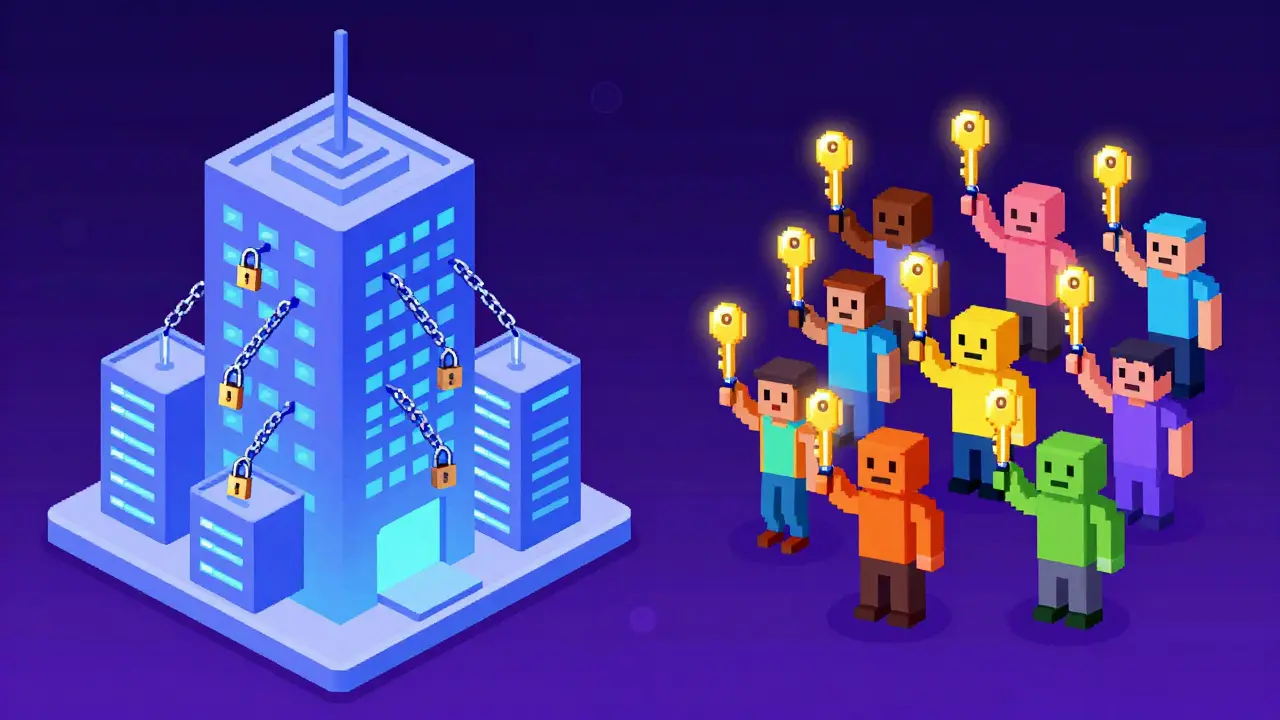
Imagine a world where you don't need a dozen different passwords or a giant tech company's permission to prove who you are. Most of us are used to "signing in with Google" or "using Facebook login," but that means those companies hold the keys to our digital lives. If they delete your account, you lose your digital identity. That is exactly the problem Decentralized Identifiers is designed to solve. By moving the power from a central server to the individual, we get a system where you own your identity, not a corporation.
What Exactly are DIDs?
At its simplest, a DID (or Decentralized Identifier) is a new kind of globally unique ID. Unlike an email address or a username, which is owned by a service provider, a DID is created and controlled by the person it represents. The W3C (World Wide Web Consortium) defines these in their DID Core v1.0 specification as tools that allow for verifiable, decentralized digital identity.
Think of a DID as a permanent digital address that you own. Because you generate it yourself using cryptographic keys, you don't have to ask a central authority for permission to exist online. You can prove you control the ID by providing a digital signature, effectively telling a system, "I have the private key that matches this public ID, so it's really me." This is the foundation of Self-Sovereign Identity (SSI), a model where users have total autonomy over their personal data.
The Protocol Layers: How it Actually Works
To make these identifiers work across the whole internet, we need Communication Protocols. A protocol is basically a set of rules that allows two different systems to talk to each other without confusion. In the world of DIDs, these protocols are often structured like a "stack," similar to how the internet itself works.
Most DID implementations follow the logic of the OSI Model, which divides networking into seven layers. While a DID doesn't need every single layer, it usually operates across the network and transport levels to ensure data gets from point A to point B securely. The beauty of the W3C standard is that it's technology-agnostic. This means a DID doesn't have to live on a specific blockchain; it could be stored on a distributed ledger, a peer-to-peer network, or even a decentralized file system.
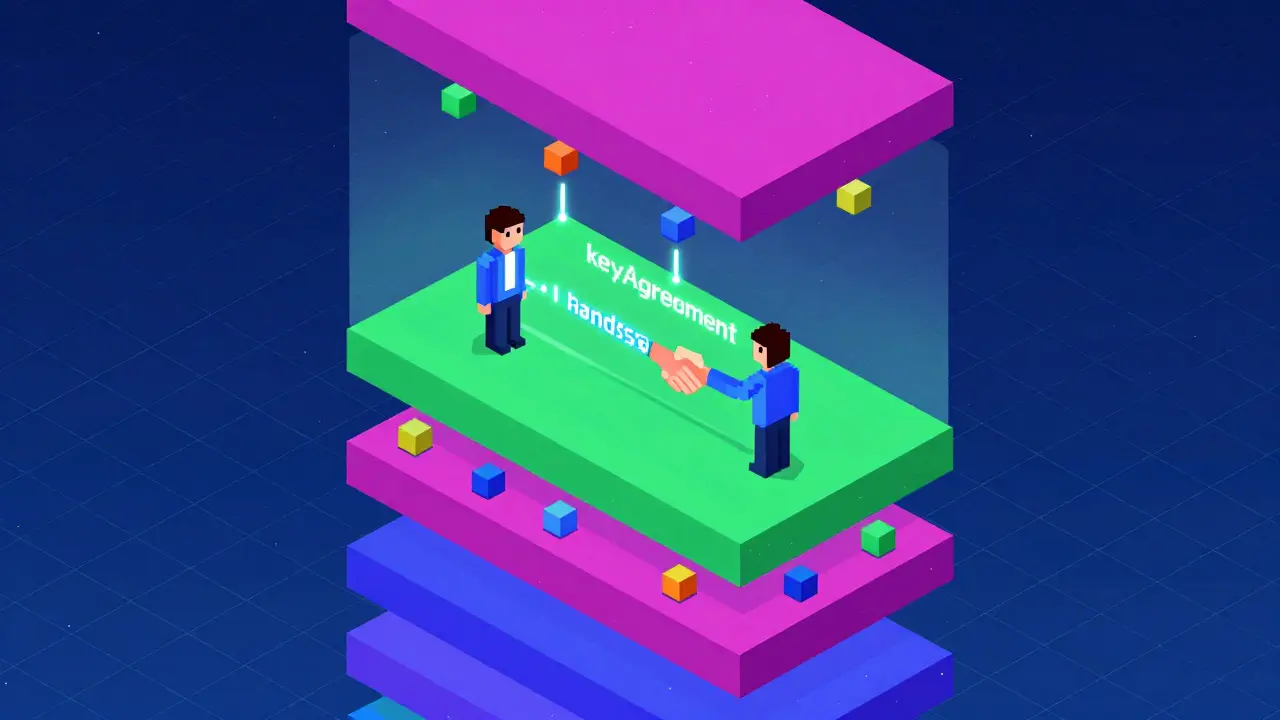
One critical part of these protocols is the keyAgreement property. This is a technical handshake that allows two parties to generate encryption material. If you want to send a private message to someone's DID, the protocol uses this property to establish a secure channel, ensuring that only the person holding the private key can decrypt the information.
| Feature | Centralized Identity (e.g., Google/FB) | Decentralized Identity (DID) |
|---|---|---|
| Control | Owned by the provider | Owned by the user |
| Point of Failure | Single central server | Distributed across networks |
| Privacy | Provider tracks all logins | User controls data disclosure |
| Persistence | Account can be banned/deleted | Identifier exists as long as the network does |
Why Does This Matter for Your Privacy?
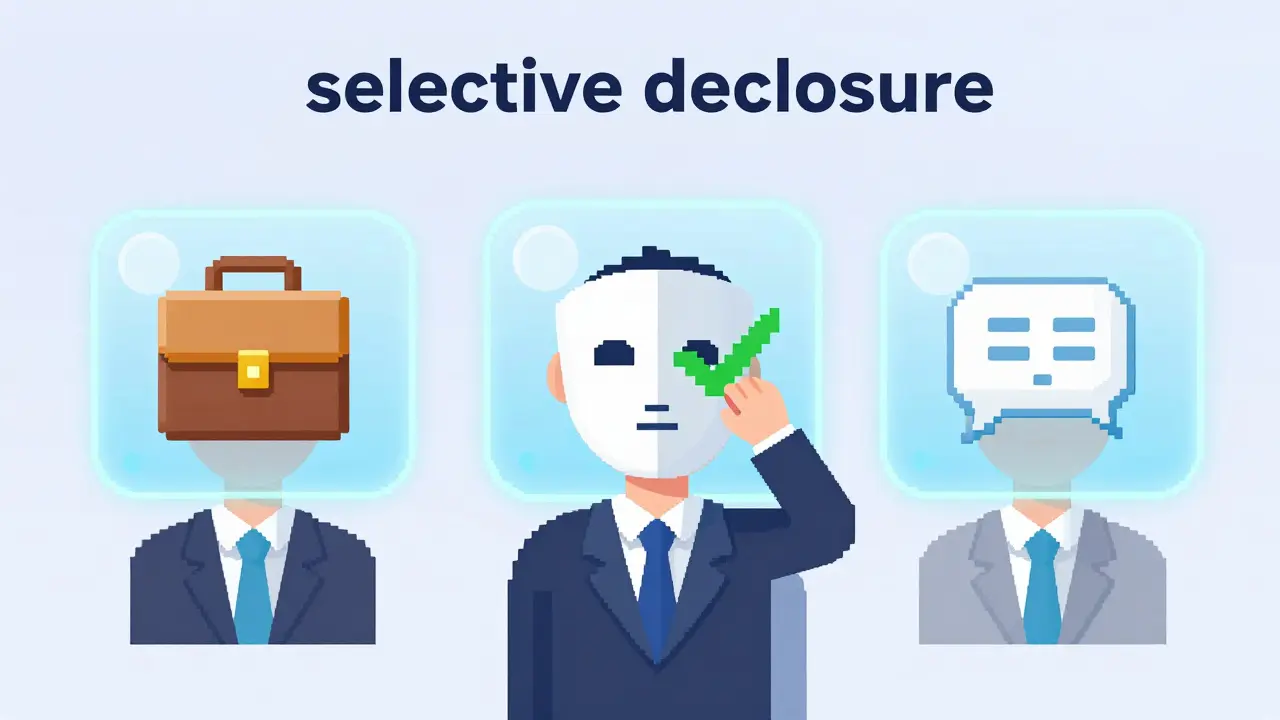
One of the biggest wins for DIDs is the ability to maintain different "personas." In a traditional system, your identity is one big bucket of data. If you use one account for everything, that company knows your shopping habits, your political views, and your health data all at once. With DID standards, you can create as many identifiers as you want.
You could have one DID for your professional life, another for your medical records, and a third for your social media. Because these are entity-controlled, you decide exactly how much data to reveal in each interaction. For example, if a website needs to know you are over 18, a DID-based system can prove you meet that requirement without actually revealing your exact birth date or full name. This is known as selective disclosure.
Implementation and Security Standards
Implementing a DID system isn't just about the blockchain; it's about following rigorous security standards. Much like how IPsec creates encrypted tunnels for VPNs, DID protocols use a combination of authentication headers and security associations to keep data safe.
Errors are also handled systematically. In standard networking, the ICMP (Internet Control Message Protocol) tells a sender when a packet couldn't be delivered. DID protocols implement similar feedback loops to ensure that if a DID resolution fails-meaning the system can't find the public key associated with an ID-the user is notified immediately rather than the system simply crashing.
Furthermore, these standards act as a bridge. You don't have to jump completely into the deep end of decentralization. Implementers can create DIDs based on identifiers that are already registered in federated or centralized systems, allowing a gradual transition toward a more private web.
Common Pitfalls in DID Adoption
Despite the promise, moving to a decentralized model isn't without risks. The biggest hurdle is key management. In the old world, if you forgot your password, you clicked "Forgot Password" and the company reset it. In a DID world, if you lose your private key, there is no "reset" button. You are the only person with the key, which means you are the only one responsible for its safety.
Another challenge is interoperability. While the W3C provides the core standard, different "DID methods" (the way the ID is actually stored) can sometimes struggle to talk to each other. If one app uses a blockchain-based method and another uses a peer-to-peer method, they need a common resolution layer to understand each other's identifiers.
What happens if I lose my DID private key?
Because DIDs are decentralized, there is no central admin to reset your password. If you lose your private key and haven't set up a recovery mechanism (like social recovery or a backup seed phrase), you lose access to that identity and any verifiable credentials linked to it. This is why secure key storage is the most critical part of the system.
Do I need a blockchain to use DIDs?
No. While blockchains are a popular way to store DIDs, the W3C standard is technology-agnostic. DIDs can be implemented using distributed databases, peer-to-peer networks, or even some traditional decentralized file systems. The blockchain is just one of many possible "DID methods."
How is a DID different from a public key?
A public key is just a string of characters used for encryption. A DID is a URI (Uniform Resource Identifier) that points to a DID Document. This document contains the public key, but it also includes other metadata, like service endpoints and verification methods, making it a complete identity profile rather than just a cryptographic key.
Can a company delete my DID?
No. Because the identifier is generated by you and stored on a decentralized network, no single company has the power to delete it. They can stop providing services to you, but they cannot erase your digital existence or your ability to use that ID with other providers.
Is DID the same as a digital signature?
Not exactly. A digital signature is the *tool* used to prove you own the DID. The DID is the identifier itself, and the digital signature is the cryptographic proof that the person presenting the DID is the actual owner of the private key associated with it.
Next Steps for Implementation
If you are a developer looking to build with DIDs, start by reviewing the W3C DID Core v1.0 spec. Don't try to build your own cryptographic primitives from scratch; instead, use established libraries that handle the keyAgreement and digital signature processes.
For those starting with a pilot project, consider a "hybrid approach." Use a federated identity system as a backup while you test a decentralized method. This ensures that if your users struggle with key management during the early stages, they aren't completely locked out of their accounts while you refine your recovery protocols.

Jimmy vasquez
May 1, 2026 AT 05:36The bit about selective disclosure is where this really shines. Most people don't realize how much data they're leaking just to prove they're an adult or a citizen. Using zero-knowledge proofs alongside DIDs is the real game changer here.
Noel Mandotah
May 2, 2026 AT 04:32Groundbreaking. Truly. Who knew keys were important? 🙄
Jan Conrad
May 2, 2026 AT 17:34I've been looking into the different DID methods lately and it's wild how varied they are. The transition from a blockchain-based method to something like ion (Sidetree) really shows that the 'blockchain' part is just a tool for availability and not the identity itself.
Nitin Gupta
May 4, 2026 AT 09:39I totally agree with the points on interoperability. It is a bit of a hurdle right now, but once the resolution layers become more standardized, the adoption will likely spike. Great to see the W3C pushing for a technology-agnostic approach.
debra hoskins
May 6, 2026 AT 09:23This whole 'self-sovereign' dream is a bit of a fantastical mirage. Most folks can't even remember their email password, yet we're pretending they'll manage a private key without burning their entire digital life to the ground in a fit of clumsiness.
its me
May 6, 2026 AT 17:47It's funny how we talk about 'ownership' here. In a deeper sense, the only true ownership is the absence of need for an identifier at all. We are just trading one set of digital shackles for another, just with fancier cryptographic locks.
edie rosa
May 6, 2026 AT 18:46The moral bankruptcy of the current big-tech system is precisely why we need this, but I bet the people pushing DIDs are just as opportunistic. They talk about privacy while building new ways to categorize and track us under the guise of 'decentralization'. It's just a different flavor of the same exploitation.
Carli Bates
May 6, 2026 AT 21:23oh yeah because losing a key is such a small price to pay for the privilege of being my own it department... totally sounds like a win for everyone involved lol
Aaron Zeiler
May 7, 2026 AT 20:47look into the sidetree protocol if you want to see how this scales without putting every single update on a main chain its way more efficient and avoids the gas fee nightmare
Kathleen Warren
May 9, 2026 AT 07:32I can see how this would be scary for people who aren't tech-savvy. We should really focus on making the recovery tools more friendly so no one feels left behind.
Barbara Jones
May 9, 2026 AT 15:40i think the social recovery thing is a rly good idea! lets just hope people actually set it up before they lose everything haha
Pramendra Singh
May 10, 2026 AT 17:30It is so inspiring to see the move toward user autonomy. Even with the challenges, the potential for a fairer internet is worth the effort!
Amanda Macy
May 12, 2026 AT 05:56The shift from centralized to decentralized is a shift in the locus of trust. We are moving from trusting an entity to trusting a mathematical proof. It's an interesting evolution of the social contract in the digital age.
Ipsita Seal
May 12, 2026 AT 22:41Too much reading. Basically just say we'll lose our keys and be locked out.
Abhishek Verma
May 14, 2026 AT 11:09Imagine thinking a 'DID document' makes it any less of a headache than a regular account. The narcissism of thinking this is 'freedom' is peak tech-bro energy.
Brendan Thraxton
May 16, 2026 AT 05:21just remember that the most important part is the user experience. if the wallet app is clunky people wont use it no matter how secure it is. keep it simple for the newcomers
Janis Naglis
May 16, 2026 AT 18:08The architectural paradigm shift here is just... breathtaking!!! The synergetic potential of utilizing Verifiable Credentials (VCs) combined with the DID resolution layer is absolutely pivotal for a zero-trust environment!!!
Michael Repak
May 17, 2026 AT 18:44I'd love to help test any open-source implementations of these recovery protocols!!! It's so important to get the UX right for the average person!!!
Livvy Cooper
May 18, 2026 AT 04:10Why bother. Just use a password manager and stop pretending this is some revolution. It's just a way for developers to feel special.
Rain Richardsson
May 18, 2026 AT 16:21Does this mean we can finally stop with the 2FA SMS codes?
Rushell Perry
May 19, 2026 AT 05:52The point about hybrid approaches is spot on for developers
it gives a safety net while the industry matures
don't rush the users into a system that might lock them out if they make one mistake
gradual migration is always the way to go for mass adoption
focus on the education part first
then the tech
then the full decentralization
that's how you build a sustainable ecosystem
without the fear factor
especially for older users
who aren't used to seed phrases
or hardware wallets
keep the transition smooth
and the users will actually stay
instead of fleeing back to google login