
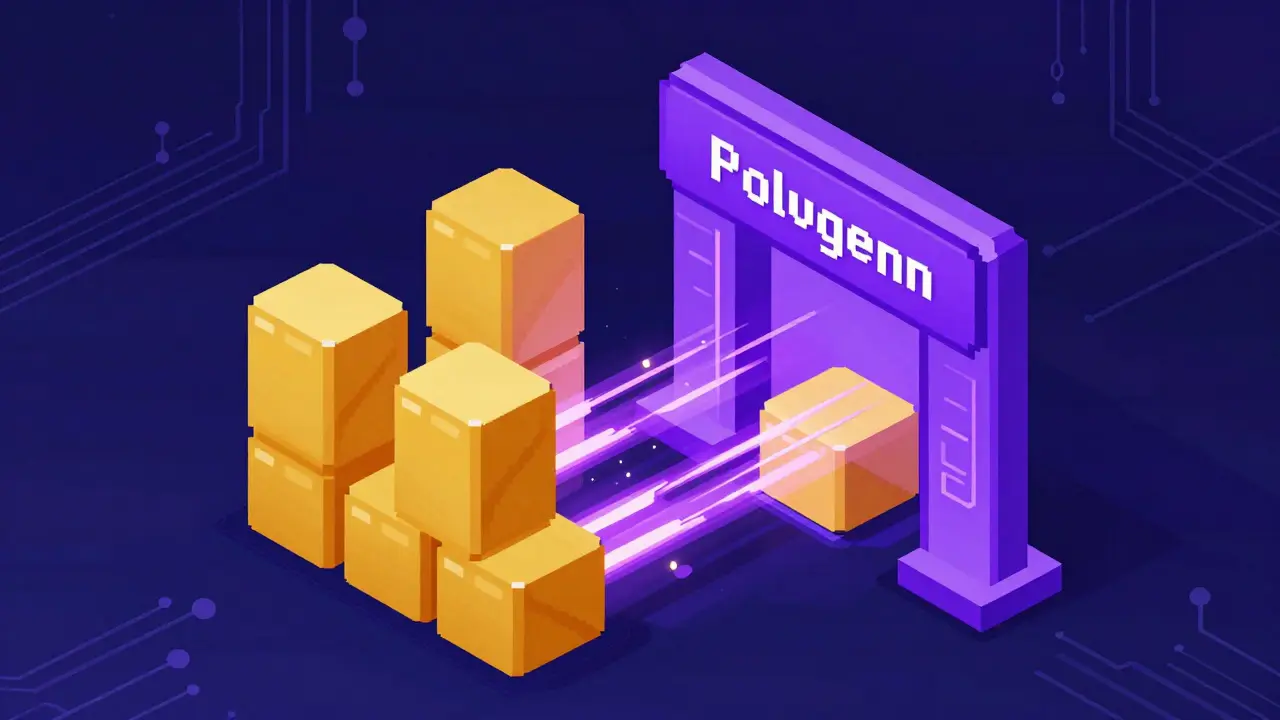
Trading on Ethereum used to feel like paying a luxury tax just to move your own money. Between the spikes in gas fees and the slow confirmation times, small-scale traders were essentially priced out of DeFi. That is why SushiSwap v3 (Polygon) is a decentralized exchange (DEX) that leverages the Polygon network to provide high-speed, low-cost trading via an automated market maker (AMM) model. By moving the core swapping logic to a layer-2 environment, it removes the friction that plagued its predecessors.
If you are tired of watching your profits vanish into network fees or you want a way to earn passive income without a central bank acting as the middleman, this setup is designed for you. But is it actually better than the giants like UniSwap? Let's break down how it works, the money-making potential, and the risks you need to watch out for.
Key Takeaways for Fast Readers
- Near-Zero Fees: Using the Polygon network means you can rebalance positions and trade for cents, not dollars.
- Dual Reward System: You can earn from both trading fees and staking rewards simultaneously.
- Low Entry Barrier: You only need a Web3 wallet (like MetaMask) to get started; no KYC or account sign-ups.
- Incentivized Growth: The Onsen Program gives extra boosts for providing liquidity to new tokens.
How SushiSwap v3 on Polygon Actually Works
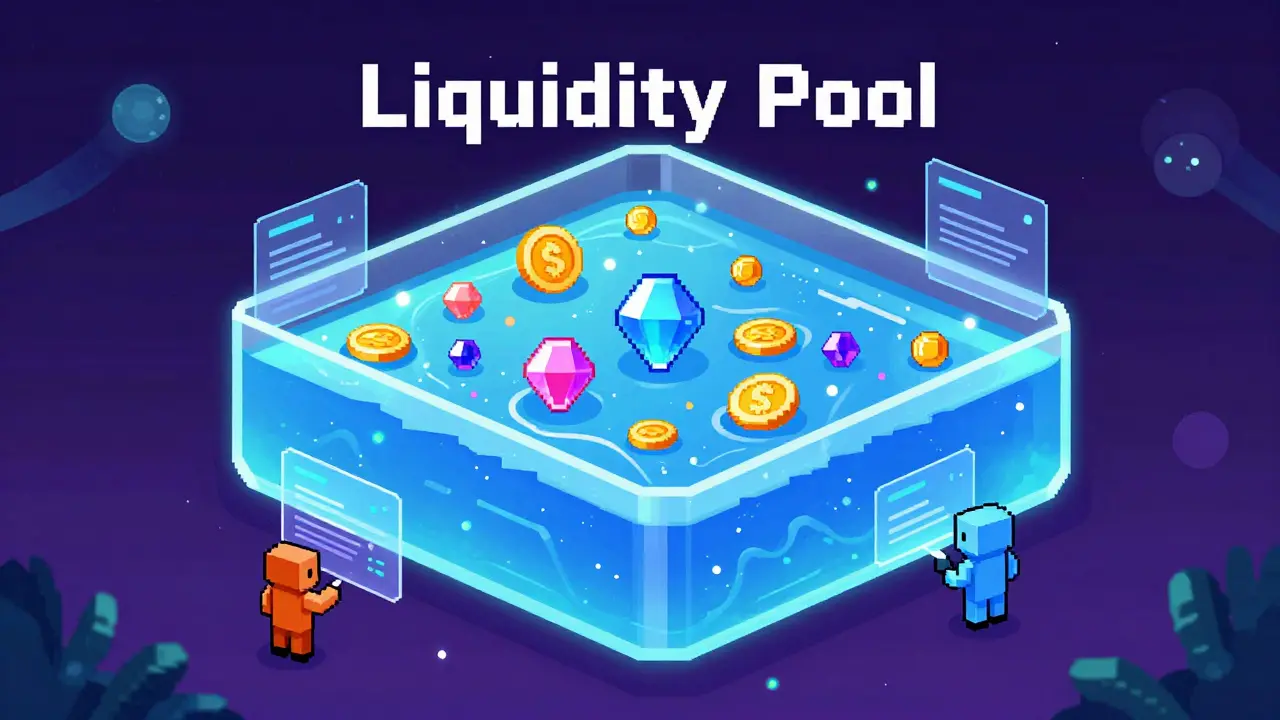
Traditional exchanges use order books-a list of buyers and sellers waiting for a match. SushiSwap v3 throws that out the window. Instead, it uses Liquidity Pools, which are essentially crowdsourced pots of cryptocurrency. When you trade, you aren't trading with another person; you're trading against the pool.
The magic happens through an Automated Market Maker (AMM), a smart contract that automatically adjusts the price of assets based on supply and demand. Because this version runs on Polygon, a scaling solution for Ethereum, the transaction overhead is negligible. This allows you to perform complex strategies, like frequent yield farming harvests, without the gas fees eating your entire return.
Making Money: Staking and Liquidity Provision
Most people don't just use this platform to swap tokens; they use it as a yield engine. There are two primary ways to put your assets to work here. First, you can become a Liquidity Provider (LP). By depositing a pair of tokens into a pool, you help facilitate trades. In return, you earn a slice of the trading fees. Currently, 0.25% of these fees go directly to the LPs.
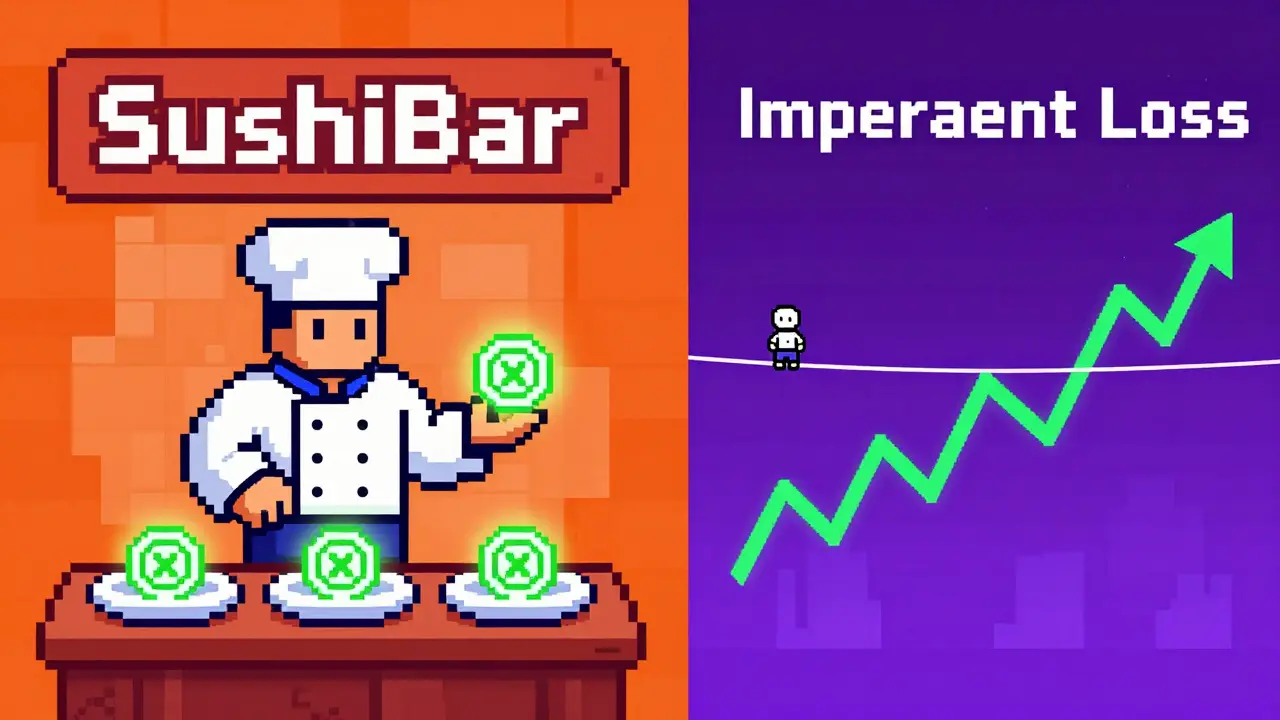
Second, there is the SUSHI token ecosystem. If you hold the native token, you can stake it in the "SushiBar" to receive xSUSHI. This isn't just a vanity move; 0.05% of all platform trading fees are distributed to these stakers. This dual-incentive structure is a major differentiator from competitors who only reward the people providing the actual liquidity.
For those looking for higher risks and higher rewards, the Onsen Program is the place to be. It specifically targets new token listings, offering enhanced rewards to attract liquidity to emerging projects. It's a high-stakes game: you get more tokens, but you're dealing with more volatile assets.
| Feature | SushiSwap v3 (Polygon) | UniSwap (Mainnet/L2) |
|---|---|---|
| Fee Distribution | LPs (0.25%) + Stakers (0.05%) | Primarily LPs |
| Gas Costs | Extremely Low (Polygon) | Variable (High on Mainnet) |
| Incentives | Active Liquidity Mining/Onsen | Mostly Fee-based |
| Governance | Community-driven via SUSHI | UNI token holders |
The Reality Check: Risks and Pitfalls
It isn't all free money. If you're providing liquidity, you have to deal with Impermanent Loss. This happens when the price of your deposited tokens diverges. If one token moons while the other stays flat, you might have been better off just holding the tokens in your wallet rather than providing them to the pool. The AMM's balancing mechanism essentially sells your winning asset to buy more of the losing one to keep the pool ratio stable.
Then there is the issue of liquidity depth. While the Polygon deployment is efficient, some specific pools can suffer from lower trading volumes. If no one is trading your pair, you aren't earning fees. Furthermore, because this is a DeFi platform, you are trusting the smart contracts. While SushiSwap is well-established, no piece of code is 100% immune to vulnerabilities.
Step-by-Step: How to Start Trading
- Set Up Your Wallet: Install a Web3 wallet like MetaMask. Ensure you have the Polygon network added to your wallet settings.
- Fund Your Account: Transfer some POL (formerly MATIC) to your wallet to cover the tiny transaction fees.
- Connect to SushiSwap: Visit the official site and click "Connect Wallet." No email or password is required.
- Perform a Swap: Select the token you have and the token you want. Review the slippage (the difference between expected and executed price) and confirm the trade.
- Optional: Provide Liquidity: Navigate to the "Pools" section, choose a pair, and deposit equal values of both tokens to start earning fees.
Final Verdict: Is it for You?
If you are a DeFi novice, this is one of the best entry points available. The combination of a friendly UI and the low cost of the Polygon network makes it a safe place to learn how liquidity pools work without losing your shirt to gas fees. For the yield farmer, the dual reward system (fees + staking) provides a more sustainable income stream than platforms that rely solely on inflation.
However, if you are a high-volume institutional trader, you might find the liquidity in some specific Polygon pairs too thin. You'll need to monitor the volume closely. For the average person, the ability to earn passive income while keeping transaction costs nearly zero is a winning formula.
Is SushiSwap v3 (Polygon) safe to use?
Generally, yes. It uses audited smart contracts and is one of the most established DEXs in the world. However, always remember that DeFi carries inherent risks, including smart contract bugs and the volatility of the tokens you hold.
What is the difference between SUSHI and xSUSHI?
SUSHI is the native governance token. When you stake your SUSHI in the SushiBar, you receive xSUSHI in return. xSUSHI represents your share of the protocol's trading fee distributions, acting as a receipt for your staked assets.
How do I avoid impermanent loss?
You can't completely avoid it if you're providing liquidity to a pair with different price movements. To minimize it, look for "stablecoin pairs" (like USDC/USDT) where the prices are pegged to the same value, or pairs with highly correlated assets.
Do I need to pay gas fees on Polygon?
Yes, but they are tiny compared to Ethereum. You will need a small amount of POL (formerly MATIC) in your wallet to pay for the network's processing power.
What is the Onsen Program?
The Onsen Program is a specialized incentive system that provides higher rewards to liquidity providers who support newly listed tokens. It's designed to help new projects gain traction while rewarding early adopters.

Sandeep Bhoir
April 16, 2026 AT 16:36Oh yeah, because we all know how "safe" smart contracts are until they suddenly aren't. I love the optimism here, but let's be real: the only thing guaranteed in DeFi is that some genius will find a loophole and drain a pool while you're sleeping.
Keri Pommerenk
April 17, 2026 AT 20:34this looks like a great way to start for anyone who's scared of the high fees
Abhinav Chaubey
April 18, 2026 AT 00:16It is honestly pathetic that people still debate if Polygon is viable in 2026. India has practically driven the adoption of these L2 solutions due to our sheer volume of micro-transactions. If you are still stuck on Mainnet, you are simply not paying attention to the global shift in infrastructure.
Joshua Salwen
April 18, 2026 AT 17:12LMAO the slippge on some of these pairs is absolutely INSANE!! Like, you think you're getting a deal and then boom, you've just lost 5% of your portfolio to a bot before the trade even finishes!! It's a complete disaster out there!!
siddharth narula
April 19, 2026 AT 09:30One must ponder if the pursuit of "near-zero fees" is merely a mask for the erosion of true decentralization. We trade the sanctity of the base layer for the convenience of a side-chain, effectively selling our digital souls to the altar of efficiency. 🧘♂️
Sandeep Bhoir
April 21, 2026 AT 05:19Spoken like a true philosopher who has never actually tried to swap tokens during a network congestion event.
Robert Preston
April 23, 2026 AT 02:34If you're worried about impermanent loss, I highly recommend looking into concentrated liquidity strategies. You can narrow your price range to earn higher fees, but keep in mind that if the price moves outside your range, you stop earning and are left with the less valuable asset. It takes some practice but it's the only way to actually make the math work in your favor over the long term.
Jeff Barlett
April 23, 2026 AT 08:52Honestly, why is everyone acting like Sushi is some revolutionary discovery? It's just a fork of a fork. The whole "dual reward" thing is just a fancy way to hide the fact that the tokenomics are basically a game of musical chairs where the last person holding the bag loses everything. Pure chaos!
Andrew Southgate
April 24, 2026 AT 01:52I've actually had a really positive experience with the SushiBar. While I agree that liquidity mining can be risky, the way they handle the xSUSHI distribution is actually quite fair for long-term holders. If you just set it and forget it, the compounding effect of the trading fees can be a nice little bonus, especially when you're using Polygon to avoid those nasty Ethereum gas spikes that used to make small-scale staking completely pointless. Just make sure you're diversifying your assets so you aren't overly exposed to a single ecosystem!
Alex Long
April 24, 2026 AT 20:49Too lazy to care. It's all a scam.
Vicky Duffala
April 26, 2026 AT 05:08Let's get those gains!! 🚀 The Onsen program is where the real magic happens if you've got the stomach for it. It's all about that early adopter energy and riding the wave of new projects before the rest of the world wakes up!!
Trudy Morse
April 28, 2026 AT 00:37Slippage is just the cost of liquidity. Simple as that.
Kevin Lư
April 29, 2026 AT 19:36I just threw some POL in there and it works great, totally chill. You guys overthink this stuff way too much, just hit the swap button and enjoy the ride!
Prachi Bhadarge
May 1, 2026 AT 03:24Imagine thinking a 0.05% staker reward is "major differentiator". That's cute.
Yuhan Mo
May 2, 2026 AT 09:38The TVL on the Polygon side is quite impressive. From a technical perspective, the AMM efficiency is optimal for low-latency executions, though we might see some slippage on low-cap pairs due to thinner liquidity buckets compared to the mainnet.
Thomas Jewett
May 3, 2026 AT 13:33This is exactly why the US needs to stop relyin on these foreign-built networks and start buildin our own sovereign DeFi infrastructure that isnt subject to the whims of some random dev in another country who could just rug pull our entire savings in a single heartbeat because there is no real accountability in the code!!
Anna Grealis
May 5, 2026 AT 06:48The way they track your wallet is creepy. They say no KYC but the chain is public and some AI is probably already linking your IP to your holdings... just saying.
Tracy Sperandio
May 7, 2026 AT 01:21Absolute fire! 💥 If you aren't using L2s in 2026, you're basically trading with a typewriter. Get in there and start farming those rewards!
Sean Douglas
May 7, 2026 AT 06:43My soul is literally weeping for the people who think this is a "safe entry point." We are talking about a digital casino where the house is a piece of code written by people who probably live in their parents' basements! The sheer audacity of calling this a sustainable income stream is a joke!
Michelle Stanish
May 8, 2026 AT 03:00I prefer Uniswap.
Gillian Kent
May 9, 2026 AT 22:44Tring to be positive here but just be careful with those new tokens on Onsen, some of them are lapped in weird promises
Nishant Goyal
May 10, 2026 AT 06:06Easy to get started. Good for learning.