SEC Crypto Compliance Checker
Is Your Crypto Project a Security?
Use this tool to assess if your token might be treated as a security by the SEC based on the Howey Test criteria.
Based on 2024 enforcement actions including $4.68 billion in fines
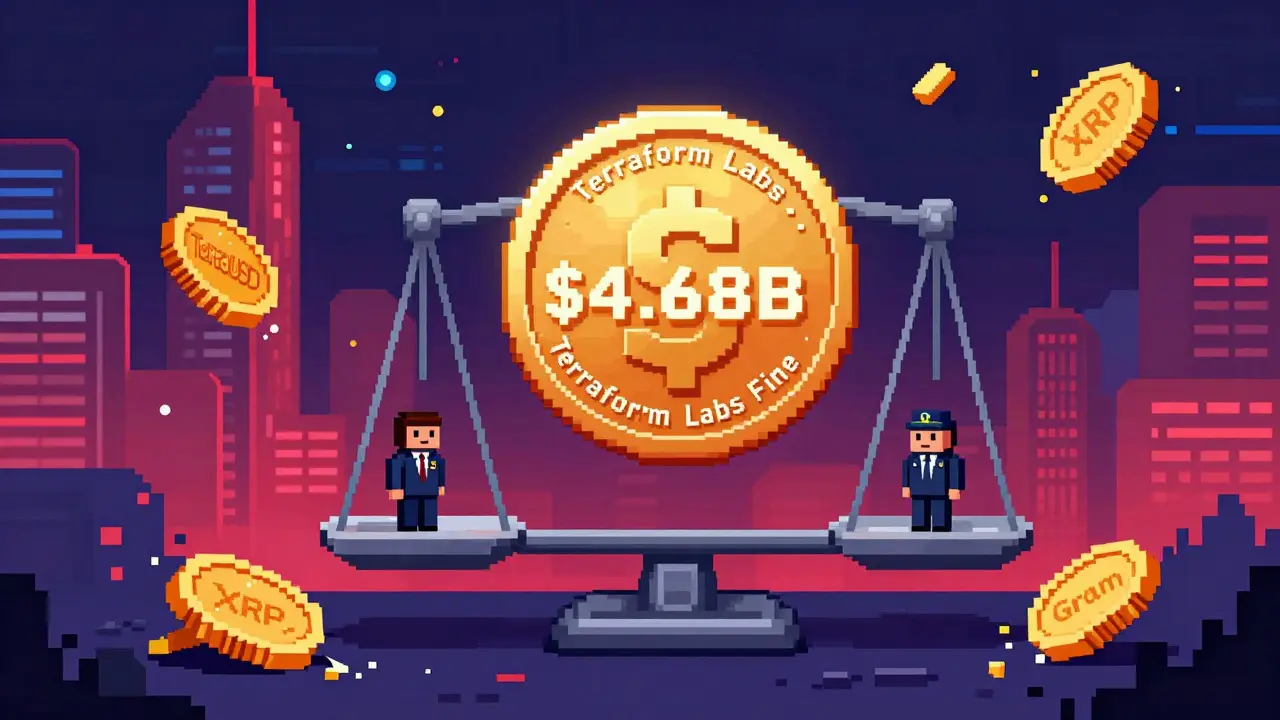
The U.S. Securities and Exchange Commission (SEC) slapped crypto companies with $4.68 billion in fines in 2024 - the biggest enforcement year in its history. That’s not a typo. It’s more than the total fines the SEC had ever collected from crypto firms in the decade before. And it wasn’t spread across dozens of small cases. Most of it came from one company: Terraform Labs and its founder, Do Kwon. They were hit with the largest single penalty ever issued by the SEC for offering unregistered securities and lying to investors about their stablecoin, TerraUSD. This wasn’t just a slap on the wrist. It was a warning shot fired across the bow of the entire crypto industry.
Why Did the SEC Go So Hard in 2024?
The SEC didn’t wake up one day and decide to crush crypto. Under former Chair Gary Gensler, who led the agency from 2022 to early 2025, the SEC doubled down on a simple idea: if a crypto asset behaves like a stock, it should be treated like one. That meant requiring companies to register their tokens as securities, disclose risks to investors, and follow the same rules as Wall Street firms. Most crypto projects didn’t. And the SEC started suing them - hard. The numbers tell the story. In 2023, the SEC collected just $150 million in crypto fines. In 2024, that jumped to $4.68 billion - a 3,000% increase. The agency filed 33 enforcement actions that year, down from 47 in 2023, but the penalties got much bigger. Half of those 33 cases were filed in September and October, right before the presidential election. That timing wasn’t random. It was strategic. The SEC knew the political winds were shifting and moved fast before any new leadership could change course.The Big Players and the Big Fines
Terraform Labs wasn’t the only target. Ripple Labs paid $125 million in 2021 for selling XRP without registering it as a security. Telegram was fined $1.24 billion in 2019 for its Gram token sale - a case that ended in a settlement and the project’s collapse. Then there were the individuals: John and JonAtina Barksdale paid over $100 million in 2022 for running a fake ICO. These weren’t just corporate penalties. The SEC started going after CEOs, founders, and developers personally. That’s a big deal. It meant you couldn’t hide behind a company name anymore. If you sold a token and lied about it, you could lose your house. The $4.68 billion fine against Terraform Labs was the tipping point. It wasn’t just about money. It was about sending a message: if you claim your token is a currency or a utility, but it’s really an investment contract, the SEC will treat it like a stock. That’s based on the Howey Test - a 80-year-old legal standard used to define what counts as a security. The SEC applied it aggressively to crypto, and it stuck.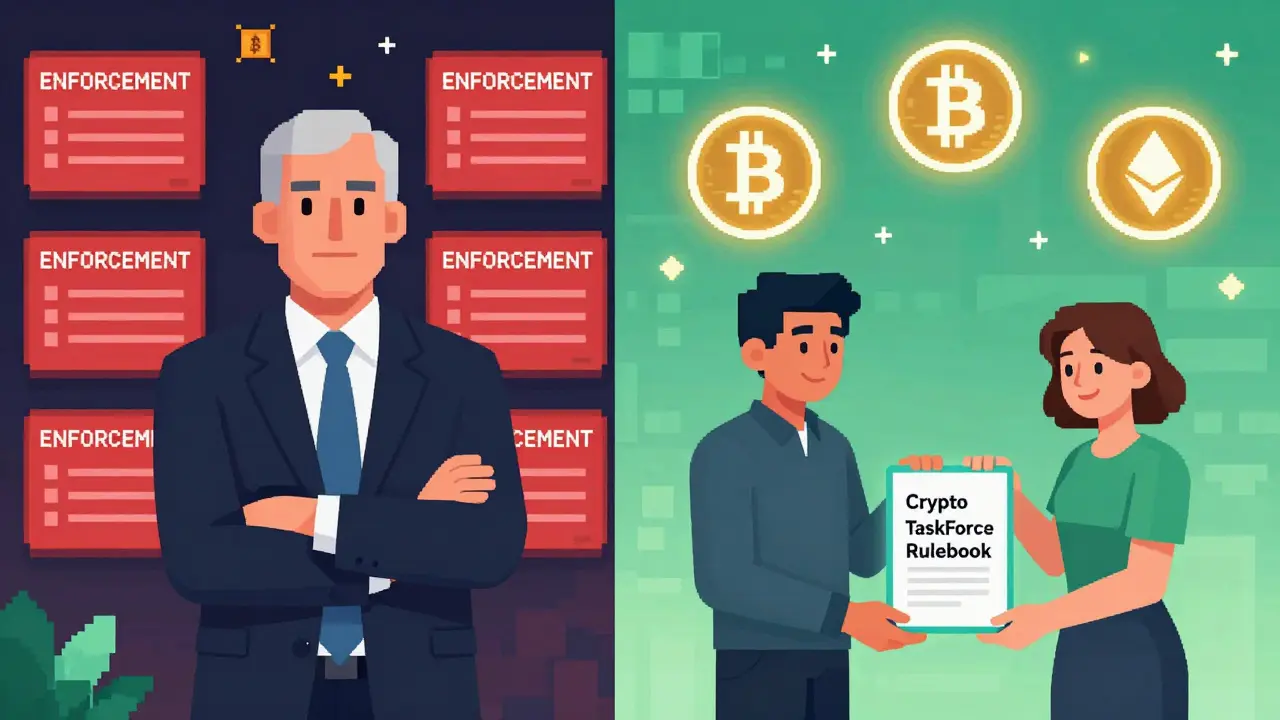
The Turnaround: What Happened After Gensler Left?
On January 20, 2025, Gary Gensler stepped down. Two days later, Acting Chair Mark Uyeda announced a major shift. He created the Crypto Task Force, led by Commissioner Hester Pierce - known in the industry as “Crypto Mom” for her pro-innovation stance. Their mission? Stop using enforcement as the only tool to regulate crypto. Stop guessing what’s legal. Start making clear rules. The new team didn’t just slow down. They reversed course. In June 2025, the SEC dropped its lawsuit against Coinbase, the largest U.S. crypto exchange. That case had been dragging on since 2023. Coinbase had sued the SEC first, calling its approach “regulation by enforcement.” The dismissal wasn’t a win for Coinbase alone. It was a signal that the SEC was changing its strategy. No longer would they chase every unregistered token sale. Now, they’d focus on fraud - real lies, real theft, real harm to people’s money. They also shut down the Crypto Assets and Cyber Unit and replaced it with the Cyber and Emerging Technologies Unit (CETU). The new team had fewer lawyers assigned to crypto enforcement. Their job wasn’t to find every technical violation. It was to target the worst actors: scammers, pump-and-dump rings, and fake platforms that stole users’ funds.What Does This Mean for Crypto Businesses Today?
If you’re running a crypto project in 2025, the rules have changed. You can’t assume the SEC will come after you just because you didn’t register. But you also can’t assume you’re safe. The line is clearer now: if you’re honest, transparent, and not stealing from people, you’re probably fine. If you’re promising returns, hiding who’s behind the project, or lying about your tech - you’re in danger. Major exchanges like Coinbase and Kraken are now working with regulators to build legal paths for listing tokens. The Crypto Task Force is working on clear guidelines for what makes a token a security versus a commodity. That’s huge. For years, companies were flying blind. Now, they’re getting maps. The market is reacting. Bitcoin’s market cap hit $1.97 trillion in October 2025, and institutional investors are pouring in. Spot Bitcoin ETFs, approved in January 2024, are now mainstream. The SEC’s crackdown scared off bad actors - and made room for legitimate players to grow.
What’s Still Risky?
Even with the new approach, some things haven’t changed. If you’re running a DeFi protocol that pays users interest in crypto, the SEC still sees that as an unregistered security offering. If you’re selling NFTs as investments - not as digital art - you’re still on the radar. And if you’re a founder who raised money from the public without disclosing risks, you’re still at risk of being sued. The SEC’s new focus on fraud means cases like the $198 million scam against Ramil and PGI Global in April 2025, or the charges against Unicoin Inc. in May 2025, are still going forward. These weren’t about registration. They were about stealing money. And that’s exactly what the SEC still wants to stop.The Bigger Picture: Is This Good for Crypto?
Some say the SEC’s 2024 crackdown drove crypto companies overseas - to places like Singapore, Switzerland, and Dubai. That’s true. But it also cleared out the fraudsters and the hype machines. The market didn’t die. It matured. Companies that survived are now building real products, not just whitepapers and Telegram groups. The real win? Legal clarity. The SEC isn’t gone. It’s just changing its tactics. Instead of throwing lawsuits at everything, it’s trying to write the rules first. That’s how mature markets work. Stocks, bonds, and commodities all had their messy early days. Crypto is going through the same thing. The $4.68 billion in fines didn’t kill crypto. They forced it to grow up. And now, with clearer rules and fewer random lawsuits, the industry has a real shot at building something lasting - not just a speculative bubble, but a real part of the financial system.Why did the SEC fine crypto companies $4.68 billion in 2024?
The SEC fined crypto companies $4.68 billion in 2024 mostly because of one case: Terraform Labs and its founder Do Kwon, who were charged with selling unregistered securities and misleading investors about their stablecoin, TerraUSD. This single penalty made up the vast majority of the total. The SEC, under Chair Gary Gensler, aggressively applied the Howey Test to crypto assets, treating many tokens as unregistered securities. The goal was to force compliance with federal securities laws, even if it meant hitting companies with record-breaking fines.
Is the SEC still cracking down on crypto in 2025?
No - not the way they were in 2024. After Gary Gensler left in January 2025, the SEC shifted its focus. Instead of suing companies for not registering tokens, they now target clear cases of fraud, scams, and investor harm. The dismissal of the Coinbase lawsuit in June 2025 was a major sign of this change. The agency created a new Crypto Task Force to build clearer rules, not just punish violations.
What’s the difference between a security and a commodity in crypto?
A security is an investment contract where people put money into a project expecting profits based on others’ efforts - like buying shares in a company. The SEC says most tokens sold in ICOs are securities. A commodity is something with intrinsic value that’s traded like gold or oil. Bitcoin and Ethereum are often treated as commodities because they’re decentralized and used as digital assets, not as investments in a company. The SEC hasn’t officially classified them yet, but the new administration is working on clear definitions.
Can I still launch a crypto token without getting in trouble?
Yes - if you’re transparent and avoid promising returns. If your token is meant to be used within a platform (like a game or service) and doesn’t promise profits, you’re less likely to be targeted. But if you’re raising money from investors and saying they’ll make money from your project, the SEC will likely treat it as a security. You’ll need to register or get legal advice. The new SEC approach doesn’t mean free rein - it means they’re focused on fraud, not technicalities.
What happened to the Coinbase lawsuit?
The SEC dropped its lawsuit against Coinbase in June 2025. Coinbase had sued the SEC first, arguing its enforcement actions were arbitrary and harmful. The dismissal was a major win for the crypto industry and signaled a policy shift. The new SEC leadership decided the case didn’t serve the public interest under their new focus on fraud, not registration. It was a turning point - showing the agency was willing to walk back aggressive moves.
Are Bitcoin and Ethereum safe from SEC enforcement?
Yes - for now. The SEC hasn’t charged Bitcoin or Ethereum with being unregistered securities. Both are widely seen as commodities due to their decentralized nature and use as digital assets. The new Crypto Task Force is working on clearer rules, and Bitcoin ETFs are now approved and trading. That’s a strong signal the SEC accepts them as different from tokens tied to specific companies or fundraising campaigns.