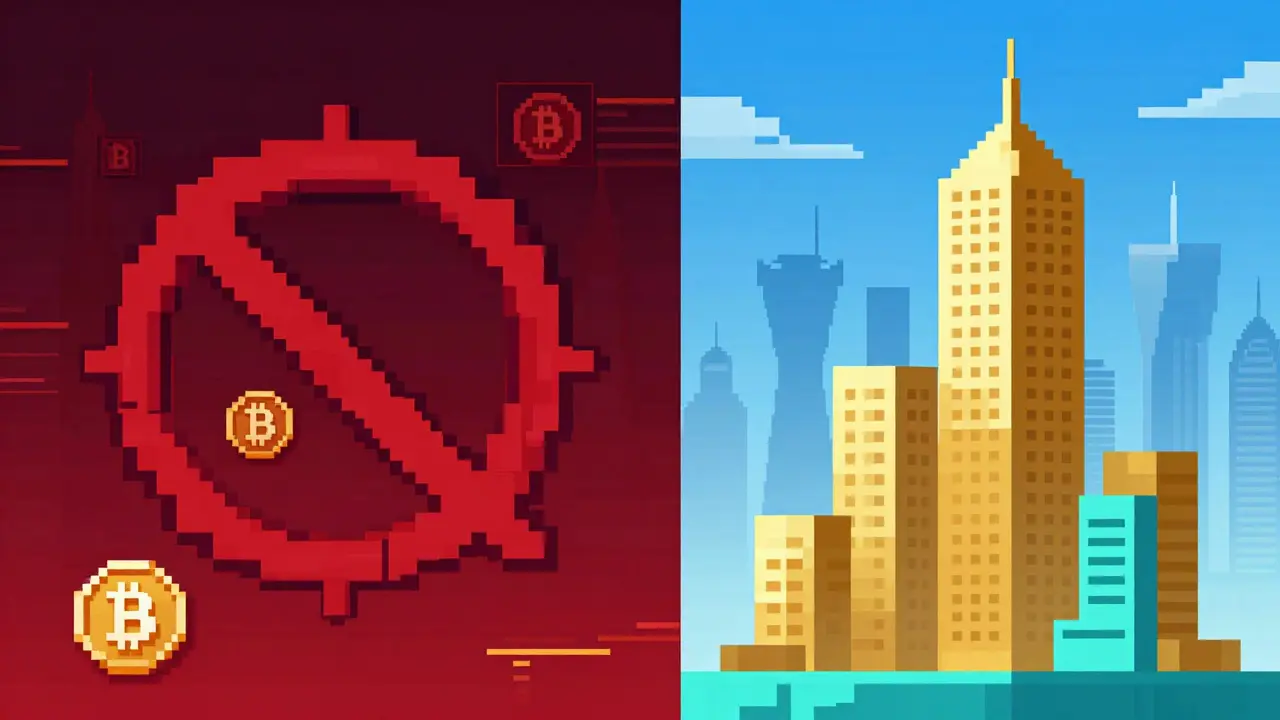
It’s a common misconception that Qatar has shut the door on all things digital finance. If you’re looking to trade Bitcoin or Ethereum in Doha, you’ll hit a brick wall. But if you’re an institution looking to tokenize real estate or Islamic bonds, the doors are wide open. This split personality in Qatar’s financial sector can be confusing. The country maintains a strict cryptocurrency prohibition while simultaneously building one of the most advanced frameworks for regulated asset tokenization in the Middle East.
Understanding this distinction is crucial for anyone doing business in the Gulf. It’s not just about what is banned; it’s about where the opportunity lies. While neighbors like the UAE race to capture retail crypto trading volume, Qatar is betting on stability and institutional-grade digital assets. Here is exactly how the rules work, why they exist, and what they mean for your money.
The Hard Line: How the Crypto Ban Works
Qatar didn’t wake up one day and decide to ban crypto. The regulatory stance was built over several years, starting with a clear signal from the top. In February 2018, the Qatar Central Bank (QCB) issued Circular No. (6) of 2018, explicitly prohibiting all licensed financial institutions from engaging with cryptocurrencies. This meant banks couldn’t process payments for crypto exchanges, hold crypto as collateral, or offer any services related to virtual currencies.
This ban was reinforced significantly on December 26, 2019. The Qatar Financial Centre Regulatory Authority (QFCRA) issued a comprehensive alert within the Qatar Financial Centre (QFC). This alert banned virtual asset services, including exchanging virtual assets for fiat currency, transferring them, or safekeeping them. The goal was to protect the financial system from the volatility and illicit activities often associated with unregulated crypto markets at the time.
As of May 2026, this prohibition remains absolute for specific categories of digital assets. The QFC Digital Assets Regulations 2024 define these prohibited items as "Excluded Tokens." This category includes:
- Cryptocurrencies like Bitcoin and Ethereum.
- Stablecoins pegged to fiat currencies.
- Central Bank Digital Currencies (CBDCs) that act as substitutes for legal tender.
If a token does not represent a right to an underlying physical or financial asset, it is generally considered an excluded token and is illegal to trade or service within the QFC jurisdiction.
The Pivot: Embracing Asset Tokenization
While the door slammed shut on speculative crypto, another window opened. On September 1, 2024, the QFC Authority and QFCRA enacted the QFC Digital Assets Regulations 2024. This framework marked a strategic shift. Instead of blocking blockchain technology entirely, Qatar decided to harness its efficiency for traditional finance.
The new regulations allow for the tokenization of real-world assets (RWAs). This means you can take an illiquid asset-like a commercial building, a bond, or a commodity-and create a digital token that represents ownership of that asset. These tokens can then be traded, transferred, and settled on a blockchain, but they are backed by tangible value and regulated strictly.
Key features of this framework include:
- Legal Recognition: Smart contracts used in these transactions are legally enforceable in Qatar.
- Custody Standards: Strict rules govern who can hold and manage these digital assets.
- Asset Classes: Focuses on commercial real estate, Islamic finance products (like sukuk), bonds, and commodities.
Yousef Al-Jaida, CEO of the Qatar Financial Centre, emphasized that this approach doesn’t hinder innovation; it redirects it toward stable, productive applications. For example, Barwa Real Estate Company successfully tokenized a QAR 150 million commercial property in early 2025. The settlement time dropped from 30 days to just 48 hours, showcasing the operational efficiency blockchain brings to traditional sectors.
Qatar vs. The GCC: A Tale of Two Strategies
To understand Qatar’s position, you have to look at its neighbors. The Gulf Cooperation Council (GCC) countries have taken vastly different approaches to digital assets.
| Country | Crypto Trading Status | Regulatory Body | Focus Area |
|---|---|---|---|
| Qatar | Banned | QFCRA / QCB | Real-World Asset Tokenization |
| UAE | Licensed & Regulated | VARA (Dubai) / SCA | Retail & Institutional Crypto Markets |
| Kuwait | Comprehensive Ban | Central Bank / CMA | None (Strict Prohibition) |
| Bahrain | Licensed Exchanges | Central Bank of Bahrain | Virtual Asset Service Providers |
| Saudi Arabia | Framework Only (No Licenses Yet) | Capital Market Authority | Future Licensing Framework |
The UAE, particularly Dubai, has become a global hub for crypto trading, capturing approximately 68% of the GCC’s cryptocurrency trading volume. They established the Virtual Assets Regulatory Authority (VARA) to oversee everything from exchanges to NFT marketplaces. Qatar, by contrast, has deliberately excluded itself from this volatile market. It aligns more closely with Kuwait’s conservative stance on crypto but goes further by creating a sophisticated alternative through tokenization.
This divergence reflects Qatar’s priority: financial stability over speculative growth. By banning cryptocurrencies, Qatar avoids the systemic risks associated with price crashes and fraud scandals that have plagued the broader crypto industry. At the same time, by embracing tokenization, it positions itself as a leader in fintech innovation that serves the traditional economy.

Impact on Businesses and Investors
For businesses operating in Qatar, the regulatory landscape requires careful navigation. If you are a financial services firm, you need to verify that none of your transactions involve prohibited cryptocurrencies. According to a survey by OneEquity in February 2025, 78% of financial services firms reported increased compliance costs, averaging 15% higher than regional competitors, due to these verification requirements.
However, for institutional investors, the opportunities are growing. The QFC has received dozens of inquiries from international asset managers interested in the tokenization framework. As of March 2025, there were 12 verified business registrations under the new rules, with 14 firms participating in the regulatory sandbox. The sandbox allows companies to test their tokenization models for up to 18 months before seeking full licensing.
Islamic finance plays a significant role here. Sharia-compliant digital assets make up 58% of tokenization initiatives in Qatar. This makes sense given the country’s cultural and economic context. Tokenizing sukuk (Islamic bonds) allows for greater liquidity and fractional ownership without violating religious principles, provided the underlying assets are halal.
Challenges for Retail Users
If you are an individual investor living in Qatar, the situation is less favorable. With no local exchanges allowed, citizens must use offshore platforms. This comes with drawbacks. Higher fees, complex Know Your Customer (KYC) hurdles, and a lack of local consumer protection are common complaints. On Reddit’s r/CryptoQatar forum, users frequently discuss the extra 2.5% in transaction costs they incur compared to those in jurisdictions with local exchanges.
Despite this, adoption among younger demographics remains curious. A February 2025 survey by Qatar University found that 68% of citizens aged 18-35 support limited legalization of cryptocurrencies. This suggests a potential future tension between public demand and regulatory caution.

Implementation Costs and Timeline
For companies wanting to enter the tokenization space, be prepared for a rigorous process. The QFCRA reports that full compliance implementation typically takes 6 to 8 months. The average setup cost is around QAR 850,000 (approximately $233,500 USD). You will need:
- Comprehensive asset verification documents.
- Legal opinions on the underlying assets.
- Detailed technical specifications of your blockchain infrastructure.
Interoperability is also a major hurdle. About 41% of firms report difficulties bridging traditional payment systems with blockchain platforms. Ensuring that your smart contracts comply with both QFC regulations and sector-specific laws (like real estate or securities laws) requires specialized legal and technical expertise.
Future Outlook: Stability Over Speculation
Looking ahead, Qatar shows no signs of lifting the crypto ban. Governor Sheikh Bandar bin Mohammed Al Thani stated in January 2025 that the regulatory framework prioritizes investor protection and financial system stability over short-term market participation. The focus will remain on expanding the tokenization framework to include new asset classes like carbon credits, intellectual property rights, and art collections.
While the UAE captures the hype of crypto trading, Qatar is quietly building the infrastructure for the next generation of traditional finance. It’s a slower, steadier path, but one that aligns perfectly with the country’s long-term economic diversification goals under Qatar National Vision 2030.
Is Bitcoin legal in Qatar?
No, Bitcoin is not legal for trading or investment services in Qatar. The Qatar Central Bank and QFCRA prohibit financial institutions from dealing with cryptocurrencies, which are classified as "Excluded Tokens" under the QFC Digital Assets Regulations 2024.
What is the difference between crypto and tokenization in Qatar?
Cryptocurrencies like Bitcoin are speculative assets with no underlying physical backing, and they are banned. Tokenization involves creating digital tokens that represent ownership of real-world assets like real estate or bonds. This form of digital asset is permitted and regulated under the QFC framework.
Can I buy crypto using a Qatari bank card?
You cannot use Qatari banks to facilitate crypto transactions. Banks are prohibited from processing payments for crypto exchanges. Individuals may use offshore exchanges, but they do so at their own risk and without local banking support or consumer protection.
How much does it cost to launch a tokenized asset in Qatar?
The average setup cost for compliance and implementation is approximately QAR 850,000 ($233,500 USD). This includes legal fees, technical infrastructure setup, and regulatory application processes, which typically take 6-8 months.
Will Qatar legalize crypto in the future?
Current projections suggest Qatar will maintain its prohibition on cryptocurrencies through 2030. The government’s focus is on regulated asset tokenization rather than speculative crypto markets, prioritizing financial stability over retail trading access.