
Every four years, something predictable happens in the chaotic world of cryptocurrency. The amount of new Bitcoin is a decentralized digital currency that operates on a blockchain network without central authority created gets cut in half. It’s not a rumor, it’s not a marketing stunt, and it’s not up for debate. It is hard-coded into the software itself by Satoshi Nakamoto back in 2009. This event is known as the Bitcoin halving is a programmed event that reduces the block reward for miners by 50% every 210,000 blocks. If you are looking at charts right now, wondering if the price will moon or crash, you need to understand what has happened before. History doesn't repeat itself exactly, but it often rhymes. Let's look at the actual data from the past four events to see what really drives the market.
The Mechanics of Scarcity
To understand why people care so much about the halving, you have to look at how Bitcoin works. Unlike the US Dollar or the Euro, which central banks can print in unlimited amounts during crises, Bitcoin has a strict cap. There will never be more than 21 million coins. The halving is the mechanism that controls the speed at which we reach that limit.
Miners secure the network by solving complex mathematical puzzles. In return, they get paid with newly minted Bitcoin plus transaction fees. Every 210,000 blocks-which takes roughly four years given the current average block time of 9 minutes and 48 seconds-that payment is slashed by 50%. This creates a "supply shock." If demand stays the same or increases, but the new supply drops drastically, basic economics suggests the price should rise. It is a deflationary monetary policy built directly into the code.
| Attribute | Value / Detail |
|---|---|
| Frequency | Every 210,000 blocks (~4 years) |
| Current Block Reward (Post-2024) | 3.125 BTC per block |
| Max Supply Cap | 21 Million BTC |
| Next Estimated Halving | March 26, 2028 |
| Mining Algorithm | SHA-256 |
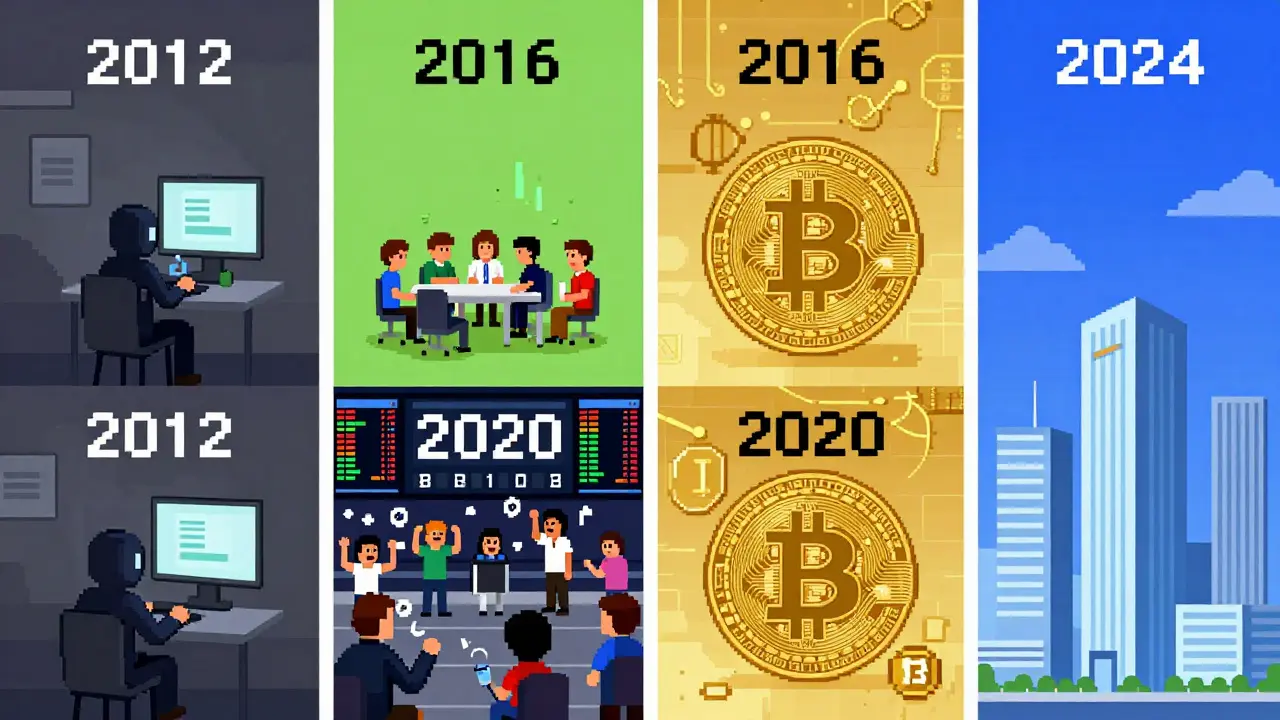
2012: The Quiet Experiment
The first halving happened on November 28, 2012. At this point, Bitcoin was practically invisible to the general public. It was a toy for cryptographers, computer scientists, and a few early adopters who believed in the theory of decentralized money. The block reward dropped from 50 BTC to 25 BTC.
Did the price skyrocket immediately? Not really. But over the next 180 days, the price moved from roughly $10.59 to $126.24. That is a massive percentage gain, but in absolute terms, it was still small change. Most analysts agree that attributing this rise solely to the halving is difficult because the market was so immature. There were no major exchanges, no institutional investors, and barely any media coverage. It was the proof-of-concept phase. The system worked, the supply was cut, and the network survived.
2016: Entering the Mainstream
By July 9, 2016, things had changed. Bitcoin was no longer just a niche experiment; it was becoming an asset class. The second halving reduced the reward from 25 BTC to 12.5 BTC. This time, there were eyes on the prize. Retail investors were buying in, and early institutional interest was budding.
Following this event, Bitcoin saw significant appreciation, eventually peaking above $1,000. This laid the groundwork for the massive bull run of 2017. The difference here was awareness. People knew the supply was tightening. Media outlets started covering crypto regularly. The halving acted as a catalyst, but it was the growing adoption and liquidity that fueled the fire. You couldn't separate the technical event from the cultural moment.
2020: The Pandemic Paradox
The third halving occurred in May 2020, dropping the reward to 6.25 BTC. This was a unique moment in history. The world was shutting down due to the COVID-19 pandemic. Governments around the globe were printing trillions of dollars in stimulus checks and quantitative easing to keep their economies afloat.
In this environment, Bitcoin’s fixed supply looked incredibly attractive. While fiat currencies were inflating rapidly, Bitcoin’s issuance was being cut in half. Investors flocked to it as a hedge against traditional currency debasement. Within 180 days post-halving, Bitcoin hit an all-time high of $14,849.09. Here, the macroeconomic context amplified the effect of the halving. It wasn't just about less Bitcoin being created; it was about more money chasing that limited supply because people were losing faith in traditional savings vehicles.
2024: The Institutional Era
The most recent halving took place on April 19-20, 2024. The block reward fell to 3.125 BTC. This was the fourth time this has happened. By now, Bitcoin is a global financial asset. We have Spot ETFs approved by the SEC, major corporations holding it on their balance sheets, and widespread recognition among retail traders.
This halving represented the largest reduction in supply relative to the existing market size. With nearly 19.7 million Bitcoins already in circulation, cutting the daily issuance by 900 coins (approximately) is a significant drag on available supply. However, the price reaction was different this time. It was slower, more volatile, and heavily influenced by regulatory news and ETF flows rather than just the raw mechanics of the halving. The market had become efficient at pricing in the event months in advance.
| Year | New Reward | Price Before | Price +180 Days |
|---|---|---|---|
| 2012 | 25 BTC | $10.59 | $126.24 |
| 2016 | 12.5 BTC | $650 (approx) | $1,002+ (peak later) |
| 2020 | 6.25 BTC | $87 (approx) | $14,849 (peak later) |
| 2024 | 3.125 BTC | $63,000 (approx) | Variable (Market Mature) |
Impact on Miners and Network Security
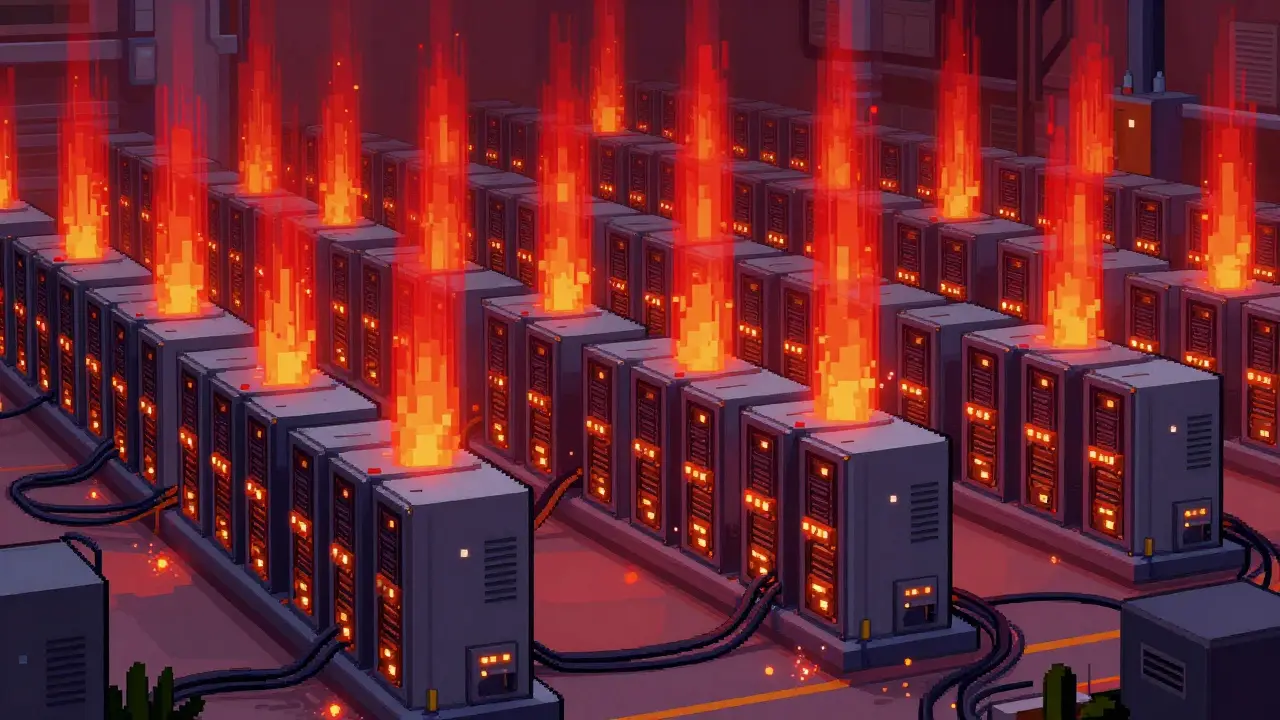
We often talk about price, but the halving hits miners hardest. Their revenue is instantly cut by 50%. If the price doesn't double immediately, many mining operations go underwater. This forces a consolidation of the industry. Less efficient miners shut down, sell their equipment, or move to regions with cheaper electricity.
This dynamic affects the network hash rate-the total computing power securing Bitcoin. Historically, we see a dip in hash rate right after a halving as weak players exit. Then, as the price stabilizes or rises, the remaining efficient miners buy better hardware, and the hash rate recovers to new highs. This cycle ensures that only the most committed and efficient participants remain, theoretically making the network more robust over time. By 2024, mining was dominated by large-scale industrial farms using specialized ASICs, making the impact on individual hobbyists negligible.
What Comes Next?
Looking ahead, the next halving is projected for March 26, 2028. The reward will drop to 1.5625 BTC. As we approach 2140, when the last fraction of a Bitcoin is mined, the block reward will become negligible. Miners will then rely entirely on transaction fees.
For investors and observers, the key takeaway is that the halving is a background condition, not a trigger button. It sets the stage for scarcity, but the play is written by adoption, regulation, and global economic health. Don't bet your house on the date alone. Look at the broader trends. The era of easy gains based purely on the calendar is likely behind us. Now, it’s about understanding the asset’s role in a diversified portfolio.
When is the next Bitcoin halving?
Based on historical patterns and current block times, the next Bitcoin halving is estimated to occur around March 26, 2028. This event will reduce the miner reward from 3.125 BTC to 1.5625 BTC per block.
Does Bitcoin halving guarantee a price increase?
No, it does not guarantee a price increase. While halvings create supply-side pressure that can support prices, market dynamics, regulatory changes, and macroeconomic factors also play critical roles. Past performance does not ensure future results.
How many Bitcoin halvings have occurred so far?
As of 2026, four Bitcoin halvings have taken place: in 2012, 2016, 2020, and 2024. Each event reduced the block reward by 50%, starting from the original 50 BTC.
Why does the halving happen every four years?
The halving is triggered every 210,000 blocks. Since a new block is mined approximately every 10 minutes, it takes roughly four years to mine that many blocks. This schedule was hardcoded by Satoshi Nakamoto to control inflation.
What happens to miners when the reward is too low?
If block rewards drop below operational costs, inefficient miners shut down. Over time, miners will rely more on transaction fees. Eventually, when all 21 million BTC are mined around 2140, miners will be compensated solely through user transaction fees.




Josh Dodson
June 11, 2026 AT 04:27gud read. think the supply shock is real but dont forget demand matters more now with all these ETFs.
Suman Patil
June 11, 2026 AT 16:21The macro environment in 2024 was totally different from 2020, right? We had institutional liquidity entering via spot ETFs which changes the dynamic completely compared to the retail-driven cycles of the past. It's fascinating how the narrative shifted from 'digital gold' for individuals to a treasury reserve asset for corporations. The halving is just one variable in a complex equation involving interest rates and global geopolitical stability. We need to look at on-chain metrics like exchange reserves and long-term holder behavior to get the full picture. The correlation between price action and hash rate post-halving is also something we should monitor closely as it indicates miner capitulation points.
Kumaran sowkarpet
June 13, 2026 AT 07:09Very true Suman Patil :D The data shows that early adopters are still holding strong despite the volatility. In India, we see a lot of young people getting into crypto through peer-to-peer networks because of regulatory uncertainty. It is interesting how local economies adapt to global digital trends. The scarcity model works well when you have trust in the code but not necessarily in the government banks. Keep sharing such informative posts! :)
Mauricio Contreras Loredo
June 14, 2026 AT 13:45Sure, let's pretend the SEC isn't rigging the game with their ETF approvals timed perfectly to soak up retail liquidity. Typical corporate greed wrapped in blockchain buzzwords. I love how everyone ignores the environmental impact while celebrating the 'scarcity'.
sreeja boora
June 15, 2026 AT 20:01It is imperative that we consider the national security implications of decentralized currencies. The lack of central control poses significant challenges for sovereign states attempting to maintain monetary policy autonomy. We must ensure that our financial infrastructure remains robust against external digital threats that could undermine economic stability.
Grace Newman
June 17, 2026 AT 12:49One must question who truly benefits from this so-called 'decentralization.' The narratives surrounding Bitcoin often obscure the reality of centralized exchanges and mining pools that control the majority of the network's power. It is highly probable that these entities manipulate market sentiment to create artificial scarcity. We should be wary of the underlying agendas driving this technological adoption.
Annemarie Fitzgerald
June 18, 2026 AT 05:02The existential dread of finite resources in an infinite universe is what drives this whole thing really. We are projecting our fear of entropy onto a mathematical ledger. It is tragic how humans seek comfort in rigid structures when chaos is the only constant. Why do we cling to numbers when meaning is subjective?
Jessica Lane
June 19, 2026 AT 07:55I appreciate the detailed breakdown of historical performance. It helps to contextualize current market movements within a broader timeline. Understanding the mechanics behind the halvings provides clarity on why certain price actions occur. This information is valuable for anyone looking to make informed decisions about their portfolio.
Charles Pawlikowski
June 19, 2026 AT 09:49typical lefty take on money lol. bitcoin is freedom from the fed printing press. keep your hands off my coins. american values mean sound money not debased fiat currency. wake up sheeple :)
Andrea Burd
June 20, 2026 AT 19:14Boring analysis. Everyone knows this stuff already. Real experts don't need charts to tell them where the price is going. It's all about vibes and insider info anyway. Yawn.
Akeem Whittaker
June 21, 2026 AT 16:58We need to focus on education rather than speculation. Many new investors enter the market without understanding the fundamental technology or the risks involved. Providing clear, accurate information helps build a more resilient community. Let's encourage critical thinking and responsible investment practices.
Mekz Wheoki
June 22, 2026 AT 08:09Oh great, another article telling us what we already know. The halving doesn't magically print money, genius. Maybe if you spent less time writing blog posts and more time actually coding, you'd understand the real value here. But sure, keep nodding along to the mainstream narrative.
Danna Charris
June 23, 2026 AT 11:05Precise and concise. The data speaks for itself. No need for fluff.
Fede Faith
June 24, 2026 AT 03:03This is a solid overview. I've been tracking the hash rate dips post-halving and they always recover stronger. It's reassuring to see the network resilience in action. Good job highlighting the miner consolidation aspect too.
Abby Sivertsen
June 24, 2026 AT 16:52I feel like the emotional toll of watching these charts is underestimated. People stress out over daily fluctuations while ignoring the long-term trend. We need to talk more about mental health in trading communities. It's not just about profit; it's about peace of mind.
Benjamin Eisen
June 26, 2026 AT 01:29Great post man. I think the next cycle will be slower though cause everything is priced in now. Maybe we see more sideways movement before the real run. What do u guys think about the ETF flows impacting short term volatility?
Kenneth Riley
June 26, 2026 AT 16:48You're all missing the bigger picture here!!! The manipulation is obvious. Look at the volume spikes during Asian trading hours. It's clearly coordinated dumping by whales. Wake up!!! The system is rigged against the little guy and nobody cares. Drama everywhere!!!
ravi mahla
June 26, 2026 AT 19:57Haha nice try with the serious tone. But we both know Bitcoin is just a meme coin with extra steps. Still laughing at those who bought the top in 2021. See you at the bottom friends! ;)
Mark Brunschwiler
June 27, 2026 AT 23:20Why does everyone care about money so much? It's just paper. Or pixels now. We are trapped in a matrix of our own making. I give away my gains because hoarding wealth is evil. Join me in poverty enlightenment.
Sonya O'Brien
June 28, 2026 AT 01:06I found this analysis incredibly helpful in understanding the nuances of each halving event, particularly how the external economic conditions played a pivotal role in shaping the market response, which suggests that we cannot view these events in isolation but rather as part of a larger interconnected web of financial influences that require careful consideration and thoughtful engagement from all participants in the ecosystem.