You might have heard of Beethoven X, a once-popular decentralized exchange on the Fantom network that has since evolved into the core infrastructure for the Sonic ecosystem. If you are looking to trade or stake tokens on what was formerly known as Fantom, you need to know one critical thing first: Beethoven X as a traditional DEX is largely history. The platform underwent a massive transformation in late 2024, rebranding and shifting its focus from simple token swapping to becoming the primary liquid staking provider for the new Sonic blockchain.
This review breaks down what happened to Beethoven X, how it works today under the name BEETS, and whether it still makes sense for your portfolio in 2026. We will look at the features, the risks, and how it compares to other options in the market.
The Big Shift: From DEX to Staking Infrastructure
To understand where Beethoven X stands today, we have to look at its past. Launched in 2021 as a "friendly fork" of the Balancer V2 protocol, it was designed to bring advanced automated market maker (AMM) features to the Fantom Opera network. Back then, it offered weighted pools and concentrated liquidity, which were great tools for sophisticated traders.
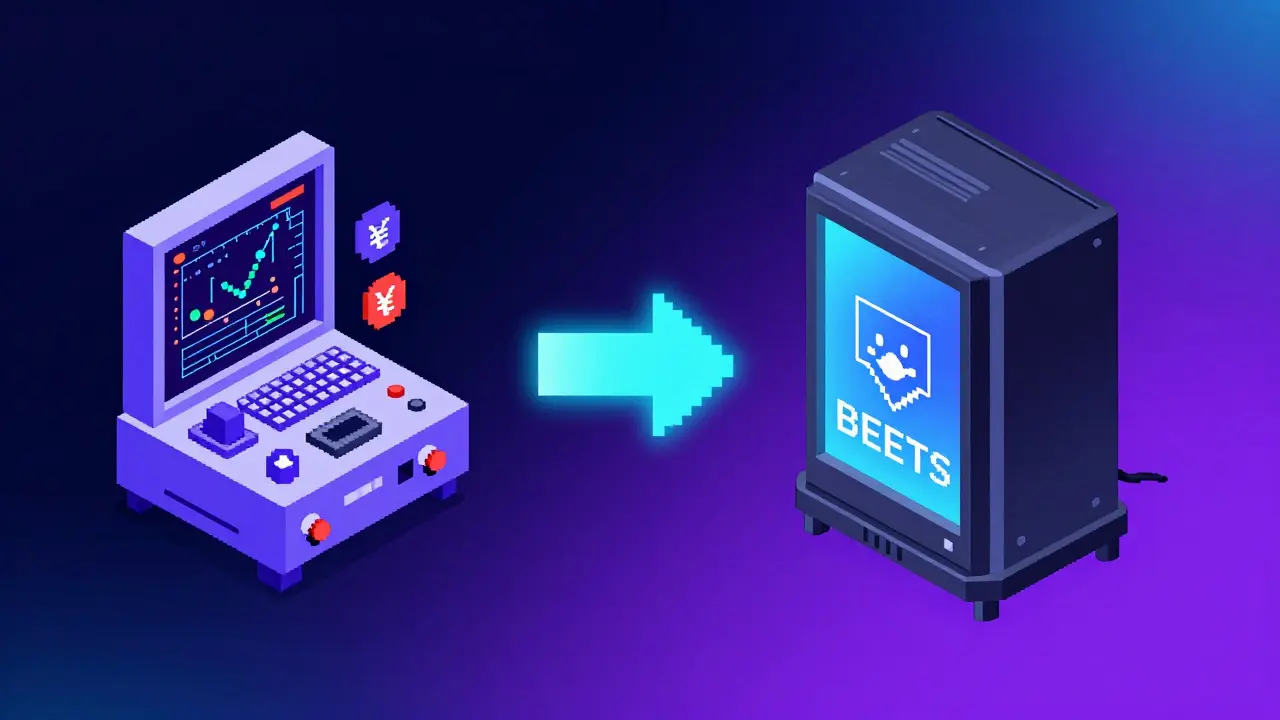
However, by late 2024, the landscape changed dramatically. The Fantom Foundation rebranded to Sonic, a high-performance blockchain layer. As part of this shift, Beethoven X migrated its infrastructure and rebranded to BEETS. It stopped being just another place to swap tokens and became the backbone for staking on Sonic.
Why does this matter to you? Because if you go to the site expecting a wide variety of trading pairs like you would find on Uniswap or PancakeSwap, you will be disappointed. Instead, you will find a streamlined interface focused on staking Sonic’s native token (S) to receive staked Sonic (stS). This shift addresses a common pain point in DeFi: idle assets. By turning your staked tokens into a liquid asset, you can earn rewards while still using those tokens in other applications.
How BEETS Works Today
The core functionality of the platform now revolves around liquid staking. Here is the simple process:
- Connect Your Wallet: You need a Web3-compatible wallet like MetaMask or WalletConnect. There are no special hardware requirements; any device with internet access works.
- Stake S Tokens: You deposit Sonic’s native currency into the BEETS protocol.
- Receive stS: In return, you get staked Sonic (stS). This is a liquid representation of your stake.
- Earn and Use: Your stS automatically earns rewards. As of recent data, the average annual percentage yield (APY) hovers around 8.7%. More importantly, you can use stS in other DeFi apps on the Sonic network without unstaking your original tokens.
This auto-compounding feature is a significant upgrade over standard staking. Users report effective yields that are 15-20% higher than basic staking because they can deploy their stS into yield farms simultaneously. It simplifies the strategy-you don’t need to manually claim rewards every week. The system handles it for you.
Pros and Cons of Using BEETS
No platform is perfect. While the pivot to liquid staking has created a strong niche, there are trade-offs compared to larger exchanges.
| Feature | BEETS (Formerly Beethoven X) | Uniswap / PancakeSwap |
|---|---|---|
| Primary Function | Liquid Staking & Yield | Token Swapping (DEX) |
| Token Selection | Limited (~29 coins) | Extensive (1,200+ coins) |
| Transaction Fees | Near zero ($0.01 avg) | Variable (often higher on Ethereum) |
| Liquidity Depth | Moderate ($28,500 avg depth) | High ($142,000+ avg depth) |
| Best For | Sonic ecosystem users seeking yield | Cross-chain trading and large swaps |
The biggest advantage of BEETS is its integration with the Sonic ecosystem. Thanks to Sonic’s architecture, which uses Lachesis consensus for asynchronous Byzantine Fault Tolerance (aBFT), transactions are incredibly fast-near one-second finality-and cheap. This means you can move funds and adjust your positions without worrying about draining your wallet on gas fees.
On the downside, the limited token selection is a hurdle. If you want to trade obscure altcoins, you won’t find them here. The lower liquidity depth also means that very large trades might experience slippage, although this is less of an issue for the average retail investor.
User Experience and Technical Performance
From a user experience standpoint, the platform has simplified significantly. During its DEX phase, some users reported confusion with complex pool settings. Now, the interface is straightforward. Most users can connect their wallet, stake their tokens, and deploy stS into a yield pool within 15 to 20 minutes.
Technical performance is generally solid, but there are occasional hiccups. During peak usage hours (typically 14:00-18:00 UTC), the Sonic network can experience congestion. If your transaction fails, try adjusting your gas fee slightly above the default level. Documentation is rated decently by users, though troubleshooting resources for advanced features could be better.
Community support is active. The official Discord server has thousands of members, and technical questions usually get answered within 45 minutes during business hours. This is a marked improvement from the days when customer support responses took over 72 hours.

Market Position and Future Outlook
Where does BEETS stand in the broader market? It is not trying to compete with Uniswap for market share. Instead, it occupies a specialized niche as a mid-tier player in the liquid staking derivatives market, holding approximately 4.7% market share within the Sonic ecosystem.
The success of BEETS is tightly coupled with the adoption of the Sonic blockchain. If Sonic reaches its target of 500,000 daily active users by late 2025, analysts project a potential 300-400% increase in staking volume for BEETS. However, risks remain. Competition from other Sonic-native staking solutions is growing, and regulatory scrutiny on liquid staking derivatives is increasing globally.
For investors, the BEETS token itself has seen modest growth. While the broader market surged in 2024, the BEETS token remained relatively flat, suggesting that value accrual is more tied to utility and staking rewards than speculative price action.
Who Should Use BEETS?
If you are already invested in the Sonic (formerly Fantom) ecosystem and want to maximize the yield on your S tokens, BEETS is currently the best option. It offers a seamless way to earn passive income while keeping your assets liquid for other DeFi opportunities.
However, if you are looking for a general-purpose exchange to buy and sell a wide range of cryptocurrencies, you should look elsewhere. Platforms like Uniswap, SushiSwap, or centralized exchanges offer far greater liquidity and variety. BEETS is a tool for a specific job: optimizing yield within the Sonic network.
Is Beethoven X the same as BEETS?
Yes. Beethoven X rebranded to BEETS in late 2024 following the transition of the Fantom network to Sonic. The underlying technology and team remain largely the same, but the focus shifted from a decentralized exchange to liquid staking infrastructure.
What is the minimum amount to stake on BEETS?
There is typically no strict minimum for staking S tokens to receive stS, allowing users to start with small amounts. However, for governance voting rights, you may need to hold a minimum of 10,000 BEETS tokens, as per the roadmap updates.
Are there fees for using BEETS?
Transaction fees on the Sonic network are extremely low, often costing less than $0.01. The protocol may charge a small performance fee on yields, but these are generally transparent and deducted from the rewards rather than your principal investment.
Can I use BEETS on mobile devices?
Yes. Since BEETS is a web-based application compatible with Web3 wallets like MetaMask and WalletConnect, it works seamlessly on mobile browsers. You do not need to download a separate app.
Is BEETS safe to use?
Like all DeFi platforms, BEETS carries smart contract risk. However, it builds on the secure Sonic blockchain and undergoes regular audits. Always ensure you are connecting to the official URL and verify contract addresses before interacting.