

If you're looking to set up a mining rig in Kazakhstan, you'll quickly find that the days of "plug and play" are long gone. The government has shifted from a loose notification system to a strict, centralized regime. Now, if you want to mine legally, you have to play by the rules of the Astana International Financial Center is a specialized financial hub in Kazakhstan that serves as the exclusive jurisdiction for granting cryptocurrency licenses. Also known as AIFC, it acts as the sole gateway for anyone wanting to operate a legal mining business in the country.
The core problem for most operators is that crypto mining licensing Kazakhstan isn't just a paperwork exercise-it's a full corporate setup. You can't just be a foreign entity with a few machines in a warehouse; you need a local footprint, specific staff, and a willingness to sell the bulk of your coins on local exchanges. Let's break down exactly what you need to do to get licensed and stay compliant.
Key Requirements for Legal Mining
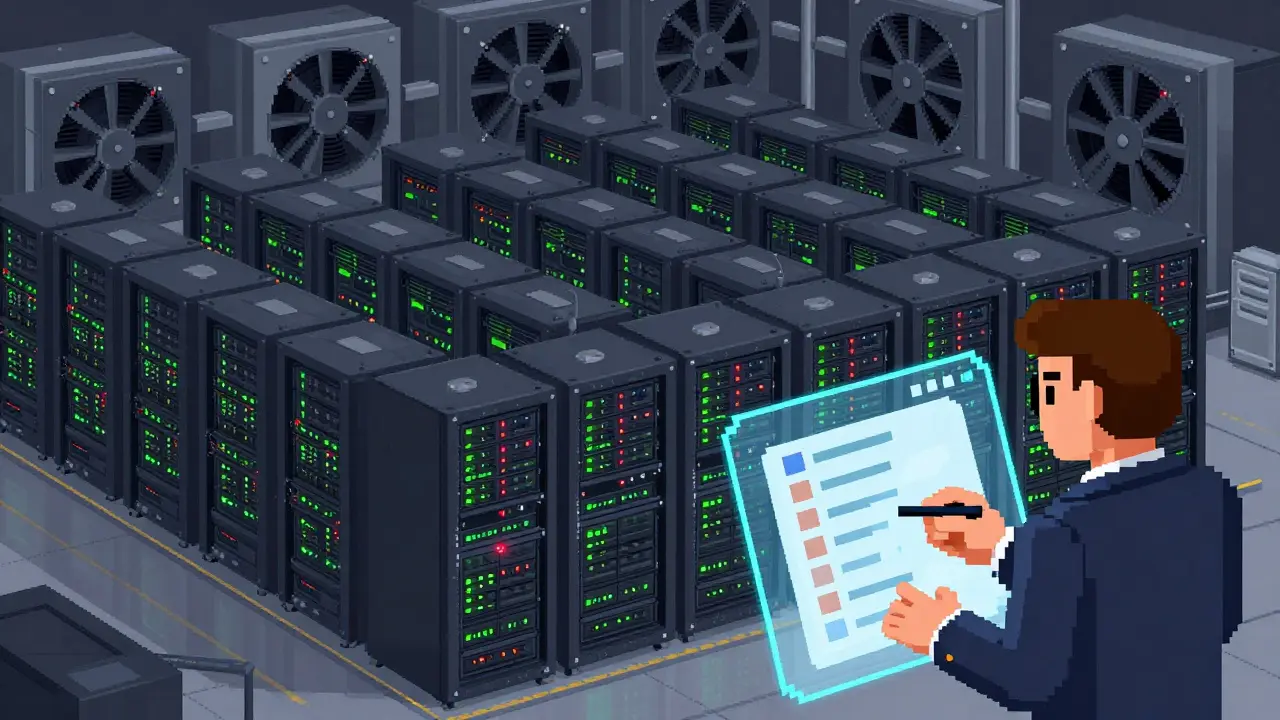
To even apply for a license, you need to meet a few non-negotiable criteria. First, you must be a Kazakhstan legal entity or a registered individual entrepreneur. You can't operate as a remote foreign company. Second, you have to prove you actually have a place to put your gear. This means you either own a Digital Mining Data Processing Center is a specialized facility designed to house high-density computing hardware for cryptocurrency mining with required power and cooling infrastructure or have a legal lease agreement to place your hardware within an authorized center.
One of the weirdest rules in Kazakhstan is the "exclusive business" clause. The law prohibits licensed miners from engaging in any other business activities. Your company exists to mine crypto and nothing else. Additionally, you cannot mine independently. You are required to operate through Digital Mining Pools is regulated entities that aggregate the computational power of multiple miners to increase the probability of finding blocks (DMPs). If you aren't connected to an accredited pool, you're operating illegally.
The Three-Phase Licensing Process
Getting your license isn't a quick win. Expect a timeline of 6 to 9 months. It's a rigorous process designed to weed out fly-by-night operators and ensure everything is AML-compliant.
- The Preparation Phase: This is where you build your foundation. You'll need a detailed business plan and financial projections. You also have to develop comprehensive AML-CFT is Anti-Money Laundering and Countering the Financing of Terrorism policies used to prevent illegal financial flows policies. You can't just write these in a Word doc; you need actual KYC software and a clear plan for how you'll onboard clients and assess risk.
- The Incorporation Phase: Now you go physical. You must incorporate your company within the AIFC jurisdiction and rent actual office space there. You also need to hire at least two local experts: an AML officer and a compliance officer. You'll need to deposit your share capital into a local corporate account and appoint a management board with at least four members.
- The Application Phase: This is the "proof of concept" stage. The AIFC will want to see your AML-CFT systems actually working. You'll need to demonstrate your client onboarding flow and prove that your management board actually knows what they're doing. If you have a platform or a prototype of your operational flow, this is when you show it.
Financial Obligations and the "75% Rule"
The biggest shock for most miners is the asset sale requirement. In 2024, miners had to sell 50% of their mined assets on AIFC platforms. As of 2025, that number has jumped to 75%. This means the government is effectively forcing you to liquidate most of your rewards through their regulated exchanges to keep a tight grip on foreign currency flows.
On the bright side, the tax environment is relatively stable. The tax rate for mining operations is 15%. While not "tax-free," it's competitive compared to the high corporate taxes in Europe or the US. However, remember that this tax is on your operations, and you still have to deal with the costs of local staffing and AIFC office rentals.
| Feature | Kazakhstan (AIFC) | Typical Global Standard |
|---|---|---|
| Licensing Authority | Exclusive (AIFC) | Various (State/Regional) |
| Pool Requirement | Mandatory (Accredited DMPs) | Optional/Voluntary |
| Asset Liquidation | 75% on local exchanges | No restriction |
| Local Presence | Required (Office + Staff) | Often not required |
| Tax Rate | 15% | Varies (0% to 35%) |
Infrastructure and Energy Strategies
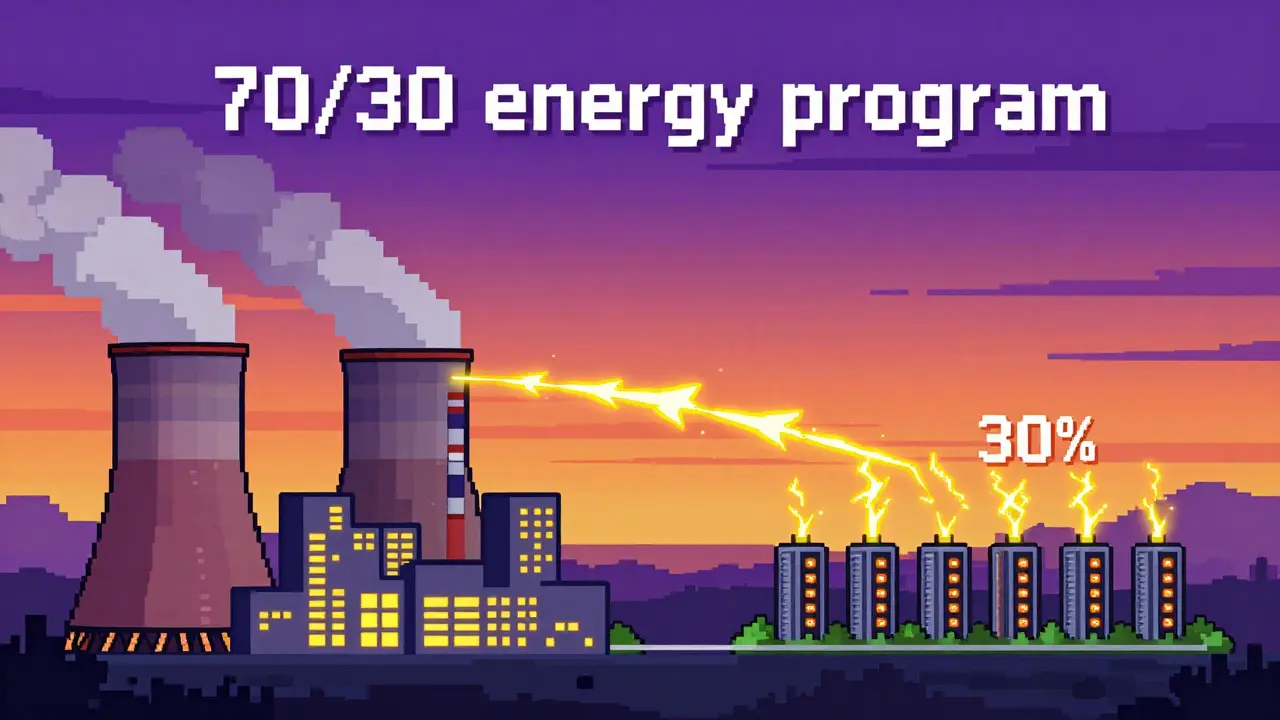
Kazakhstan isn't just letting you plug into the wall. The state is using mining to balance its power grid. There is a strategic move toward a "70/30 energy program." In this setup, foreign investors fund upgrades to thermal power plants. In return, 70% of the power goes to the national grid, and 30% is reserved for the miners. It's a trade-off: you get stable, legal power, and the state gets upgraded infrastructure.
You'll also need to stay on the good side of the ICRIAP is the Information Committee for the Regulation and Improvement of Activities in the Sphere of Preventing Money Laundering in Kazakhstan . Even though mining is a notification-based activity for commencement, the reporting requirements to ICRIAP are intense. If your reporting lags, your license is at risk.
Common Pitfalls for International Operators
Most foreigners fail during the incorporation phase. They underestimate the difficulty of finding qualified local AML and compliance officers who meet the AIFC's standards. You can't just hire a general accountant; you need people who understand the specific regulatory nuances of the AIFC.
Another trap is the management board requirement. For a small-scale operation, finding four distinct roles for a management board can feel like overkill, but the AIFC doesn't budge on this. If you try to consolidate roles or use "placeholder" directors, your application will likely be rejected during the final phase.
How long does it actually take to get a mining license?
Expect a window of 6 to 9 months. This includes the time needed to draft your business plan, incorporate within the AIFC, rent office space, and hire local compliance staff before the final application is even reviewed.
Can I mine independently without a pool?
No. Under current Kazakhstan law, mining is only permitted through licensed digital mining pools (DMPs). Operating outside of an accredited pool is considered an illegal activity.
What happens if I don't sell 75% of my assets on AIFC platforms?
Failure to meet the 75% sale requirement is a breach of your licensing terms. This can lead to heavy fines or the total revocation of your license to operate within the country.
Is the 15% tax rate the only cost?
No. While 15% is the mining tax, you must also account for AIFC office rent, the salaries of at least two mandatory local officers (AML and Compliance), and the cost of required KYC software.
Do I need a physical office in Astana?
Yes. A physical presence within the AIFC premises is a mandatory requirement for the incorporation phase of the licensing process.
Next Steps for Operators
If you're just starting, don't buy hardware yet. Your first step should be engaging a legal consultant specializing in AIFC law to draft your business plan. If you already have a company, audit your current sales flow-if you're selling more than 25% of your coins on external exchanges, you need to migrate those flows to an AIFC-licensed platform immediately to avoid sanctions. For those struggling with power stability, look into the 70/30 energy upgrade programs to secure a legal, long-term power allocation.



Prachi Bhadarge
April 14, 2026 AT 22:26Sure, just "hire two local experts" and a board of four. Totally easy and not at all a way to bleed your startup dry before you even hash a single block. 🙄
Shannon Kelly Smith
April 16, 2026 AT 03:31This is a huge wake-up call for anyone trying to scale! 🚀 You gotta be proactive about these legal hurdles or you'll just lose your shirt. Let's get those compliance systems locked down! 💪✨
Kevin Lư
April 16, 2026 AT 16:29Seems like a lot of work for some internet coins. I mean, who actually wants to spend 9 months filling out forms? Just sounds like a headache, honestly.
Shantal Sanjur
April 18, 2026 AT 13:27Typical government power grab. They don't care about "compliance," they just want to track every single satoshi you move. The 75% rule is basically a digital leash so they can manipulate the currency exchange. Wake up people, this is how the surveillance state starts. First it's a mining license, then it's a social credit score for your wallet. It's all designed to centralize what was supposed to be decentralized. Hilarious that some people actually think this is "stable" tax environment. It's a trap!
Vicky Duffala
April 20, 2026 AT 11:52It's interesting how different countries approach this. Kazakhstan is basically trying to treat crypto like a heavy industrial utility. 🌍 It's a wild shift from the wild west days of mining!
Ian Chait
April 20, 2026 AT 21:30AIFC is just another layer of bureaucracy to keep the real money moving in circles. These "regulated pools" are probably just fronts for the local elite to skim off the top. Total shambles. Totaly rigged system if you ask me.
Chintu Parikh
April 22, 2026 AT 11:24I find the 70/30 energy program to be an exceptionally commendable initiative! It demonstrates a harmonious balance between industrial growth and national infrastructure development. We should all strive for such synergistic partnerships! 🌟
Andrew Southgate
April 22, 2026 AT 14:06For those of you wondering about the actual overhead, don't forget to calculate the cost of the AIFC office rent specifically. It's not just a mailing address; they actually check if you're physically there. I've seen a few guys try to cheat this with virtual offices and they got their applications tossed immediately. It's better to just budget for a real space and treat it as a cost of doing business in a high-barrier market. If you're serious about the long-term play, the 15% tax is actually a steal compared to what you'd pay in the States or EU, but only if you can survive the first year of operational burn.
Trudy Morse
April 23, 2026 AT 08:26The 75% liquidation rule is just a basic liquidity play by the state. Simple economics.
Alex Long
April 25, 2026 AT 07:28Too many rules. Waste of time.
Gaurav Undirwade
April 26, 2026 AT 07:12It is profoundly disappointing to see operators attempting to bypass these essential AML protocols. One must adhere to the moral imperative of legal transparency if one wishes to be a respected member of the global financial community.
Sean Douglas
April 28, 2026 AT 00:11The sheer audacity of requiring a four-person management board for a mining operation is absolutely theatrical! It's a bureaucratic masquerade designed to make a warehouse full of loud fans look like a Fortune 500 company! Truly a masterpiece of red tape!
Gillian Kent
April 28, 2026 AT 16:35i think its brave of them to try and setup there even with all the rules. its laike a new adventure in bizness!
Karen Mogollon Gutierrez
April 29, 2026 AT 11:58The level of corporate formality required by the AIFC is simply staggering. One does not merely "start" a business; one orchestrates a full-scale institutional arrival.
Tracy Sperandio
April 30, 2026 AT 00:08Stop complaining about the rules and just execute! The ones who can actually navigate this red tape are the ones who will dominate the market while the lazy ones just whine on the internet! Get it done! 🔥
Adam Mann
April 30, 2026 AT 23:42I really think we should look at this as a great way to learn about global regulations. It's like a classroom for international law, and while it seems hard, it's actually a very rewarding process if you take your time and really help the local staff grow into their roles. Just imagine the bridge we can build between our tech and their infrastructure if we just approach this with a bit of patience and a lot of kindness toward the local officials who are just doing their jobs.
Robert Preston
May 1, 2026 AT 06:46If you're struggling with the AML software part, look for providers that already have AIFC-approved templates. It saves a ton of time during the Application Phase.
Evan Iacoboni
May 1, 2026 AT 08:41The 70/30 rule is the only part that actually makes sense here. It's a classic quid pro quo.
Nishant Goyal
May 2, 2026 AT 21:43Stay patient, everyone. The long game is what matters. 🌿
Jeff Barlett
May 3, 2026 AT 13:59Actually, I think the 75% rule is a great way to flush out the weak hands. If you can't handle a bit of forced liquidation, you shouldn't be in crypto anyway.
Yuhan Mo
May 4, 2026 AT 17:58The latency on these local exchanges can be a bit problematic for high-frequency movements, but the regulatory clarity is a fair trade-off for institutional capital.
Michelle Stanish
May 5, 2026 AT 03:38Who cares about the licenses. Just find a guy with a plug.
Ankit Sindhu
May 6, 2026 AT 07:07I'd suggest focusing on the human element first. Building a relationship with your local compliance officer is more valuable than any software.
Mike Kempenich
May 6, 2026 AT 20:10It's a tough climb, but the stability it offers is a huge win for long-term scaling. Just keep pushing forward!
Prachi Bhadarge
May 7, 2026 AT 22:55Exactly, and good luck finding someone who actually knows what they're doing in a market where everyone is just guessing. Pure comedy. 🤡