
Sweden used to be the last safe haven for crypto miners in Europe
Just a few years ago, if you wanted to mine Bitcoin in Europe, you moved to Sweden. Not because it was the biggest market, but because it was the only one that made sense. The country offered cheap, renewable hydroelectric power, freezing winters that naturally cooled servers, and a tax break so generous it cut energy costs by 98%. For miners, it was the perfect storm: clean energy, low taxes, and a climate that didn’t need air conditioning. By 2022, Sweden hosted around 150 megawatts of mining capacity - more than any other EU country. Then, in July 2023, everything changed.
The 6,000% tax hike that crushed the industry
The Swedish government didn’t just tweak the rules. It blew them up. The energy tax for data centers jumped from SEK 0.006 per kilowatt-hour to SEK 0.36. That’s not an increase. That’s a 6,000% spike. For context: if a miner was paying $100 a month for electricity before, they suddenly owed $6,100. No grace period. No transition. Just a hard cutoff on July 1, 2023. The tax break that had been in place since 2017? Gone. Overnight, Sweden went from the most attractive mining location in Europe to the most expensive.
Why? The government claimed mining didn’t create jobs, didn’t build infrastructure, and didn’t contribute meaningfully to the economy. Meanwhile, Microsoft and Amazon were still getting tax breaks for their cloud data centers. But crypto miners? They were singled out. Critics say the real reason was political. After the 2018 crypto crash, some mining firms vanished without paying their energy bills, leaving local grids scrambling. Rather than fix the system, Sweden chose to punish the entire industry.
Miners didn’t just leave - they fled
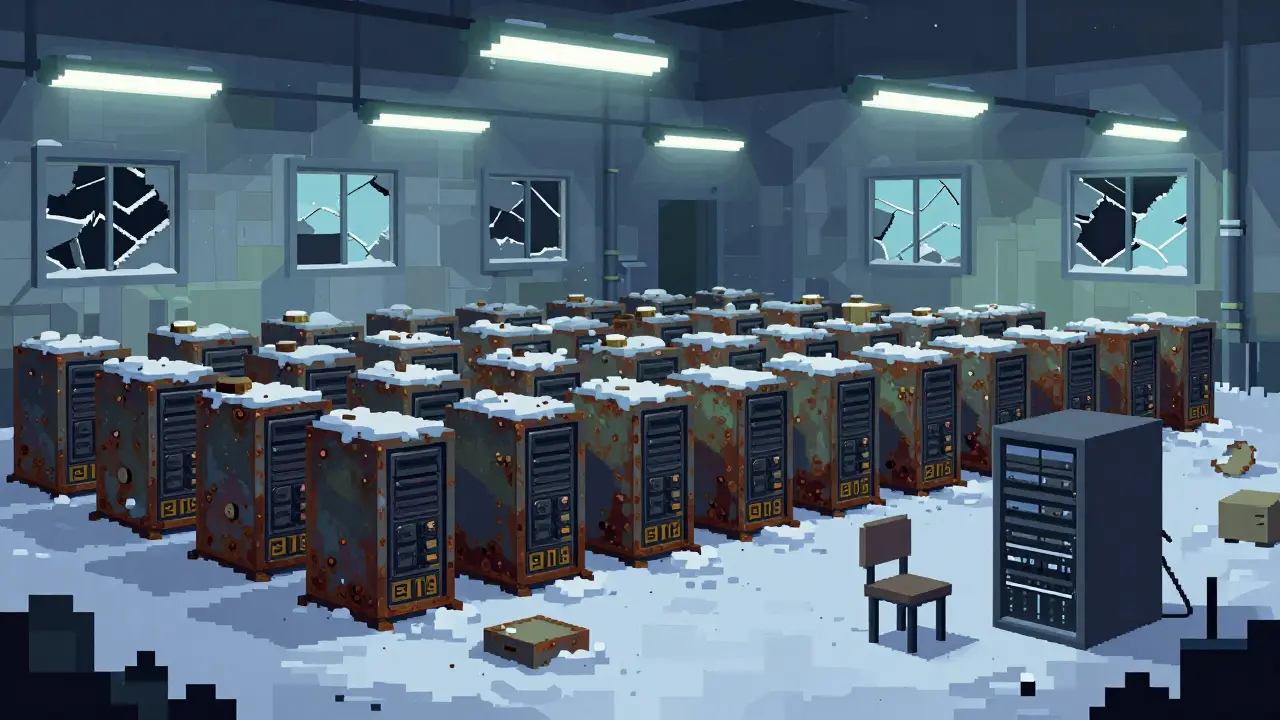
There was no slow exit. No gradual relocation. Operators packed up ASIC rigs, dismantled cooling systems, and shipped hardware out of the country in weeks. Some sold equipment at fire-sale prices. Others just abandoned it. One mining operator in northern Sweden told an industry reporter: "We had $2 million in gear. We couldn’t move it. We had to leave it behind. It’s just sitting there, rusting."
By the end of 2023, nearly all commercial mining had vanished. The few operations that tried to hang on - using the latest, most efficient mining rigs - quickly realized it was mathematically impossible to profit. Even with Bitcoin at $70,000, the energy tax alone ate up 120% of potential earnings. No miner, no matter how advanced, could break even. The industry didn’t shrink. It collapsed.

Why Sweden’s move was extreme - even by European standards
Other countries have cracked down on crypto mining. Belgium banned it. China outlawed it. But Sweden’s approach was unique. It didn’t ban mining. It made it financially lethal. Compare that to Norway, which has similar renewable energy and cooler temps - but no punitive taxes. Or Kazakhstan, which offers low electricity rates and even tax holidays for mining firms. Or Texas, where miners are actively courted with grid incentives.
Sweden didn’t just raise taxes. It created a policy that only one thing: force miners out. And it worked. No other EU country has matched its severity. The European Commission has studied Sweden’s move as a case study in how tax policy can be weaponized against an industry. But here’s the catch: Sweden didn’t just hurt miners. It hurt its own energy grid. Suddenly, a major power consumer vanished. Local utilities had to restructure pricing models. Some towns lost 15% of their industrial electricity demand overnight.
What happened to the infrastructure?
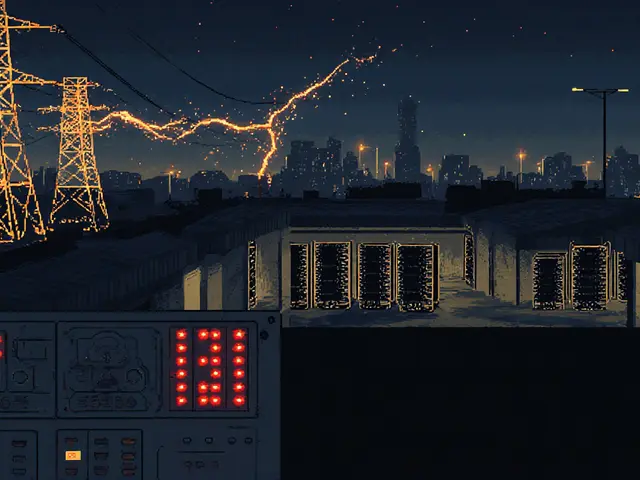
Swedish mining centers weren’t just server farms. They were custom-built facilities with high-capacity transformers, liquid-cooling systems, and direct hydroelectric connections. These weren’t plug-and-play setups. They were engineered for one thing: mining. Now, they’re empty. Some are being repurposed - one facility in Luleå became a data archive for a university. Another is being converted into a small-scale cloud server hub. But the vast majority? Just sitting idle. The equipment is too specialized to sell. The buildings are too energy-intensive for most businesses to use. They’re ghost factories.
What does this mean for the future of crypto regulation?
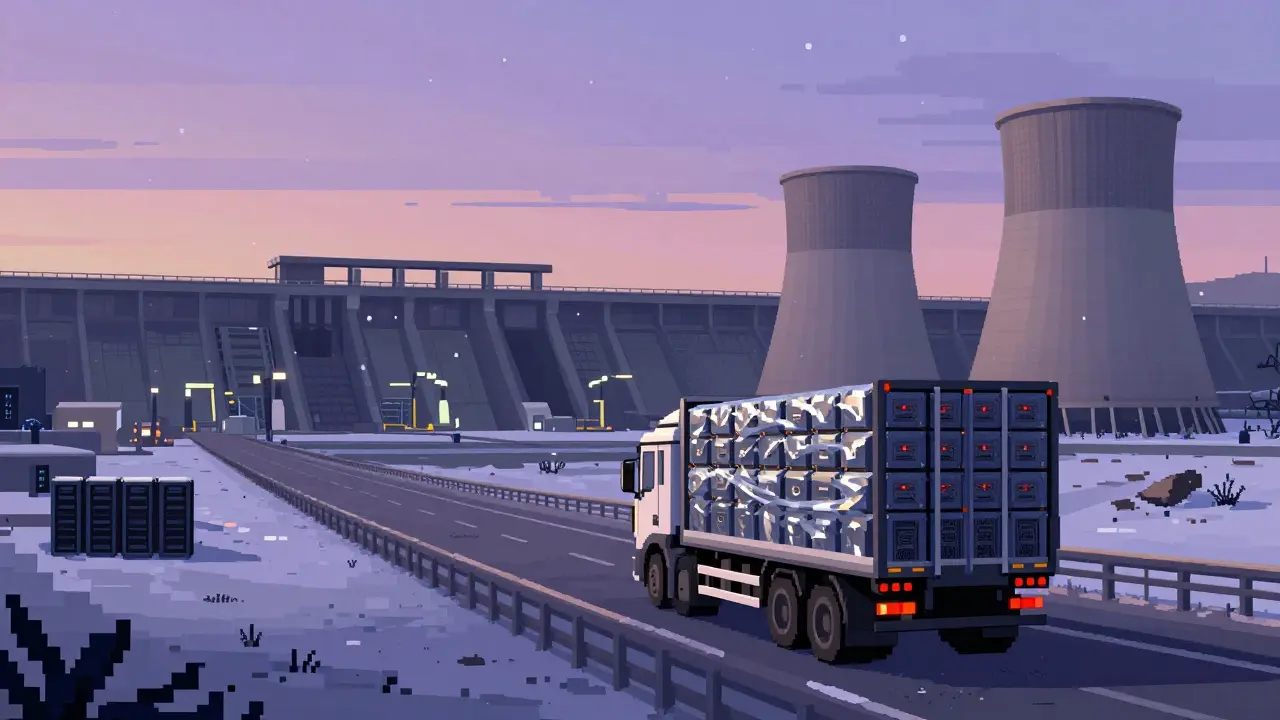
Sweden’s move sent shockwaves through global crypto policy circles. It proved that a government doesn’t need to ban crypto to kill mining. It just needs to make energy too expensive. That’s a dangerous precedent. Other countries - especially those with high energy costs and strong environmental lobbies - are watching closely. France, Germany, and the Netherlands are all considering similar tax structures. The EU is debating a unified approach to crypto energy use. Sweden didn’t just change its own rules. It gave others a blueprint.
But here’s the irony: Sweden’s policy didn’t reduce carbon emissions. It just moved them. The miners didn’t stop mining. They just moved to Kazakhstan, Texas, or Canada - places with their own environmental issues. So the global carbon footprint didn’t drop. It just got harder to track.
Is there any upside to Sweden’s decision?
Politically? Yes. The government got to say it "protected the grid" and "prioritized jobs." But economically? Not so much. Sweden lost a high-tech industry that employed hundreds of engineers, technicians, and logistics workers. It lost tax revenue from equipment imports and service contracts. It lost its reputation as a tech-forward nation. And it lost a chance to lead in clean energy innovation - because crypto miners were using renewable power that would’ve otherwise gone unused.
Now, Sweden’s northern regions are quieter. The servers are off. The fans are silent. The energy that once powered millions of Bitcoin hashes now flows to empty rooms. The policy worked - but at what cost?
Why did Sweden target crypto miners specifically?
Sweden didn’t target all data centers - just crypto mining. Companies like Microsoft and Amazon still benefit from the same tax breaks they’ve had since 2017. The government claimed crypto mining created few jobs and contributed little to the economy, unlike cloud infrastructure. But critics argue this was a political move: after some miners defaulted on energy bills in 2018, the government chose to punish the entire sector rather than improve oversight.
How much did the energy tax increase?
The tax jumped from SEK 0.006 per kilowatt-hour to SEK 0.36 - a 6,000% increase. For a typical mining operation using 1 megawatt continuously, that meant an extra $2.5 million in annual energy costs. Even the most efficient ASIC miners couldn’t cover that at current Bitcoin prices.
Did any miners stay in Sweden?
Virtually none. By late 2023, every major commercial mining operation had shut down or relocated. A few small hobbyist setups may still exist, but they’re not profitable and don’t use grid-scale power. The industry as a whole is gone.
Where did the miners go?
Most went to Kazakhstan, Texas, and parts of Canada - places with cheap electricity and no punitive taxes. Some moved to Georgia and Paraguay. A few tried to relocate to Norway, but even there, energy prices have risen since 2023. The global mining map has shifted away from Europe entirely.
Is Sweden’s policy a model for other countries?
Yes. Several EU countries are studying Sweden’s approach as a way to eliminate crypto mining without outright bans. France and Germany have held internal briefings on it. The EU’s MiCA regulation doesn’t ban mining, but Sweden showed how tax policy can achieve the same result - and more permanently.

George Hutchings
March 22, 2026 AT 04:00Henrique Lyma
March 22, 2026 AT 04:12Grace van Gent-Korver
March 23, 2026 AT 17:36shreya gupta
March 25, 2026 AT 04:00Shreya Baid
March 26, 2026 AT 04:23Christopher Hoar
March 27, 2026 AT 06:45Robert Kunze
March 28, 2026 AT 10:52Heather James
March 29, 2026 AT 18:50Jesse Pals
March 30, 2026 AT 04:25Diane Overwise
March 31, 2026 AT 20:06Ann Liu
April 2, 2026 AT 01:35Dionne van Diepenbeek
April 3, 2026 AT 17:15Jerry Panson
April 3, 2026 AT 23:22Katrina Smith
April 4, 2026 AT 07:19Anastasia Danavath
April 5, 2026 AT 03:07anshika garg
April 6, 2026 AT 11:09Ross McLeod
April 7, 2026 AT 20:22Billy Karna
April 8, 2026 AT 09:08Lucy de Gruchy
April 10, 2026 AT 02:45S F
April 10, 2026 AT 16:47Angelica Stovall
April 12, 2026 AT 13:08