Ever heard of WeFi? It’s not another meme coin. It’s trying to be something bigger - a full financial system built on blockchain, where you can spend crypto like cash, get a debit card, and still keep control of your money. But here’s the problem: no one agrees on what the token is actually called, how much it’s worth, or even if it’s real. If you’re looking at WeFi (WEFI) and wondering if it’s worth your time, you’re not alone. The confusion starts with the name.
Is it WFI or WEFI? The Token Name Mess
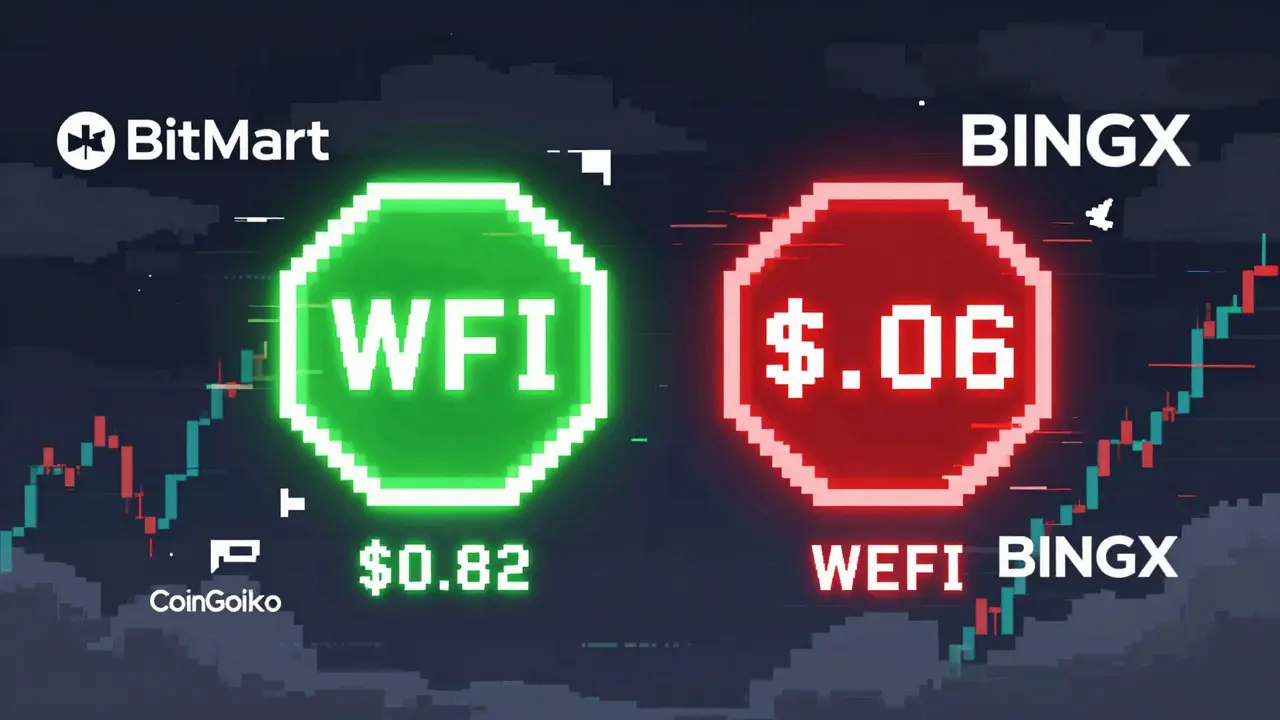
The first thing you’ll notice when you search for WeFi is that there are two tokens: WFI and WEFI. They’re listed on different exchanges, with wildly different prices. On BitMart and BingX, you’ll find WFI trading around $0.81 to $0.82. On CoinGecko, you’ll see WEFI at just $0.06. That’s more than a 10x difference. Which one is real? Neither, really - or maybe both.There’s no official statement from the WeFi team explaining this split. It’s possible they launched two tokens by accident. Or maybe one is a scam copycat. Or perhaps they’re two versions of the same project, with one being the original and the other a rebrand. Without clear documentation, you’re left guessing. If you’re thinking of buying, this alone should raise red flags. You don’t invest in something where the name and price change depending on which website you check.
What is WeFi Actually Trying to Build?
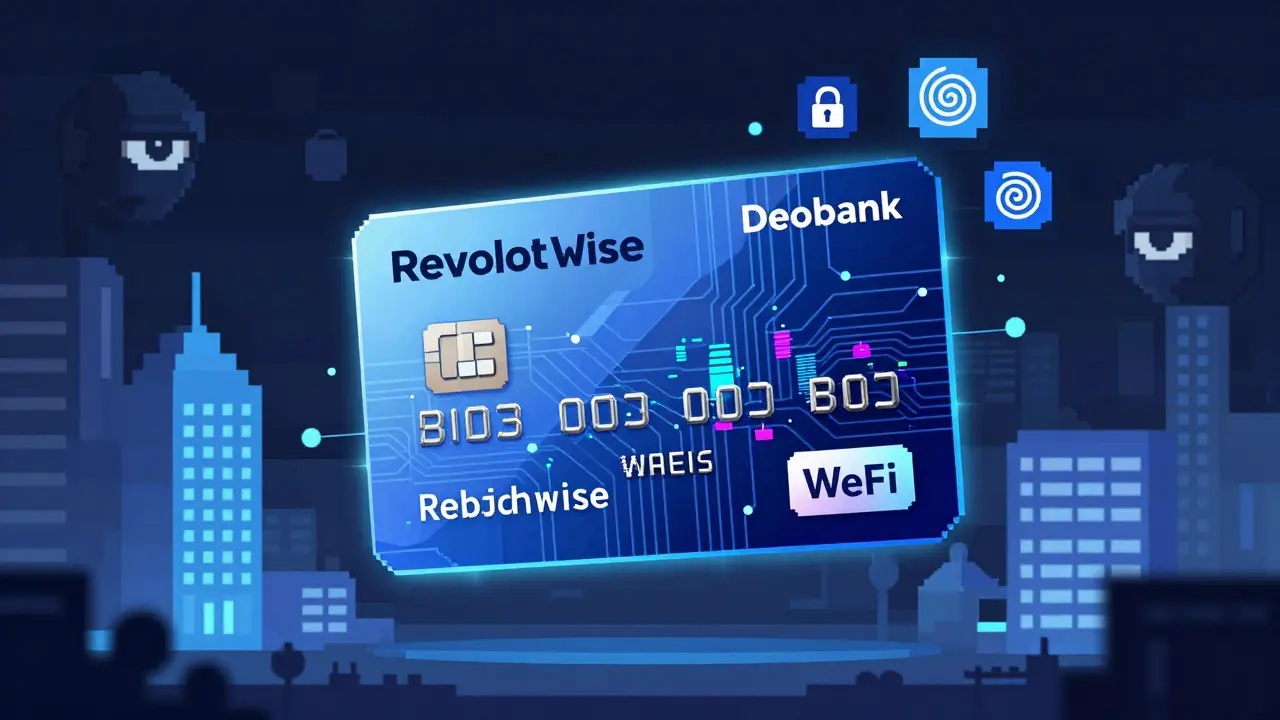
Despite the confusion, the project’s goals are bold. WeFi calls itself a "Deobank" - a blend of decentralized finance and traditional banking. The idea? To give you the freedom of crypto with the convenience of Revolut or Wise. You can hold crypto in a wallet, spend it with a physical card, withdraw cash from ATMs, send money overseas, and even earn rewards just for holding - all without needing a bank account.The tech behind it sounds advanced. They use AI to monitor transactions for fraud and compliance, and they claim to use Zero-Knowledge Proofs (ZKPs) to verify your identity without revealing your personal data. That’s the same tech used by privacy-focused blockchains like Zcash. It’s rare to see this level of compliance engineering in a crypto project, especially one that’s not backed by a major exchange or venture fund.
They also talk about "energy farming" - a way to earn more tokens by keeping your crypto locked up. It’s not staking, not mining, but something in between. Think of it like a loyalty program where the more you use the platform, the more you get rewarded. But again, no one has published clear rules on how it works, how much you can earn, or what the risks are.
Who’s Behind WeFi? The Ghost Team
The WeFi website says the team includes ex-employees from Tether, Binance, Wise, and Bitpanda. That sounds impressive - until you realize no names are listed. No LinkedIn profiles. No past projects. No press releases from those companies confirming anyone joined WeFi. It’s like saying "our team includes Apple engineers" without naming one person.In crypto, anonymity isn’t always bad. But when you’re asking people to trust you with their money and build a full financial system around it, you need transparency. A team with real names and track records builds credibility. A list of company names with no people? That’s a warning sign.
How Does WeFi Compare to Other Crypto Banks?
Let’s put this in context. You’ve got Revolut and Wise - traditional fintech apps that let you hold and spend multiple currencies. Then you’ve got DeFi platforms like Aave and Compound - where you lend and earn crypto, but you can’t pay for coffee with them. WeFi claims to be the bridge between them.Here’s how it stacks up:
| Feature | WeFi | Revolut/Wise | Aave/Compound |
|---|---|---|---|
| Physical debit card | Yes | Yes | No |
| ATM withdrawals | Yes | Yes | No |
| Crypto spending | Yes | Yes (limited) | No |
| Decentralized control | Claimed | No | Yes |
| AI compliance | Yes | Yes | No |
| Zero-Knowledge identity | Claimed | No | No |
| Token rewards | Yes (WEFI/WFI) | No | Yes (AAVE, COMP) |
So WeFi isn’t just copying someone else. It’s trying to do something no one else has pulled off: a regulated, user-friendly, crypto-native bank that still feels like you’re in control. But that’s also why it’s so risky. If they succeed, they could be huge. If they fail, the token could drop to zero - and you’ll have no recourse.
Price Predictions? Don’t Believe the Hype
You’ll find articles claiming WeFi will hit $0.04 by 2026 or $0.0286 by 2030. But those numbers are based on the CoinGecko WEFI price of $0.06 - which might not even be the real token. SwapSpace and TradingBeast are using outdated or incorrect data. One site says WEFI is worth $0.02, another says $0.82. There’s no consensus.And here’s the kicker: no major analyst firm - CoinDesk, Messari, or even Bloomberg - has covered WeFi. No institutional investor has disclosed holding it. No audit reports from CertiK or Hacken are public. That’s not normal for a project with these ambitions.
What About the Users? No Reviews, No Data
WeFi says "thousands already redefining how money moves." But where are they? No Reddit threads. No Twitter testimonials. No YouTube reviews showing people using the card or earning rewards. The official Twitter account has a few hundred followers. No engagement. No real stories.Compare that to something like Coinbase or Kraken. You can find hundreds of user reviews, complaints, success stories - all public. WeFi? Silence. That’s not a sign of a quiet revolution. It’s a sign that either no one’s using it, or people are too scared to talk about it.
Should You Buy WeFi (WEFI)?
If you’re looking for a safe investment - don’t. This isn’t Bitcoin or Ethereum. This isn’t even a well-known altcoin like Solana or Chainlink. WeFi is a high-risk experiment with unclear fundamentals, conflicting data, and zero transparency.But if you’re a crypto explorer who likes taking risks on early-stage projects? Maybe. Buy only what you can afford to lose. And never assume the token you’re buying is the "real" one. Check the contract address on BscScan or Etherscan. Don’t trust the name on the exchange. Look at the smart contract code. If it’s not open source, walk away.
The idea behind WeFi - a real crypto bank - is good. The execution? Too messy to trust right now. Keep watching. Don’t invest yet.
What’s Next for WeFi?
Without a public roadmap, no one knows. Will they launch the card? Will they fix the token confusion? Will they release an audit? Will they name their team? Until then, WeFi remains a mystery wrapped in a marketing pitch.One thing’s clear: if they ever make this work, it could change how people use crypto. But right now, it’s more of a question mark than a coin.
Is WeFi (WEFI) a scam?
There’s no proof WeFi is a scam - but there’s plenty of reason to be suspicious. The lack of team names, conflicting token symbols, no audits, and zero user reviews make it high-risk. It could be an ambitious project with poor communication, or it could be a pump-and-dump scheme. Until transparency improves, treat it like a gamble.
What’s the real price of WeFi?
There isn’t one. WFI trades around $0.82 on BitMart and BingX. WEFI trades at $0.06 on CoinGecko. They may be two different tokens, or one could be a copycat. Always check the contract address before buying. Never trust the token symbol alone.
Can I use WeFi to pay for things?
WeFi claims to offer a crypto-backed debit card that works at ATMs and stores, but there’s no evidence users are actually using it. No photos, no videos, no testimonials. Until you see real-world proof, assume it’s not available yet.
Is WeFi built on Ethereum or BSC?
Most trading activity for WFI happens on Binance Smart Chain (BSC), based on PancakeSwap data. The WEFI token on CoinGecko doesn’t specify a chain. Always verify the blockchain before interacting with any token - sending funds to the wrong network can mean permanent loss.
How do I buy WeFi (WEFI)?
You can buy WFI on BitMart, BingX, and PancakeSwap V3 using USDT or BNB. WEFI is listed on CoinGecko but not clearly available on major exchanges. Use a trusted wallet like MetaMask, and only trade on platforms you know are legitimate. Never send funds to a wallet address you found in a random tweet.
Will WeFi’s price go up?
No one knows. Price predictions are based on incorrect data or pure speculation. If the project delivers on its promises - a working card, real users, audits, team transparency - the price could rise. But if nothing changes, it could vanish. Don’t invest based on charts or hype.