Have you stumbled upon an ad for Bitzon is a purported cryptocurrency trading platform that lacks verifiable historical data, regulatory licenses, or presence on major financial aggregators as of late 2024 and early 2026. The absence of this critical information raises significant red flags regarding its legitimacy and safety for retail investors.? You are not alone. In the fast-moving world of digital assets, new platforms pop up daily, promising high returns and seamless trading. But when a name like Bitzon appears with zero footprint on trusted industry trackers, it triggers immediate alarm bells. This isn't just about missing reviews; it's about a total lack of evidence that the company exists as a legitimate business entity.
As we navigate through May 2026, the landscape of crypto exchanges has become stricter. Following the massive collapses of previous years, regulators and users alike demand transparency. If you are considering depositing money into Bitzon, you need to understand why the silence from the broader market is louder than any marketing claim they might make. This review digs into what we know-or rather, what we don’t know-and gives you a concrete checklist to protect your capital.
The Missing Footprint: Why Data Absence Matters
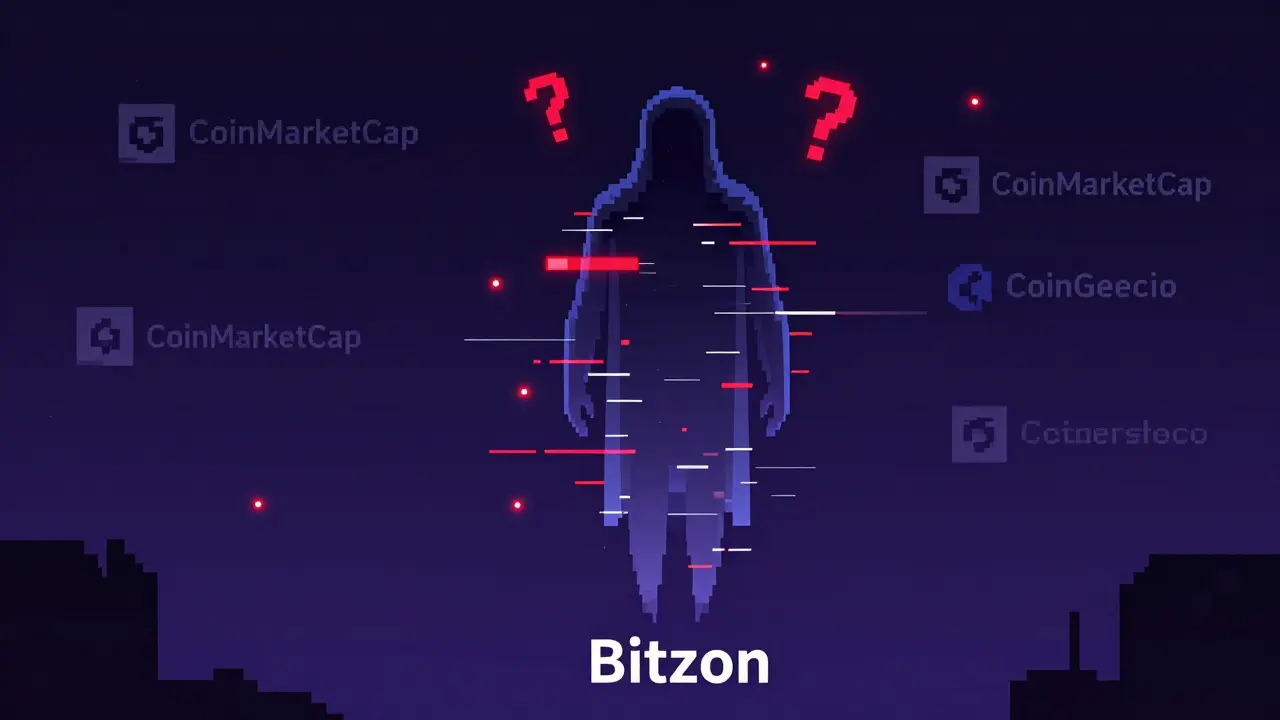
In the crypto industry, visibility is usually a sign of health. Major platforms like Binance, the largest centralized cryptocurrency exchange by trading volume, founded in 2017 or Coinbase, a publicly traded US-based cryptocurrency exchange platform founded in 2012 have millions of data points associated with them. They appear on CoinMarketCap, a leading aggregator of cryptocurrency market data launched in 2013, CoinGecko, an independent cryptocurrency search engine and data aggregator founded in 2014, and countless news outlets. These sites track volume, liquidity, and user sentiment.
Bitzon does not exist in these databases. As of late 2024, there was no entry for Bitzon among the hundreds of tracked centralized exchanges. By 2026, if it still hasn't appeared, it suggests one of three things:
- It is brand new: Launched very recently with no track record.
- It is extremely small: Operating with negligible volume, which often means low liquidity and high risk.
- It is fraudulent: A "hit-and-run" scheme designed to collect deposits before disappearing.
Legitimate businesses want to be found. They pay for listings, engage with the community, and publish whitepapers. An exchange that hides from data aggregators is hiding something.
Regulatory Black Hole: No Licenses Found
Crypto trading is heavily regulated in most developed nations. To operate legally, an exchange must register as a Virtual Asset Service Provider (VASP) or hold specific money transmission licenses. For example, Coinbase holds a BitLicense from New York, and Kraken is registered with the U.S. FinCEN.
There is no public record of Bitzon holding any such licenses. We cannot find:
- A registration with the UK Financial Conduct Authority (FCA).
- Licensing from the Monetary Authority of Singapore (MAS).
- Registration with the U.S. Commodity Futures Trading Commission (CFTC).
This lack of regulatory oversight means you have zero legal recourse if they freeze your account or vanish with your funds. When you trade on unregulated platforms, you are trusting them completely with your life savings. There is no insurance fund, no government body to call, and no audit trail. In the wake of the FTX collapse in 2022, where billions were lost due to mismanagement, relying on an unlicensed entity is akin to playing Russian roulette.
Red Flags: How to Spot a Fake Exchange
If you are looking at Bitzon’s website right now, compare it against these common traits of scam platforms. Most fake exchanges share identical templates and deceptive practices.
| Feature | Legitimate Exchange (e.g., Binance, Kraken) | Suspicious Platform (e.g., Bitzon) |
|---|---|---|
| Domain Age | Often 5+ years old | Recently registered (less than 1 year) |
| Team Transparency | Real names, LinkedIn profiles, photos | Anonymous team or stock photos |
| User Reviews | Mixed reviews on Trustpilot/Reddit | No reviews or only generic 5-star bots |
| Withdrawal Process | Clear fees, standard processing times | Vague fees, requests for "taxes" to withdraw |
| Pressure Tactics | None; self-service trading | Aggressive DMs, promises of guaranteed profits |
Notice the pattern? Legitimate exchanges don’t promise you will get rich. They provide tools for you to trade. If Bitzon’s support team is messaging you directly, urging you to deposit more to "unlock features," that is a classic social engineering tactic used by scammers.
The Risk of Counterparty Exposure
When you use a centralized exchange, you are giving up custody of your keys. The exchange holds your Bitcoin or Ethereum in their wallets. This creates counterparty risk-the risk that the other party in the transaction fails to fulfill their obligation.
For established firms, this risk is mitigated by proof-of-reserves audits. These cryptographic proofs show that the exchange actually holds the assets users think they own. Bitzon provides no such proof. Without an audit, they could be operating a Ponzi scheme, using new deposits to pay out old withdrawals while keeping the rest. This model works until confidence drops, at which point the platform collapses, leaving users with worthless balances.
Due Diligence Checklist: Protect Your Capital
Before you even think about creating an account, run Bitzon through this rigorous verification process. Do not skip steps.
- Check WHOIS Data: Use a tool like whois.domaintools.com to see when the domain was registered. If it was created in the last 6 months, walk away. Legitimate financial institutions take years to build trust.
- Search for Complaints: Go to Reddit, Twitter, and Trustpilot. Search for "Bitzon scam" or "Bitzon withdrawal." If you find nothing, that’s bad. Real companies have critics. Silence means no real users.
- Test Support Responsiveness: Send an email asking for their license number. If they reply with vague answers or ignore you, do not deposit.
- Verify Corporate Entity: Ask for the full legal name and registration number. Check this against official government registries (like Companies House in the UK). If the address is a PO Box or a shared office space in a tax haven, be cautious.
- Start Small (If You Must): If you still decide to proceed, deposit an amount you can afford to lose completely-say $10. Try to withdraw it immediately. If they delay, ask for "fees," or block you, you have confirmed it is a trap.
Better Alternatives for Safe Trading
You do not need to gamble on obscure platforms. There are dozens of reputable, regulated exchanges that offer better security, lower fees, and superior user experiences. Depending on your location, consider these proven options:
- For US Users: Coinbase and Kraken are fully compliant with federal regulations and offer robust security features.
- For European Users: Kraken, Bitstamp, and BingX (where licensed) provide strong compliance with MiCA regulations.
- For Global Users: Binance remains the leader in volume and asset variety, though users should ensure they are using the correct regional entity.
These platforms have survived bear markets, regulatory scrutiny, and cyberattacks. They have earned their place in the ecosystem. Switching to a known entity reduces your risk profile significantly.
Is Bitzon a legitimate crypto exchange?
Based on available data up to 2026, Bitzon lacks verifiable legitimacy. It is not listed on major aggregators like CoinMarketCap, has no known regulatory licenses, and has no substantial user history. Treat it as high-risk or potentially fraudulent.
Why is Bitzon not on CoinMarketCap?
CoinMarketCap lists exchanges based on volume, legitimacy, and user interest. Bitzon’s absence suggests it has negligible trading volume, lacks transparency, or fails to meet basic operational standards required for listing.
What should I do if I already deposited money into Bitzon?
Attempt to withdraw all funds immediately. If they refuse or ask for additional fees, stop communicating. Report the incident to your local consumer protection agency and file a report with Interpol if fraud is suspected. Unfortunately, recovery from unregulated scams is rare.
How can I verify if a crypto exchange is safe?
Check for regulatory licenses (FCA, MAS, FinCEN), look for independent reviews on Trustpilot and Reddit, verify the domain age via WHOIS, and ensure the exchange publishes regular proof-of-reserves audits.
Are there any positive reviews for Bitzon?
Any positive reviews found for Bitzon are likely fabricated. Scammers often create fake accounts to post 5-star ratings. Genuine user feedback is absent from major forums and review sites, which is a significant warning sign.