
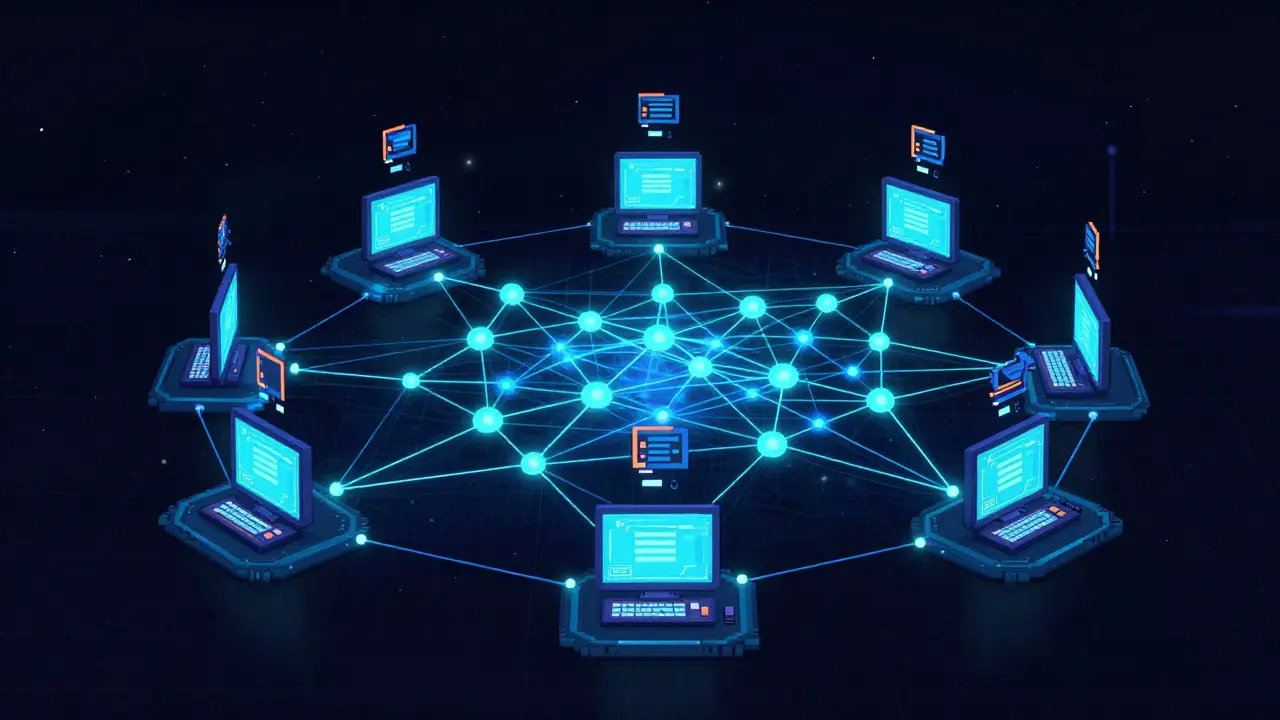
Imagine a world where the internet doesn't rely on giant corporate servers to deliver your videos, images, and web pages. Instead, spare bandwidth from everyday users powers the network, paid for in cryptocurrency. This is the promise of Media Network, a protocol built to disrupt the traditional Content Delivery Network (CDN) industry. But what exactly is the MEDIA token, and does it actually work?
The short answer: Media Network is a decentralized protocol that turns unused internet bandwidth into a sellable resource. The MEDIA token acts as the fuel for this ecosystem, paying providers for their bandwidth and allowing clients to buy cheap, censorship-resistant web services. It’s not just another meme coin; it’s an infrastructure play built on the high-speed Solana blockchain.
The Problem with Traditional CDNs
To understand why Media Network exists, you first need to look at how the internet currently works. When you stream a video or load a website, you aren’t usually connecting directly to the origin server. You’re hitting a CDN-a massive network of servers located around the world designed to cache content closer to you.
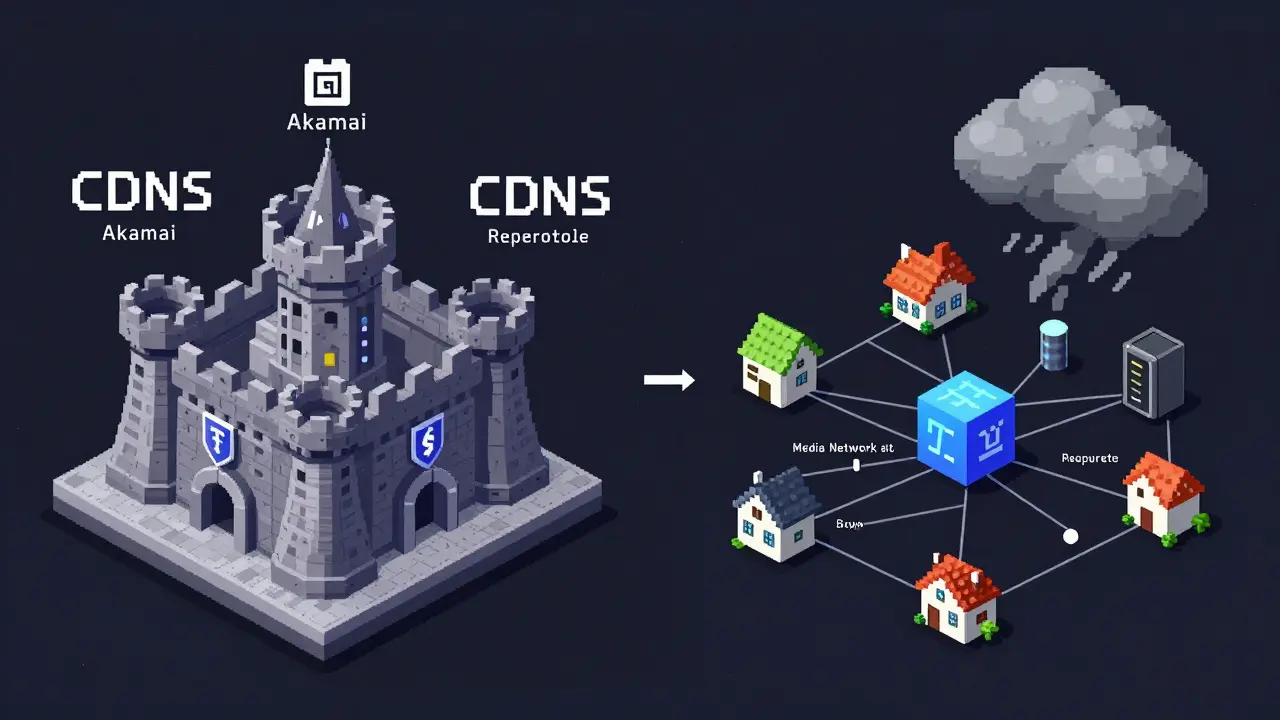
Currently, this space is dominated by tech giants like Akamai, Cloudflare, and Amazon CloudFront. These companies control the "pipes" of the internet. They charge high fees, enforce strict terms of service, and can censor content at will. For developers and publishers, this means paying premium prices for reliability while surrendering control over their data distribution.
Media Network aims to break this monopoly. By creating a peer-to-peer marketplace for bandwidth, it removes the middleman. Instead of renting expensive server racks in data centers, anyone with a computer and spare internet speed can become a provider. This shifts the power dynamic from centralized corporations to individual users.
How the MEDIA Token Works
The MEDIA token is the economic engine of the protocol. It serves two primary functions within the ecosystem:
- Payment Method: Clients use MEDIA tokens to pay for bandwidth and computing resources. If you want to host a website or stream content using the decentralized network, you spend MEDIA.
- Staking and Rewards: Providers must stake MEDIA tokens to participate in the network. This staking mechanism ensures that providers have skin in the game, discouraging bad actors who might try to provide poor-quality bandwidth or malicious services.
One of the most interesting features of the tokenomics is the burn mechanism. With every transaction executed on the network, a portion of the MEDIA tokens is burned-permanently removed from circulation. This creates deflationary pressure. As more people use the network to deliver content, the supply of MEDIA decreases, theoretically increasing the value of the remaining tokens for holders.
Unlike many crypto projects that release millions of tokens to venture capitalists early on, Media Network launched via a public Initial DEX Offering (IDO) on June 28, 2022. There was no private sale. This fair launch approach meant that retail investors had equal access to the token from day one, avoiding the common issue of insider dumping.

Built on Solana: Speed and Cost Efficiency
Media Network is an SPL token, meaning it lives on the Solana blockchain. This choice is critical for its functionality. Traditional CDNs handle billions of requests per second. If Media Network relied on a slower, more expensive blockchain like Ethereum mainnet, the transaction costs would make micro-payments for bandwidth impossible.
Solana offers near-instant finality (around 400 milliseconds) and transaction fees that are often less than a fraction of a cent. This allows the protocol to process tiny payments between providers and clients efficiently. Without Solana’s scalability, the economic model of paying individuals for small amounts of bandwidth would collapse under gas fees.
Recently, the project has expanded beyond Solana. Announcements indicate availability on Base Mainnet, Coinbase’s Layer 2 solution on Ethereum. This multi-chain strategy reduces dependency on a single ecosystem and opens up access to a broader user base familiar with Ethereum-based tools.
Current Market Status and Volatility
As of May 9, 2026, the MEDIA token reflects the harsh realities of the crypto market. After launching in 2022, the token reached an all-time high of $189.05. Today, it trades significantly lower, hovering around $0.17 to $0.23 USD depending on the exchange (CoinGecko reports $0.1736, while Kraken lists it at $0.23).
This represents a decline of approximately 99.8% from its peak. However, recent momentum shows signs of life. In the last 24 hours alone, the price surged by over 520%, with a 7-day increase of nearly 152%. While this volatility is extreme, it suggests renewed interest following a prolonged bear period.
The circulating supply stands at 250,000 MEDIA tokens out of a maximum fixed supply of 10 million. This low circulating supply indicates that much of the token remains unminted or locked, which could lead to future dilution if emission schedules release more tokens into the market. Investors should be aware of this potential supply shock.
| Feature | Media Network (Decentralized) | Akamai/Cloudflare (Centralized) |
|---|---|---|
| Infrastructure Control | Distributed among users | Owned by corporation |
| Censorship Resistance | High (Trustless) | Low (Can block content) |
| Cost Structure | Paid per usage in MEDIA | Fixed subscription/enterprise contracts |
| Barrier to Entry | Low (No KYC required) | High (Enterprise sales process) |
| Reliability SLA | Variable (Depends on node uptime) | Guaranteed (99.99% uptime) |
Challenges Facing Adoption
While the theory behind Media Network is sound, execution is difficult. The biggest hurdle is competition. Akamai and Cloudflare have spent decades building redundant, enterprise-grade infrastructure. They offer Service Level Agreements (SLAs) that guarantee uptime and performance. Media Network relies on consumer-grade hardware and internet connections. If a provider loses power or disconnects their router, the service quality drops.
There is also the issue of trust. Traditional CDNs provide customer support and legal recourse if things go wrong. Media Network is trustless by design. There is no central authority to complain to. This appeals to privacy advocates but scares off mainstream businesses that require predictable support structures.
Furthermore, the regulatory landscape for crypto infrastructure is shifting. As a utility token that also grants governance rights, MEDIA faces scrutiny regarding whether it constitutes a security in certain jurisdictions. The lack of KYC (Know Your Customer) requirements, while beneficial for privacy, may limit institutional adoption due to compliance concerns.
Who Should Care About Media Network?
You don’t need to be a developer to find value here. If you are a regular user with spare bandwidth, you can run a node and earn MEDIA tokens passively. It’s similar to earning rewards for mining Bitcoin, but instead of hashing power, you’re sharing internet capacity.
For developers and content creators, especially those focused on privacy or operating in regions with heavy censorship, Media Network offers a way to distribute content without relying on Big Tech. It aligns with the broader Web3 movement of decentralizing internet infrastructure.
Investors should view MEDIA as a high-risk, high-reward play on decentralized infrastructure. The recent price surge suggests market sentiment is turning positive, but the 99% drop from ATH serves as a reminder of the volatility inherent in emerging crypto protocols. Success depends on actual network usage, not just speculation.
Is Media Network safe to use?
Media Network operates on the Solana blockchain, which is secure. However, as a decentralized protocol, it lacks the customer support and liability protection of traditional services. Users should exercise caution and only allocate funds they can afford to lose, especially given the token's historical volatility.
How do I earn MEDIA tokens?
You can earn MEDIA tokens by becoming a provider. This involves running a node on your device, staking MEDIA tokens to prove commitment, and contributing your spare bandwidth to the network. You are rewarded based on the amount of traffic you serve.
Why did the MEDIA token price drop so much?
The drop from $189 to current levels reflects broader crypto market cycles and specific challenges in achieving mass adoption for decentralized infrastructure. Many early-stage crypto projects experienced similar corrections after initial hype phases. Recent growth suggests renewed interest in the project's utility.
Can I buy MEDIA on Coinbase?
Yes, Media Network launched on Coinbase in 2022. You can typically acquire MEDIA through major exchanges like Coinbase, Kraken, or decentralized exchanges listed on CoinGecko. Always verify the contract address before trading to avoid scams.
What is the total supply of MEDIA tokens?
The maximum fixed supply of MEDIA tokens is 10 million. As of May 2026, only 250,000 tokens are in circulation. The rest are likely locked or yet to be minted according to the project's emission schedule, which impacts long-term inflation dynamics.



Michelle Bonahoom
May 11, 2026 AT 02:14another american dream gone wrong. we let big tech build the pipes and now we expect a bunch of randoms with dialup to save us from censorship lol
Matt Davis
May 12, 2026 AT 03:51You are absolutely deluded if you think consumer-grade hardware can compete with Akamai. The idea that your home internet connection is stable enough for enterprise CDN services is laughable. I have had more uptime on my toaster than most residential ISPs claim. This is not innovation, it is a scam wrapped in blockchain jargon.
Albert Lee
May 12, 2026 AT 11:31I see where you are coming from Matt but honestly there is something really beautiful about the concept here. It feels like we are finally taking back control of our own digital lives. Who doesn't want to feel empowered by their own unused resources? It gives me hope for a more decentralized future where everyone has a stake in the network. We should support these kinds of initiatives because they challenge the status quo. Even if it fails it teaches us valuable lessons about trust and distribution.
Ankush Pokarana
May 12, 2026 AT 15:36the philosophical underpinning of this protocol suggests a shift in paradigm regarding ownership of infrastructure which is profound in its implications for societal structure and individual agency within the digital realm one must consider whether the decentralization of bandwidth truly liberates the user or merely obscures the inefficiencies inherent in peer-to-peer architectures while ignoring the economic realities of energy consumption and hardware depreciation over time which often go unmentioned in such optimistic narratives
Bianca Vilas Boas Lourenço
May 13, 2026 AT 21:59oh wow another crypto bro trying to sell me bandwidth 🙄 i'm sure my grandma's ipod touch is going to revolutionize global streaming standards 😂 please tell me you aren't actually buying this garbage based on a blog post written by someone who clearly thinks 'decentralized' means 'no one is responsible when it breaks' 💅
Yash Lodha
May 14, 2026 AT 21:29they want you to believe that sharing your bandwidth is freedom but have you considered that every packet you send is being monitored by the very entities you claim to oppose the media token is likely just a honeypot designed to map out residential networks for targeted surveillance campaigns under the guise of decentralization do not plug your router into their web of deceit unless you wish to become a node in their grand experiment of social engineering and data harvesting
Jesse Alston
May 16, 2026 AT 18:56actually if you look at the technical specs Solana's throughput makes this feasible for microtransactions which is the key bottleneck for other chains like Ethereum. I've run nodes on similar protocols and the earnings are modest but consistent if you have high-speed fiber. It's not a get-rich-quick scheme but it does put money back in users' pockets rather than corporate coffers. Just make sure you configure your firewall correctly so you don't expose local services. 🛡️💻
Sarah C
May 17, 2026 AT 23:58i agree with Jesse it seems like a solid attempt at solving a real problem. the fact that it launched fairly without VC dumping is a huge plus in my book. i'd love to see more projects adopt this model where retail investors have equal footing. it makes the whole ecosystem feel less rigged against the little guy. maybe we can all contribute a little bit of bandwidth and collectively build something better together.
Kimberly Herbstritt
May 18, 2026 AT 21:20look i get the appeal of decentralization but let's be real cloudflare works and it's cheap enough for most people. why would i switch to a system where if my neighbor loses power my website goes down? it sounds nice in theory but in practice reliability matters more than ideology. i'll stick with what guarantees my uptime thanks.
Sharada Vakkund
May 19, 2026 AT 00:33it is important to recognize that different users have different needs and neither solution is perfect for everyone. for those in regions with heavy censorship this could be a lifeline. for others traditional cdns might be more convenient. we should encourage experimentation and allow the market to decide which approach offers the best value proposition for each specific use case. inclusivity means supporting diverse technological solutions.
Sudarshan Anbazhagan
May 19, 2026 AT 11:21one must observe that the tokenomics presented herein are fundamentally flawed as the burn mechanism relies on transaction volume which is inherently speculative and thus creates a feedback loop of volatility rather than stability furthermore the reliance on solana introduces systemic risk given the historical outages of said blockchain which renders any service level agreement moot regardless of how many tokens are staked by providers who are presumably incentivized only by profit and not by altruism
John Gonzalez Bentham
May 19, 2026 AT 22:52typical hype cycle stuff. first they say it's gonna replace amazon then it crashes 99 percent and suddenly it's a community project again. dont fall for the fair launch narrative either. insiders always find a way to dump on retail. i've seen this play before and i'll see it again. stay poor.
Ellie Riddell
May 20, 2026 AT 20:22interesting read but i remain skeptical about the practical application. how many people actually have spare bandwidth worth selling? most of us are barely keeping up with netflix. plus the regulatory crackdown on crypto utilities is looming large. it might be too clever by half. sarcasm aside though the multi-chain expansion to base is a smart move technically even if the economics are questionable.
Destiny Kilby
May 21, 2026 AT 18:37i appreciate the detailed breakdown of the challenges. it is refreshing to see an article that acknowledges the reliability issues rather than just hyping the technology. however i wonder if the lack of customer support will ultimately prevent mainstream adoption regardless of the ideological benefits. businesses need predictability and this model offers variability which is a significant hurdle.
Jerry CUNNINGHAM SR
May 22, 2026 AT 14:59it is crucial to engage in respectful dialogue about the merits and drawbacks of both centralized and decentralized systems. while the potential for censorship resistance is undeniable we must also consider the environmental impact and the carbon footprint of maintaining millions of idle devices. perhaps a hybrid approach could offer the best of both worlds ensuring reliability while preserving user privacy and autonomy.
Shelby Cantu
May 23, 2026 AT 20:48great info! short and sweet. thanks for sharing.
Tobias Gjerlufsen
May 25, 2026 AT 19:12you people are missing the forest for the trees. this isn't about bandwidth it's about creating a synthetic scarcity asset backed by nothing but promises and code. the entire premise of p2p cdn is obsolete because edge computing is becoming cheaper and faster. stop pretending this is innovation when it's just financial engineering dressed up as tech. wake up sheeple.
Ruben Michel
May 26, 2026 AT 11:22the notion that one can simply 'plug in' and participate in a global content delivery network without understanding the nuances of latency jitter packet loss and quality of service parameters is indicative of a profound ignorance of networking fundamentals. the elite understand that true infrastructure requires capital investment and professional management not amateur hour setups running on consumer routers. this project is a testament to the democratization of incompetence.