You’ve probably seen it pop up on a ticker list or heard about it in a crypto chat group: Balls of Fate (BOF). It sounds like a game, but it’s actually a cryptocurrency token with a wild backstory and even wilder price swings. If you’re wondering what this coin actually does, why the price varies so wildly between exchanges, and whether it’s worth your attention, you’re not alone.
In the world of digital assets, tokens like BOF sit in a specific niche. They aren’t trying to build the next banking system or revolutionize supply chain logistics. Instead, they operate on narrative, community sentiment, and often, sheer volatility. Understanding Balls of Fate (BOF) requires looking past the hype and examining the hard data: supply, liquidity, and market reality.
The Story Behind the Token
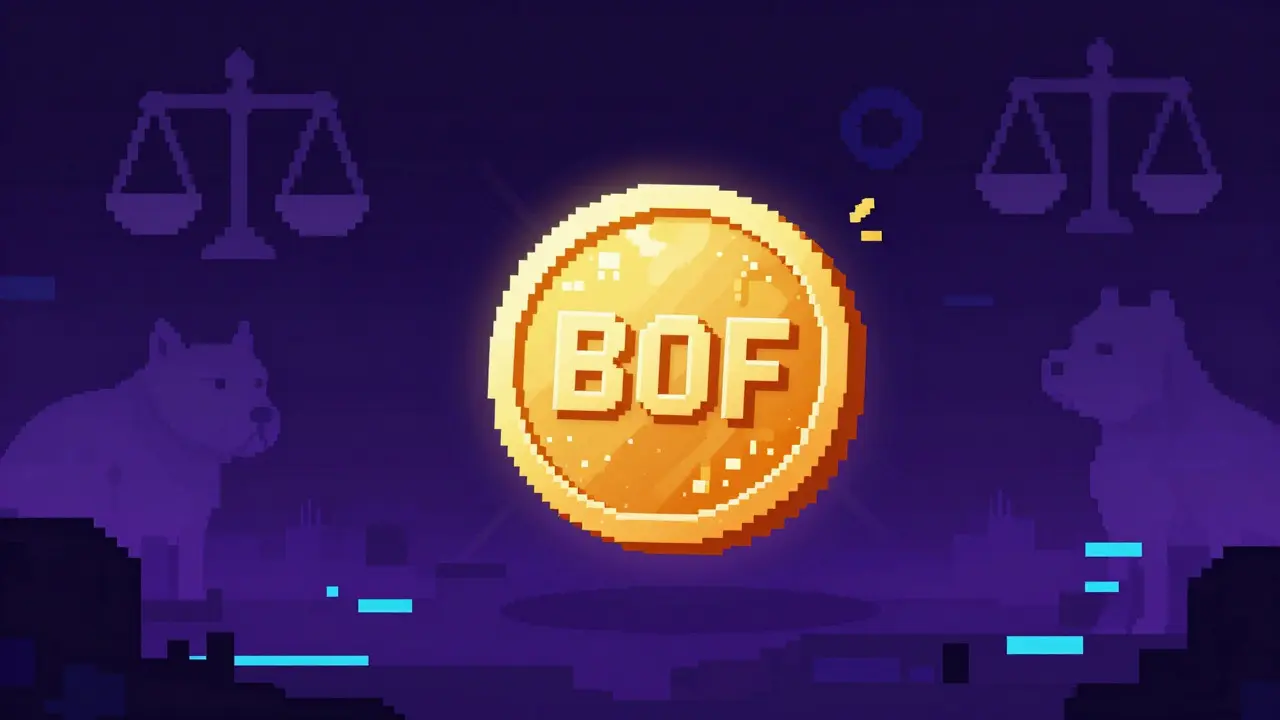
Most cryptocurrencies have a technical whitepaper detailing their consensus mechanism or smart contract architecture. Balls of Fate (BOF), however, leans heavily into its branding. The project positions itself as a force for "restoring balance and justice" in environments where honesty is scarce. It frames itself as a challenger to unjust systems, including financial institutions, political regimes, and social prejudices.
This isn't just marketing fluff; it's the core identity of the token. The ecosystem uses a pitbull mascot to symbolize determination and unyielding resolve. In the crypto space, this places BOF firmly in the category of "meme coins" or "narrative-driven tokens." Unlike utility tokens that power decentralized applications (dApps), BOF’s value proposition is tied to its community’s belief in its mission and its potential for speculative growth. This distinction is crucial because it changes how you should evaluate its risk.
Tokenomics: Supply and Distribution
When analyzing any crypto asset, the first thing to check is the tokenomics-the economic structure of the token. For Balls of Fate, the numbers are straightforward but tell an interesting story about its maturity.
- Total Maximum Supply: 1,000,000,000 (1 Billion) BOF tokens.
- Circulating Supply: Approximately 999,986,552 to 999,993,011 BOF tokens.
Notice something odd? The circulating supply is almost identical to the maximum supply. Over 99.9% of all BOF tokens ever created are already in circulation. This means there is virtually no inflationary pressure from new tokens being minted and sold by developers. In many newer projects, early investors hold large portions of the supply, which can lead to massive sell-offs later. With BOF, the distribution phase appears to be complete. You are buying into a fixed pool of assets, which theoretically reduces the risk of sudden supply shocks, though it doesn’t eliminate demand-side risks.
The Price Problem: Why Numbers Don't Match
If you look up the price of BOF today, you might get confused. One site says it’s one thing, another says it’s ten times less. This isn’t necessarily fraud; it’s a symptom of low liquidity and fragmented trading data.
As of mid-2026, data aggregators show significant discrepancies:
| Platform | Reported Price (USD) | Market Cap Estimate | 24h Volume |
|---|---|---|---|
| Coinbase | $0.000677 | ~$677,481 | $96.52K |
| Bybit / CoinMarketCap | $0.00001333 | ~$13,330 | $0 - Low |
| CoinGecko | Varies ($0.0001 range) | ~$108,490 | $2.74 - $175 |
| Crypto.com | $0.00001331 | N/A | N/A |
Why such a huge difference? Coinbase, a major centralized exchange, may have deeper order books or different update frequencies compared to smaller aggregators. When a token has low trading volume, a single large buy or sell order can spike the price on one exchange without affecting others. This creates "price islands." If you see a high price on one platform, don’t assume you can instantly sell at that rate elsewhere. The spread-the difference between the highest bid and lowest ask-is likely wide.
Market Performance and Volatility
Let’s talk about the elephant in the room: the crash. Like many narrative-driven tokens, Balls of Fate experienced a massive peak followed by a severe correction.
In September 2024, BOF hit an all-time high (ATH) of approximately $0.044. By mid-2026, the price had plummeted to the $0.000013 range on most platforms. That represents a loss of over 99.8% from its peak. While percentage losses sound terrifying, this is standard behavior for low-cap meme coins during bear markets or periods of reduced hype.
The all-time low recorded was around $0.00005897 in June 2025. The current trading range suggests the token is finding a floor, but floors in crypto can break easily. The 24-hour volatility is extreme, with prices swinging double-digit percentages in short windows. For a trader, this offers opportunity. For an investor seeking stability, it’s a nightmare.
Liquidity and Trading Risks
Liquidity is the ability to buy or sell an asset quickly without moving its price significantly. BOF suffers from chronic illiquidity. Look at the 24-hour trading volumes again. Some sources report zero volume. Others report under $200. Even Coinbase’s reported $96K volume is tiny compared to major coins like Bitcoin or Ethereum, which trade in billions daily.
Low liquidity leads to three major risks:
- Slippage: If you try to buy a large amount of BOF, your own purchase might drive the price up significantly before the trade completes, meaning you pay more than expected.
- Exit Difficulty: If panic sets in, there may not be enough buyers to absorb your sell order. You could be stuck holding the bag while the price drops further.
- Data Delays: Aggregators like CoinGecko or CoinMarketCap rely on APIs from exchanges. If an exchange hasn’t updated its feed in hours, the "live" price you see might be stale, leading to bad decisions.
The ranking of BOF on major trackers-around #7,000 out of tens of thousands of tokens-confirms its status as a micro-cap asset. It is not widely held, nor is it deeply integrated into the broader DeFi ecosystem.

Is BOF a Good Investment?
That depends entirely on your definition of "investment." If you are looking for steady growth, dividends, or technological utility, BOF is likely not for you. It lacks the fundamental infrastructure of enterprise-grade blockchains.
However, if you enjoy high-risk speculation based on community trends and meme culture, BOF fits the profile. The fact that nearly 100% of the supply is in circulation removes the fear of hidden developer dumps. The narrative of "fighting injustice" keeps a core community engaged. But remember: engagement does not equal value. Without new capital inflow, the price will likely remain stagnant or drift lower due to general market gravity.
Before touching BOF, consider these questions:
- Can I afford to lose 100% of this money?
- Am I aware that the price I see might not be the price I get?
- Do I understand that support teams for such tokens are often minimal or non-existent?
Conclusion: Navigating the Chaos
Balls of Fate (BOF) is a fascinating case study in the modern crypto landscape. It highlights how narrative can create value, how supply mechanics work, and how dangerous illiquidity can be. It is not a scam in the traditional sense-it has a public contract, a defined supply, and listed presence on reputable exchanges. But it is also not a stable store of value.
Treat it like a lottery ticket rather than a savings account. Monitor the volume, not just the price. Check multiple sources before executing trades. And never invest more than you are willing to watch disappear overnight. In the world of meme coins, fate is indeed uncertain.
What is the total supply of Balls of Fate (BOF)?
The total maximum supply of BOF is 1,000,000,000 (1 billion) tokens. Currently, over 99.9% of these tokens are in circulation, meaning very few new tokens will be issued.
Why is the price of BOF different on Coinbase vs. CoinMarketCap?
Price discrepancies occur due to low liquidity and different data update speeds across exchanges. Coinbase may have higher trading activity or deeper order books, resulting in a higher weighted average price compared to aggregators relying on smaller or slower-updating exchanges.
Is Balls of Fate a scam?
There is no evidence suggesting BOF is a fraudulent scam. It has a transparent token supply and is listed on major exchanges like Coinbase and Bybit. However, it carries high financial risk due to extreme volatility and low liquidity, which are common traits of meme coins.
What was the all-time high of BOF?
Balls of Fate reached its all-time high of approximately $0.044 in September 2024. As of 2026, it trades significantly below this level, having lost over 99% of its peak value.
Where can I buy BOF tokens?
BOF is available on several cryptocurrency exchanges, including Coinbase, Bybit, MEXC, Crypto.com, and TradeSanta. Always verify the current listing status on the exchange directly, as delistings can happen.
Does BOF have any utility besides speculation?
Currently, BOF primarily functions as a speculative asset driven by community sentiment and its "justice" narrative. It does not appear to have widespread utility in decentralized finance (DeFi) protocols or real-world applications compared to utility-focused tokens.