VSCDEX Fees – What You Pay When Swapping on the DEX
When working with VSCDEX fees, the charges imposed by the VSCDEX decentralized exchange for each swap. Also known as VSCDEX trading costs, they determine the amount deducted from every trade and directly impact overall profitability.
The VSCDEX, a layer‑2 DEX built on the Binance Smart Chain, promotes low‑cost swaps but its fee model differs from centralized brokers. VSCDEX fees encompass two core components: a maker fee that rewards liquidity providers and a taker fee that charges active traders. This maker‑taker split is a hallmark of the DEX fee structure, which also includes protocol‑level fees that fund network upgrades. Understanding that VSCDEX fees require knowledge of the broader DEX fee structure helps you estimate trade costs more accurately.
Liquidity pools are the source of on‑chain liquidity that powers every swap on VSCDEX. Because deeper pools typically enjoy lower maker rates, they influence VSCDEX fees by reducing the cost for liquidity providers, which in turn can lower the taker fee for traders. Conversely, thin pools trigger higher maker fees to compensate for added risk. This relationship shows how VSCDEX fees are tied to pool depth and how traders can seek out high‑liquidity pairs to keep fees down.
On‑chain gas fees add a variable cost to each transaction, separate from the built‑in VSCDEX charges. While VSCDEX fees set the baseline cost, gas fees fluctuate with network congestion and can sometimes exceed the exchange's own fees. Knowing that gas fees interact with VSCDEX fees lets you time trades during low‑traffic periods, saving both fee components. Below you’ll find a curated set of articles that break down each fee element, compare VSCDEX charges with other DEXs, and show you step‑by‑step how to calculate your exact cost before swapping.
VSCDEX Crypto Exchange Review: Fees, Security, and How It Stacks Up
By Robert Stukes On 14 Oct, 2025 Comments (21)
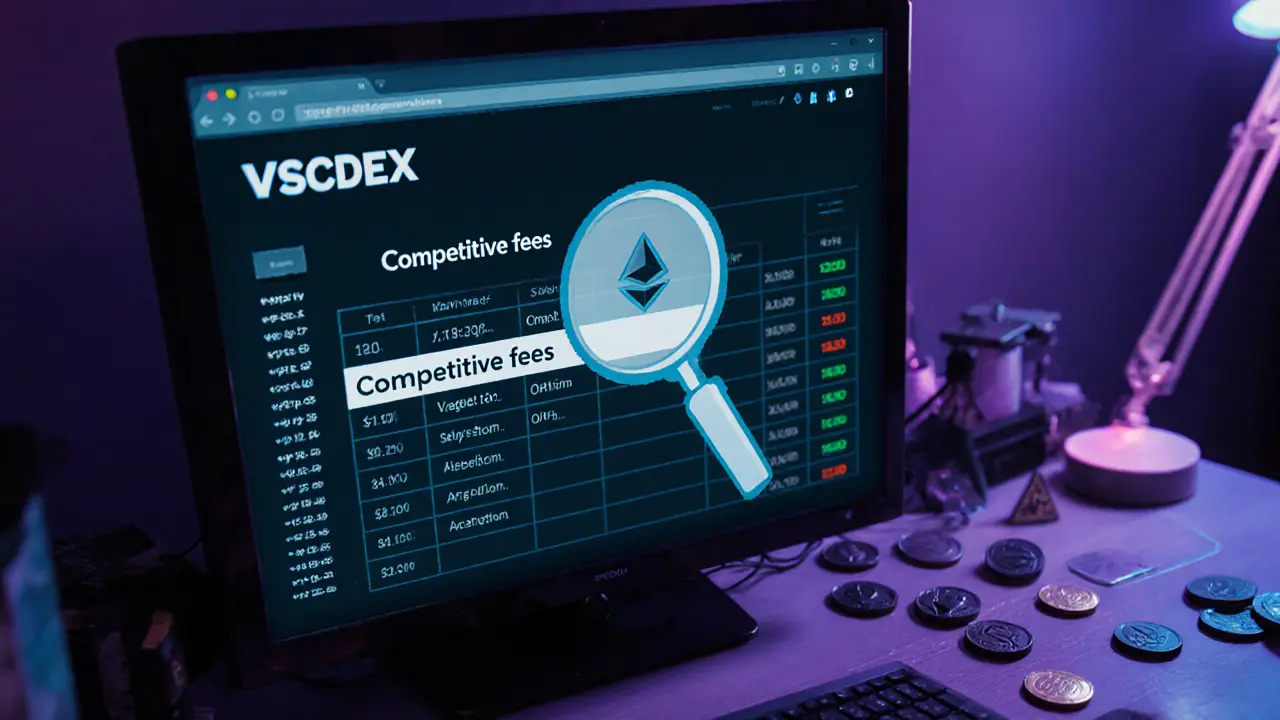
A thorough VSCDEX crypto exchange review covering fees, security, liquidity, and how it measures up against major platforms in 2025.
View More