Layer-2 Solutions: Scaling the Blockchain Landscape
When working with layer-2 solutions, off‑chain or secondary protocols that sit on top of a base blockchain to boost speed and cut costs. Also known as L2 scaling, they let users move most activity off the main chain while still inheriting its security. This tag page gathers everything you need to know about these technologies, from basics to the newest advancements.
Why Layer-2 Matters
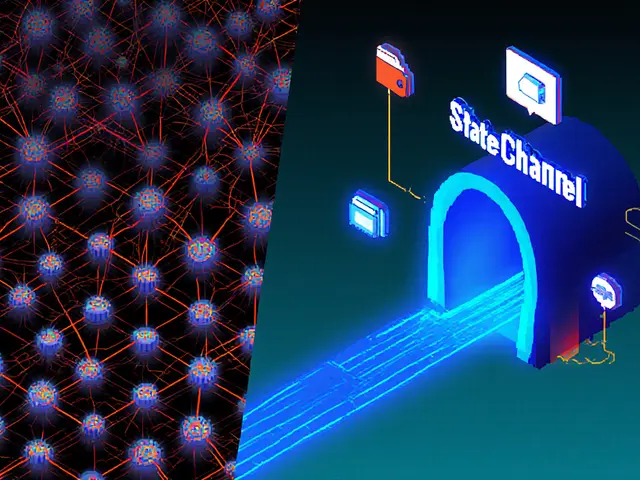
One core idea is that state channels, private, off‑chain tunnels where participants exchange signed messages before settling a single net result on‑chain let you settle dozens or hundreds of micro‑transactions instantly and almost for free. At the same time, rollups, protocols that batch many transactions into one proof submitted to the base layer compress data and keep security anchored to the main chain. The combination means you can run high‑frequency trading, gaming, or DeFi operations without choking the network.
Beyond those, sidechains, independent blockchains linked to a main chain via two‑way bridges offer their own consensus rules, giving developers flexibility to experiment with new economics or governance. plasma, a hierarchical framework that creates child chains for specific use‑cases further offloads work while still allowing periodic checkpoints on the root chain. Emerging zk‑rollups, zero‑knowledge proof based rollups that verify transaction validity without revealing data push privacy and scalability together, opening doors for confidential finance.
The relationships among these entities form a clear hierarchy: layer-2 solutions encompass state channels, rollups, sidechains and plasma; each sub‑type solves a niche problem while relying on the security guarantees of the underlying blockchain. Implementing a rollup requires a smart contract on the base layer, which in turn depends on the main chain’s finality. Sidechains need robust bridge mechanisms, and state channels depend on participants’ willingness to lock funds temporarily. Understanding how they interlock helps you pick the right tool for a given application.
Practically, the benefits are tangible: transaction fees drop from several dollars to a few cents, confirmation times shrink from minutes to seconds, and user experience improves dramatically. Projects like Optimism, Arbitrum, and zkSync demonstrate real‑world adoption, while developers can tap into SDKs and APIs to spin up custom L2 solutions quickly. At the same time, trade‑offs exist—centralization risk on some sidechains, liquidity fragmentation, and the need for users to manage additional keys or bridge assets.
Below you’ll find a curated collection of articles, reviews, and deep‑dives that cover every angle of layer‑2 tech. Whether you’re a trader hunting lower fees, a developer building the next DeFi app, or just curious about how crypto can scale, these posts give you actionable insights, technical breakdowns, and up‑to‑date market analysis.
Future of Rollup Technology: What’s Next for Blockchain Scaling
By Robert Stukes On 8 Aug, 2025 Comments (16)

Rollup technology boosts blockchain speed and cuts fees by batching transactions. Learn how ZK and Optimistic rollups work, their future trends, and what to watch when adopting them.
View More