JetSwap Security: What You Need to Know
When evaluating JetSwap security, the safety measures and risks associated with the JetSwap decentralized exchange, investors should first understand the platform’s core architecture. Also known as JetSwap, a Binance Smart Chain based DEX that enables token swaps through automated market makers, it relies heavily on smart contracts. Those contracts must pass a thorough smart contract audit, an independent code review that checks for vulnerabilities, logic errors, and compliance issues to protect user funds. Another key piece is the liquidity pool risk, the exposure that liquidity providers face from impermanent loss and potential rug pulls. Together, these elements shape the overall blockchain security, the broader set of defenses against attacks on the network and its smart contracts. In short, JetSwap security encompasses smart contract audit quality, liquidity pool design, and the underlying blockchain’s resilience.
Key Factors in Assessing JetSwap Security
First, a solid audit creates a trust baseline. When auditors flag re‑entrancy bugs or unchecked external calls, developers can patch those holes before users deposit any capital. This simple step mitigates the most common attack vectors on decentralized exchange, any platform that lets users trade directly from their wallets without a central order book. Second, liquidity pool risk directly influences user confidence. Pools with low depth attract high slippage, which can be exploited by front‑running bots. By comparing pool depth, token pair volatility, and fee structures, traders can gauge how likely a rug pull or impermanent loss event is to happen. Third, the broader blockchain security posture matters. A chain with frequent validator attacks or weak consensus mechanisms can jeopardize even the best‑audited contracts. Hence, JetSwap security is only as strong as the chain it runs on.
These three pillars—audit rigor, pool health, and chain robustness—form a practical checklist for anyone looking to swap tokens on JetSwap. For example, before you add liquidity to the JET/BNB pool, ask: Has the smart contract been audited by a reputable firm? Is the pool’s total value locked (TVL) sufficient to absorb large trades without massive price impact? Does the Binance Smart Chain maintain a stable block time and resist 51% attacks? Answering these questions lets you spot red flags early, turning abstract risk into concrete actions you can take.
Another often‑overlooked aspect is the role of community governance. JetSwap’s token holders can vote on fee updates, new pair listings, and emergency pause functions. When governance is transparent and the voting power is well‑distributed, the platform can react quickly to emerging threats. This ties back to blockchain security because a decentralized governance model reduces the chance of a single entity introducing malicious code. In practice, watch the governance forum for proposals that tighten audit requirements or adjust liquidity incentives—such moves usually signal a proactive security stance.
Finally, real‑world incident studies offer valuable lessons. In 2023, a poorly audited DEX on the same chain suffered a $12 million drain due to a flash loan exploit. The attack succeeded because the contract allowed unchecked external calls, a flaw that a thorough audit would have caught. JetSwap avoided a similar fate by integrating a multi‑layer security framework: static analysis, manual review, and bug bounty programs. This layered approach shows that security isn’t a one‑time checkbox; it’s an ongoing process that blends technology, community oversight, and continuous testing.
By keeping these considerations front‑and‑center, you’ll be better equipped to navigate JetSwap’s ecosystem safely. Below you’ll find a curated list of articles that dive deeper into each of these topics—smart contract audit case studies, liquidity pool risk calculators, blockchain security updates, and governance best practices. Use them as a toolbox to sharpen your own risk management strategy before you start swapping.
JetSwap (Polygon) Review: Features, Security, and How It Stacks Up Against Other DEXs
By Robert Stukes On 11 Oct, 2025 Comments (24)
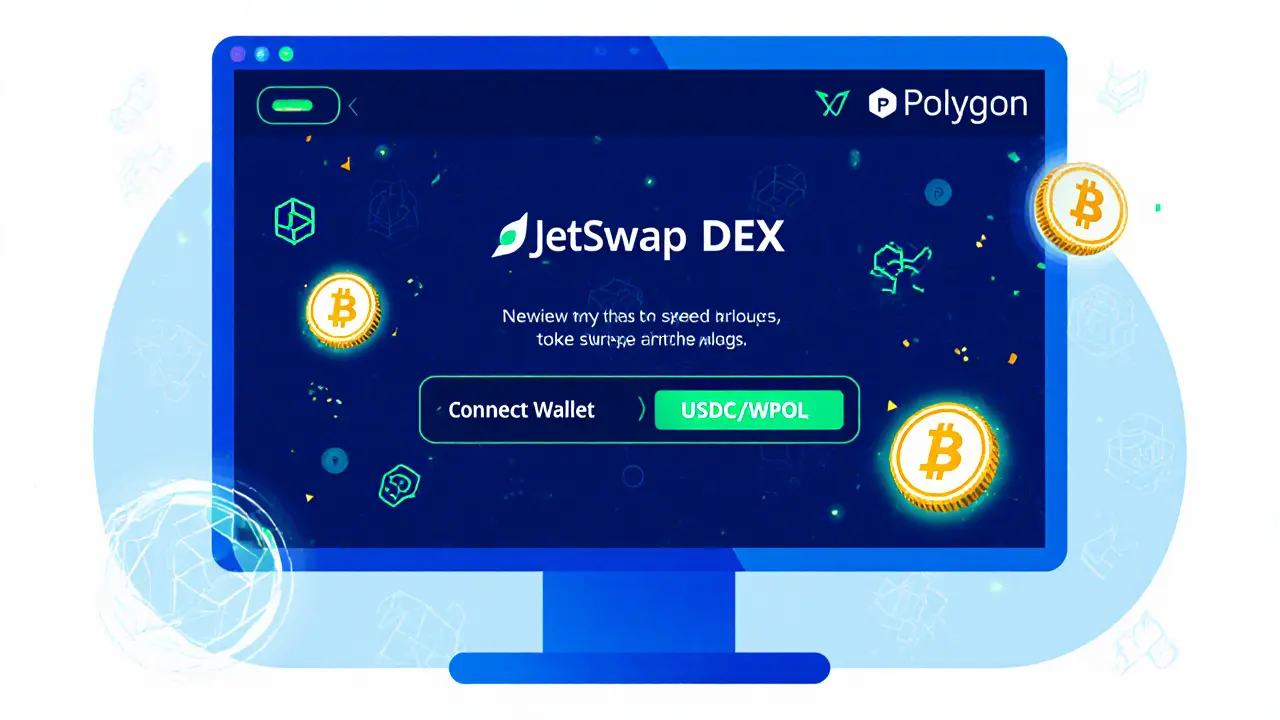
A detailed JetSwap (Polygon) review covering features, security, how to start trading, tokenomics, and a side‑by‑side comparison with top Polygon DEXs.
View More