Decentralized Governance: How Communities Run Crypto Projects
When you hear decentralized governance decentralized governance, a system where power isn’t held by a single company or government but by the community of token holders. Also known as DeGov, it lets anyone with a stake influence protocol rules, fund allocation, and future upgrades. Think of it as a digital town hall where proposals get voted on, budgets get approved, and changes roll out without a central boss.
One of the most visible forms of this model is the DAO, Decentralized Autonomous Organization that runs on smart contracts. A DAO uses governance tokens, cryptographic assets that grant voting rights to holders to let members propose and decide on everything from code upgrades to marketing spend. In practice, a token holder might lock up 100 tokens, submit a proposal to add a new feature, and then let the community cast on‑chain votes that are automatically tallied by the blockchain. This structure creates a direct link between ownership and influence, turning passive investment into active participation.
Behind the scenes, smart contracts, self‑executing code that enforces rules without human intervention handle the heavy lifting. They record votes, enforce quorum thresholds, and trigger fund transfers once a proposal passes. The combination of on‑chain voting mechanisms—like quadratic voting, token‑weighted voting, or conviction voting—and transparent proposal histories ensures that decisions are auditable and tamper‑proof. Protocol upgrades often follow a clear roadmap: a community member drafts a change, the DAO votes, the smart contract executes, and the network updates, all without a single admin signing off.
Key Components of Effective Decentralized Governance
Successful decentralized governance hinges on three pillars: clear proposal frameworks, structured templates that define what a change looks like, how much funding is needed, and the timeline for execution; robust treasury management, the process of allocating funds, tracking expenses, and ensuring transparency; and inclusive voting systems, methods that balance power between large whales and small holders. When these elements work together, a DAO can adapt quickly to market shifts, fund community projects, and maintain security without central oversight.
What you’ll find in the collection below is a mixture of deep dives into exchange reviews, token airdrops, NFT utilities, and blockchain scaling solutions—all of which tie back to the core idea of letting the community call the shots. Whether you’re curious about how a governance token like $MCDon shapes a fast‑food chain’s on‑chain equity, or you want to see how state channels improve transaction speed for DAO budgets, these pieces give you real‑world examples of decentralized governance in action. Dive in, and you’ll see how the theory translates into tools you can use today.
DAO Governance Token Models Explained
By Robert Stukes On 21 Dec, 2024 Comments (24)
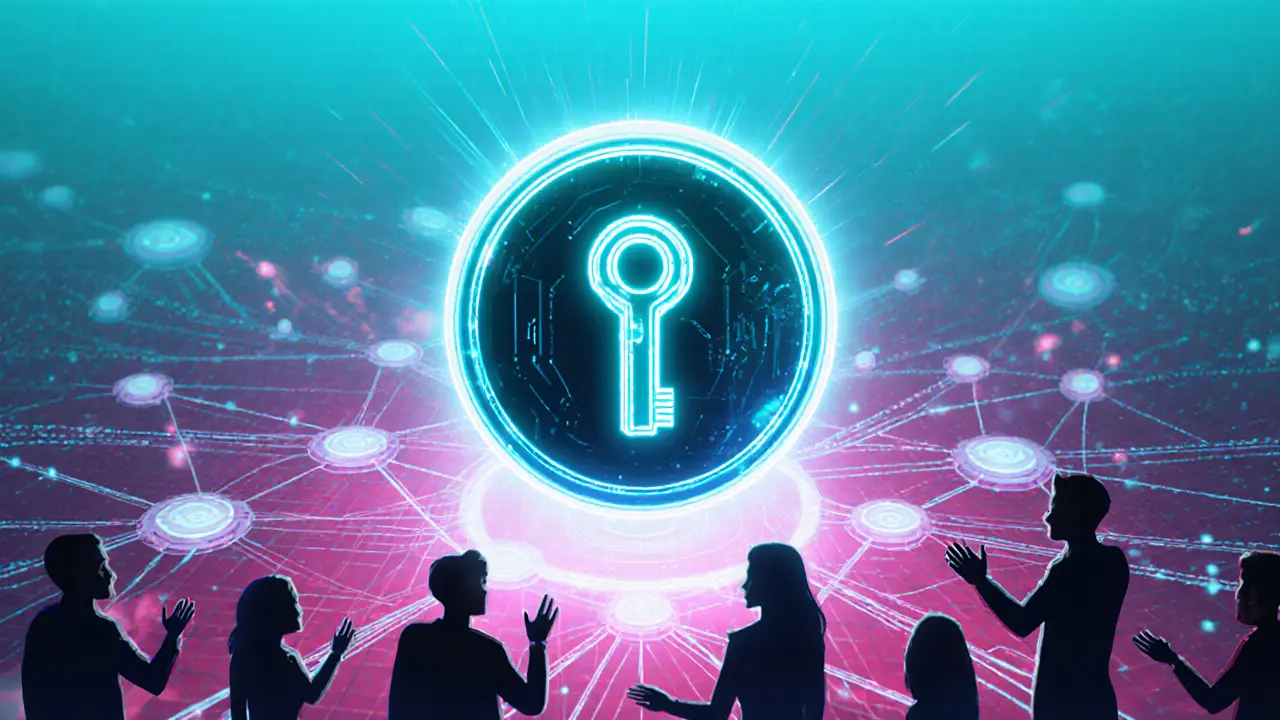
Explore DAO governance token models, their technical traits, pros and cons, participation steps, and emerging trends in decentralized decision‑making.
View More