BEP-20 Token: What It Is and Why It Matters
When working with BEP-20 token, a token standard on Binance Smart Chain that defines how fungible assets are created and transferred via smart contracts. Also known as BSC token standard, it enables seamless interaction with wallets, decentralized exchanges, and DeFi protocols. BEP-20 token is built for speed and low fees, making it a go‑to choice for projects that need high‑throughput transactions without the gas spikes you see on Ethereum.
How BEP-20 Relates to Other Token Standards
One of the key influences on BEP‑20 is the ERC-20 token, Ethereum’s original fungible token specification. ERC‑20 set the blueprint for balance queries, transfers, and allowance mechanisms, and BEP‑20 mirrors those functions while adding native support for Binance Smart Chain’s consensus model. This relationship creates a simple migration path: many projects launch an ERC‑20 version on Ethereum, then copy the code to a BEP‑20 contract to tap into BSC’s faster block times. At the same time, the token utility concept—how a token provides access to services, governance, or rewards—remains the same across both standards, so users can understand value propositions regardless of the chain.
The ecosystem where BEP‑20 lives also matters. Binance Smart Chain (BSC), a high‑performance blockchain that runs parallel to Binance Chain hosts thousands of BEP‑20 contracts, powering everything from yield farms to launchpad projects. Because BSC is EVM‑compatible, developers can deploy the same Solidity code they use on Ethereum, and the network’s low transaction fees encourage frequent trading on decentralized exchanges (DEX), platforms that match buyers and sellers without a central order book. This trio—BEP‑20, BSC, and DEXs—forms a loop: BEP‑20 tokens fuel DEX liquidity, DEXs showcase token utility, and BSC provides the scalable backbone.
Beyond trading, BEP‑20 tokens are the backbone of many airdrops, token launches, and community incentive programs. Because the standard includes functions for querying total supply and individual balances, projects can automate snapshot mechanics for fair airdrop distribution. Token utility extends into governance, where BEP‑20 holders vote on protocol upgrades, and into staking, where locking tokens earns yield on BSC‑based DeFi platforms. Our collection below walks you through real‑world examples: exchange reviews that detail how BEP‑20 assets are handled, deep dives into token utility design, and guides on participating in airdrops. Whether you’re a developer looking to launch a BEP‑20 contract or an investor scouting the next high‑yield token, the articles ahead give you the practical knowledge you need.
DUET airdrop by Duet Protocol - What you need to know in 2025
By Robert Stukes On 27 Dec, 2024 Comments (21)
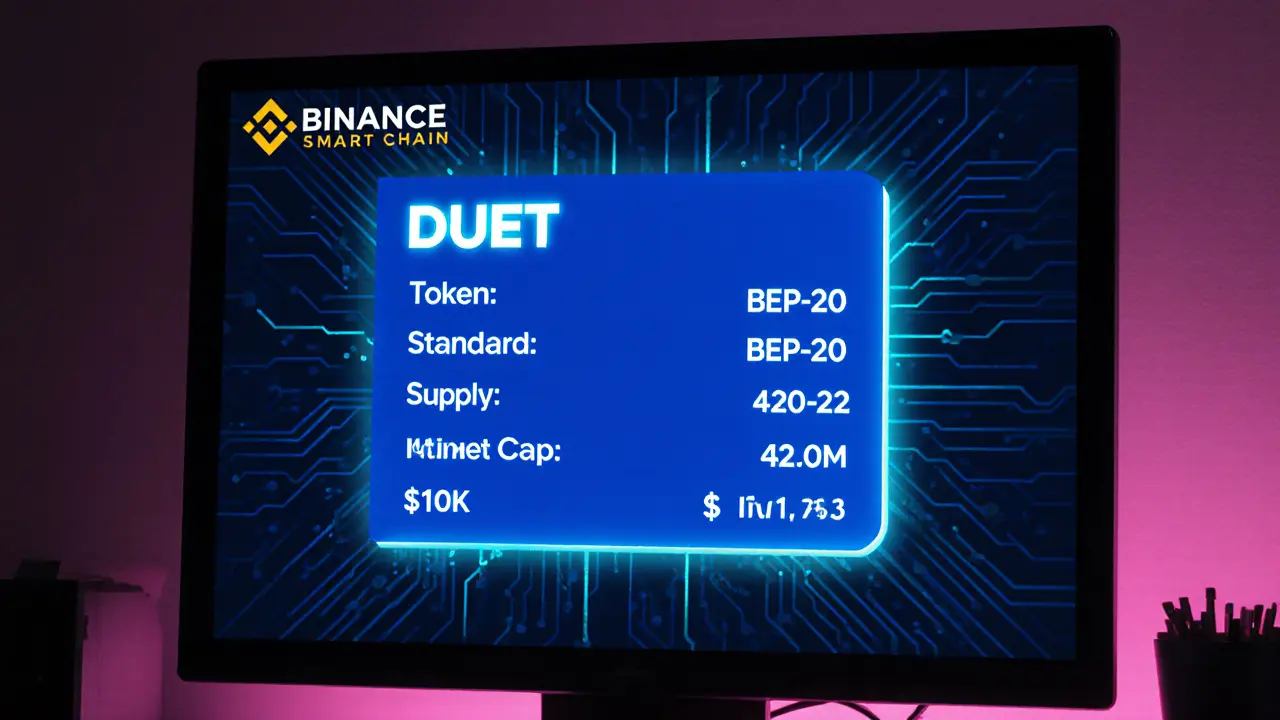
Learn how to claim the DUET airdrop by Duet Protocol in 2025, understand token basics, market data, and risks, plus a step‑by‑step guide.
View More