VSCDEX Security: Protecting Your Decentralized Trading Experience
When talking about VSCDEX security, the set of safeguards that keep the VSCDEX platform safe from hacks, bugs, and fund loss. Also known as VSCDEX safety, it is a critical piece of any decentralized exchange, a peer‑to‑peer platform that lets users trade tokens without a central authority. Strong smart contract audits, independent code reviews that spot vulnerabilities before deployment form the first line of defense. Equally important is liquidity pool safety, monitoring the health of the asset pools that power trades, which prevents sudden draining or price manipulation. These layers work together with broader blockchain security concepts such as hash‑rate robustness and node decentralization, creating an ecosystem where users can trade with confidence. In practice, VSCDEX security also means complying with emerging regulatory standards, offering transparent reporting, and providing real‑time alerts when unusual activity is detected, ensuring that both traders and developers stay ahead of threats.
Core Pillars of VSCDEX Security
VSCDEX security rests on three practical pillars that interlock to form a resilient shield. First, the smart contracts that execute swaps, staking rewards, and fee distribution must be locked down. Audits from reputable firms such as CertiK, Hacken, or Quantstamp deliver detailed reports on re‑entrancy risks, integer overflows, and access‑control gaps, turning code vulnerabilities into actionable fixes before the contracts go live. Second, continuous liquidity pool monitoring watches metrics like depth, slippage, and impermanent loss; automated bots flag abnormal withdrawal spikes that could signal a flash loan attack or a rug pull. Third, user authentication and wallet protection are reinforced with hardware‑wallet integration, multi‑factor prompts, and on‑chain session signatures that make it hard for attackers to hijack accounts. These measures intersect with the larger security model of the underlying blockchain—high hash‑rate, diverse validator set, and regular network upgrades—all of which reduce the chance that a single compromised node can jeopardize the whole platform. By layering code scrutiny, real‑time pool analytics, and robust user safeguards, VSCDEX achieves a defense‑in‑depth approach that balances transparency (open‑source code) with proactive risk management.
Understanding how audits, pool health checks, and user safeguards intertwine gives you a clear lens to evaluate VSCDEX against other DEXs and decide whether it fits your risk tolerance. The articles below dive deeper into real‑world examples—from case studies of liquidity attacks to step‑by‑step audit checklists and open‑source tools you can use to verify contract integrity yourself. Whether you’re a novice trader curious about safe entry points or a seasoned developer building on the platform, the collection offers actionable insights that help you navigate VSCDEX securely. Let’s explore the details and see how each piece fits into the broader security puzzle.
VSCDEX Crypto Exchange Review: Fees, Security, and How It Stacks Up
By Robert Stukes On 14 Oct, 2025 Comments (21)
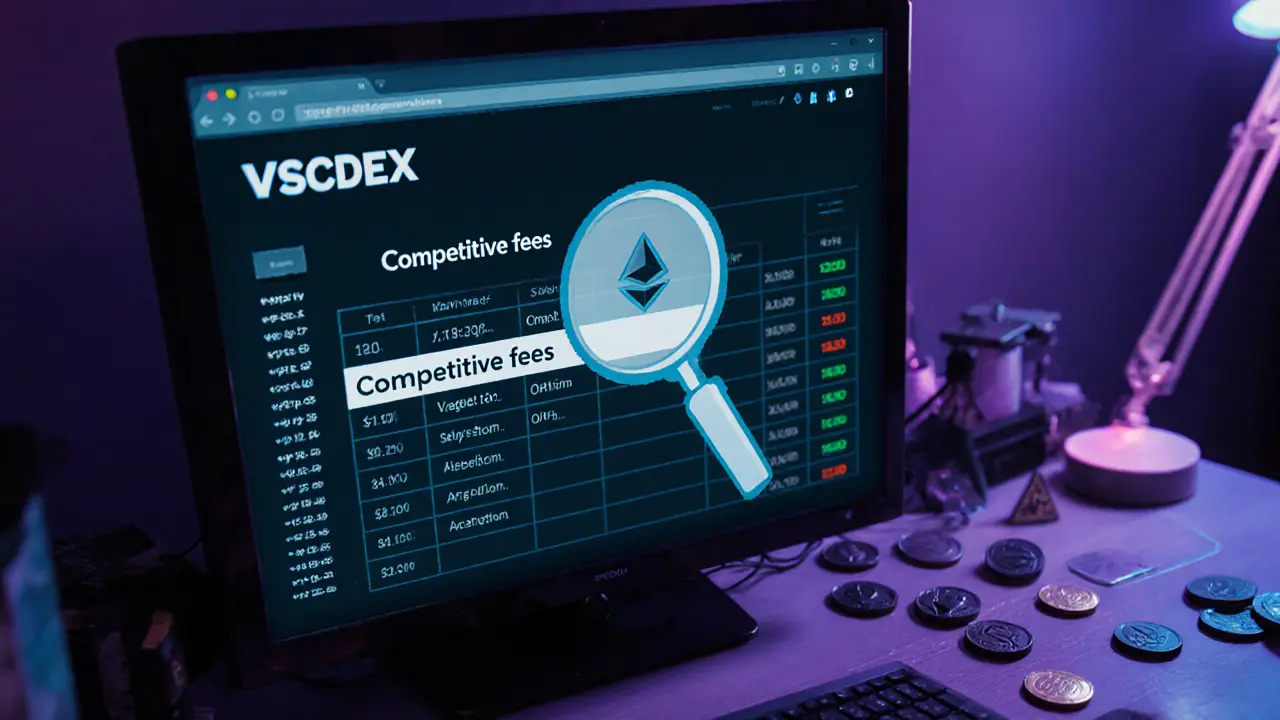
A thorough VSCDEX crypto exchange review covering fees, security, liquidity, and how it measures up against major platforms in 2025.
View More