Security Tokens: What They Are, How They Work, and Where to Find Real Value
When you hear security tokens, blockchain-based digital assets that represent ownership in a real-world asset like equity, real estate, or debt, and are subject to financial regulations. Also known as tokenized securities, they blend the efficiency of crypto with the legal structure of traditional finance. Unlike Bitcoin or meme coins, security tokens aren’t just speculative bets—they’re legally recognized investments. That means they must follow rules set by agencies like the SEC in the U.S. or ESMA in Europe. If a project claims to sell a "token" but doesn’t prove it’s compliant, it’s not a security token—it’s a scam.
Security tokens rely on blockchain securities, digital representations of traditional financial instruments issued and traded on blockchain networks with built-in compliance controls. These tokens often include smart contracts that enforce investor eligibility, lock-up periods, and dividend payouts automatically. For example, a token representing shares in a commercial building might only allow accredited investors to buy it, and dividends could be paid out in stablecoins every quarter without a middleman. This isn’t theory—it’s already happening on platforms like Securitize and Polymarket. But here’s the catch: most of the hype around security tokens died after 2021. Many projects launched with big promises, but failed to get real investors, proper audits, or legal backing. The ones that survived are the ones tied to actual assets with transparent ownership records.
That’s why the posts below don’t talk about flashy new tokens. They focus on what’s real: exchanges that actually handle regulated assets, projects that got shut down for breaking rules, and platforms that claim to be compliant but aren’t. You’ll find reviews of platforms like AirSwap and GateHub—neither of which were built for security tokens, but often get confused with them. You’ll see how airdrops like PAXW or MMS turned out to be empty promises, and why projects like CHAINCREATOR don’t even exist. You’ll learn how regulators in Singapore and Mexico are tightening the screws, and how even stablecoins like EURt are being pulled into the compliance net. There’s no magic here. Just facts: if a token doesn’t have a legal framework, a real asset behind it, and a clear path to trading, it’s not a security token—it’s noise.
What follows isn’t a list of get-rich-quick schemes. It’s a collection of real-world case studies, failed experiments, and honest reviews. If you’re trying to understand where security tokens stand today, these posts show you exactly where the money went—and where it might still be worth looking.
Future of Security Token Markets: How Blockchain Is Rewriting Finance
By Robert Stukes On 8 Dec, 2025 Comments (18)
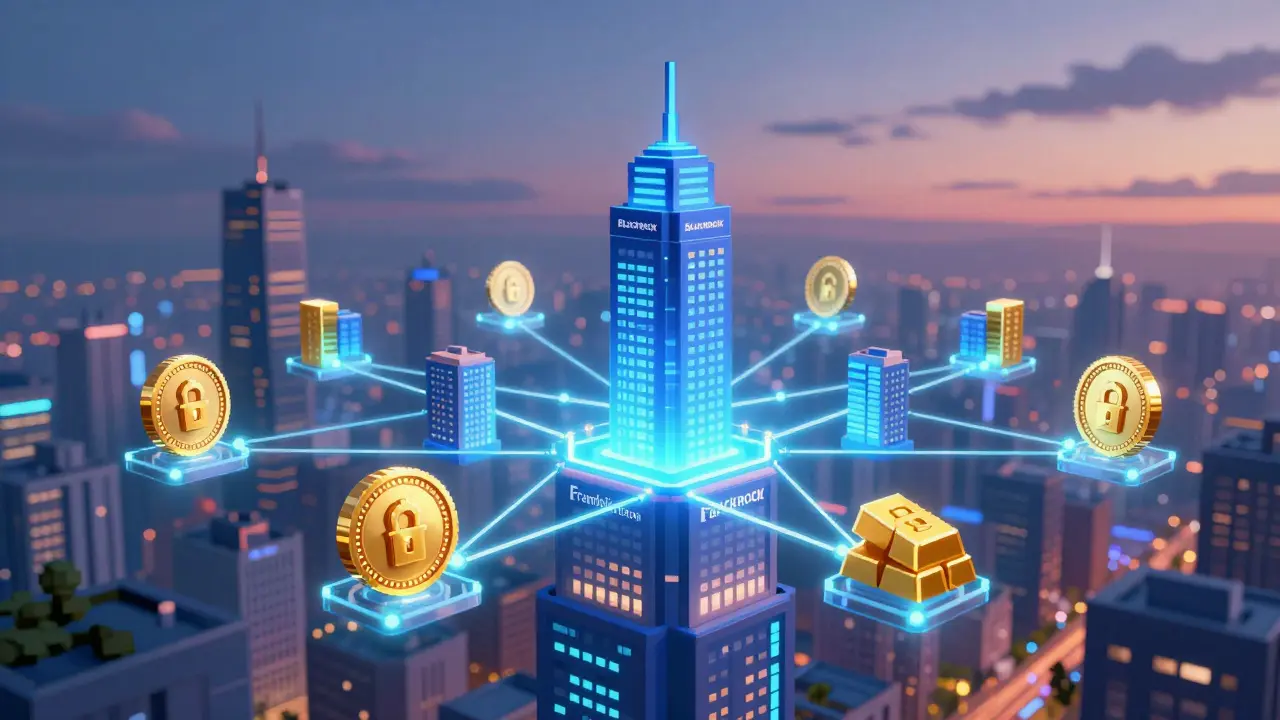
Security token markets are transforming finance by turning real assets like real estate and bonds into digital tokens. With institutional adoption rising and regulation clarifying, this $30 trillion market by 2030 is reshaping how we own and trade value.
View More