
KuangEX Fees: What You Need to Know
When you hear about KuangEX fees, the set of charges the KuangEX platform applies to each trade, deposit, or withdrawal. Also known as KuangEX trading fees, they directly affect your overall profit margin and can decide whether a strategy stays viable over time.
Understanding KuangEX exchange, a crypto‑focused trading venue that offers spot and derivatives markets helps you see why its fee model matters. The platform uses a maker‑taker model, where makers add liquidity and pay lower rates, while takers remove liquidity and pay higher rates. Fee tiers are based on your 30‑day trading volume, meaning the more you trade, the cheaper each transaction becomes. This structure links directly to trading fee structure, the breakdown of maker, taker, and hidden fees that compose the total cost of a trade.
Breakdown of Fee Components
The first semantic triple is: KuangEX fees encompass maker and taker rates. The second is: the maker‑taker model influences overall trading costs. The third: fee tiers require higher volume to unlock discounts. In practice, a maker order on KuangEX might incur a 0.08% charge, while a taker order could be 0.12% before any volume‑based discounts. Withdrawals also carry a flat fee that varies by blockchain, and deposits are typically free, but network congestion can add hidden costs.
Another key entity is fee tiers, the progressive levels that reduce rates as your monthly traded volume rises. For example, users trading under $10,000 a month pay the base rates, while those exceeding $1 million enjoy rates cut by up to 50%. This tiered approach encourages active traders to stay on the platform and rewards high‑volume participants with lower fees.
When you calculate potential profits, you must factor in both visible and hidden costs. The fourth semantic triple states: fee tiers affect profit calculations. A hidden cost often shows up as the spread between the order book and the actual execution price, especially for takers. Additionally, some markets impose a “maker rebate” that can even become a net gain if you provide sufficient liquidity over time.
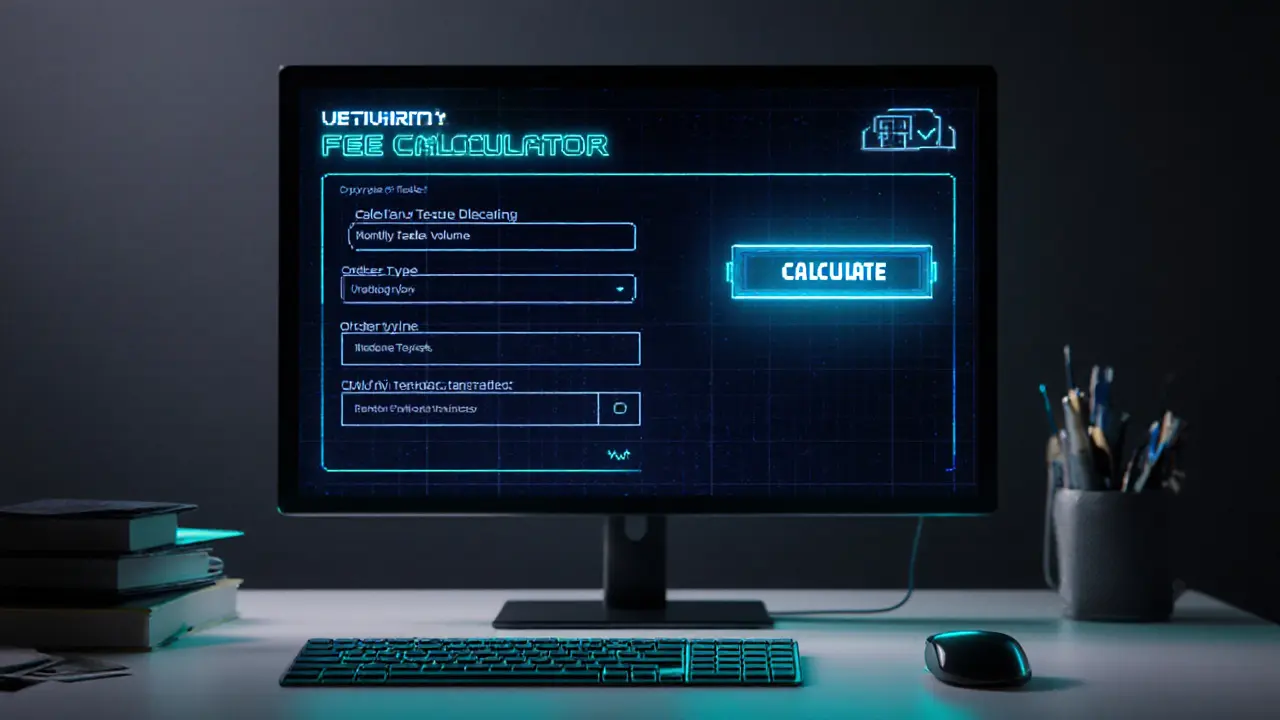
Finally, the fee calculator, a tool many exchanges provide to estimate your costs based on volume and order type is essential for planning. Plug in your expected trade size, choose maker or taker, and the calculator will show the exact fee you’ll pay after tier discounts. This simple step helps you avoid surprise deductions and keeps your strategy aligned with real‑world costs.
All these pieces—maker‑taker rates, fee tiers, withdrawal charges, and the fee calculator—form a network of relationships that shape how much you actually spend on KuangEX. By grasping each component, you can optimize order placement, choose the right market, and even schedule withdrawals during low‑fee windows.
Below you’ll find a curated collection of articles that dig deeper into each aspect: detailed fee tables, comparisons with other exchanges, tips for reducing costs, and real‑world examples of how traders adapt to KuangEX’s pricing model. Dive in to see how the concepts we just covered play out in practice.
KuangEX Crypto Exchange Review - Fees, Security & Features Explained
By Robert Stukes On 2 Jun, 2025 Comments (15)
A concise KuangEX crypto exchange review covering security, fees, assets, trading features, pros, cons, and a step‑by‑step guide for new users.
View More