Generative NFT Collection: What It Is and Why It Matters
When working with generative NFT collection, a set of non‑fungible tokens created by an algorithm, each piece uniquely generated at mint time, you are mixing code with creativity. It’s also called algorithmic NFT series. The engine behind the magic is generative art, art produced by a set of rules or code that yields countless variations. All of this runs on smart contracts, self‑executing code on a blockchain that handles minting, ownership, and royalty distribution. The result is a collection that can scale to thousands or millions of tokens while keeping provable scarcity.
In practice, generative NFT collection relies on a sturdy blockchain, a decentralized ledger that records every token transfer and ensures tamper‑proof provenance. The blockchain also defines the tokenomics, the set of economic rules such as supply caps, royalty percentages, and utility incentives that give a collection value over time. Together they form the backbone: the blockchain guarantees trust, while tokenomics shapes creator revenue and collector incentives. This pair lets a project launch quickly, manage royalties automatically, and build a community around clear financial rules.
Because the process is code‑driven, use cases spread far beyond pure art. Game studios mint in‑game items as part of a generative NFT collection, giving each player a distinct avatar or weapon without hand‑crafting every piece. Brands launch limited‑edition merch drops, where each token unlocks a unique coupon or physical product. Even musicians experiment with algorithmic album covers that change with each stream. In every scenario, the collection’s algorithm provides endless variety, while the smart contract enforces ownership and royalty splits.
Building a collection starts with a clear design schema: decide the traits, rarity weights, and visual layers. Developers then write the generator script—often in JavaScript or Python—to combine those layers into images or 3D models. Once the art is ready, the metadata (image URL, attributes, description) gets stored on a decentralized system like IPFS, ensuring the data stays accessible even if a hosting service goes down. The final step is deploying the smart contract, linking it to the metadata, and opening the mint window. Tools such as Hardhat, Truffle, or specialized platforms like Minty can speed up this workflow, letting creators focus on creativity rather than blockchain plumbing.
Legal and market considerations are just as important as the code. Setting a royalty percentage in the smart contract guarantees creators earn on secondary sales, but the rate must stay competitive to attract traders. Community management—through Discord, Twitter, or dedicated forums—helps maintain demand and informs future drops. Finally, keep an eye on gas fees and layer‑2 solutions; minting on Polygon or Arbitrum can lower costs for users and boost participation, especially for large‑scale collections.
With these fundamentals in mind, the articles below walk you through real‑world examples, deep‑dive reviews of platforms that support generative drops, and step‑by‑step guides on tokenomics design. Explore the collection to see how each piece fits into the bigger picture of crypto, blockchain, and modern digital art.
Marnotaur TAUR NFT Airdrop: Complete Guide & Details
By Robert Stukes On 13 Oct, 2025 Comments (19)
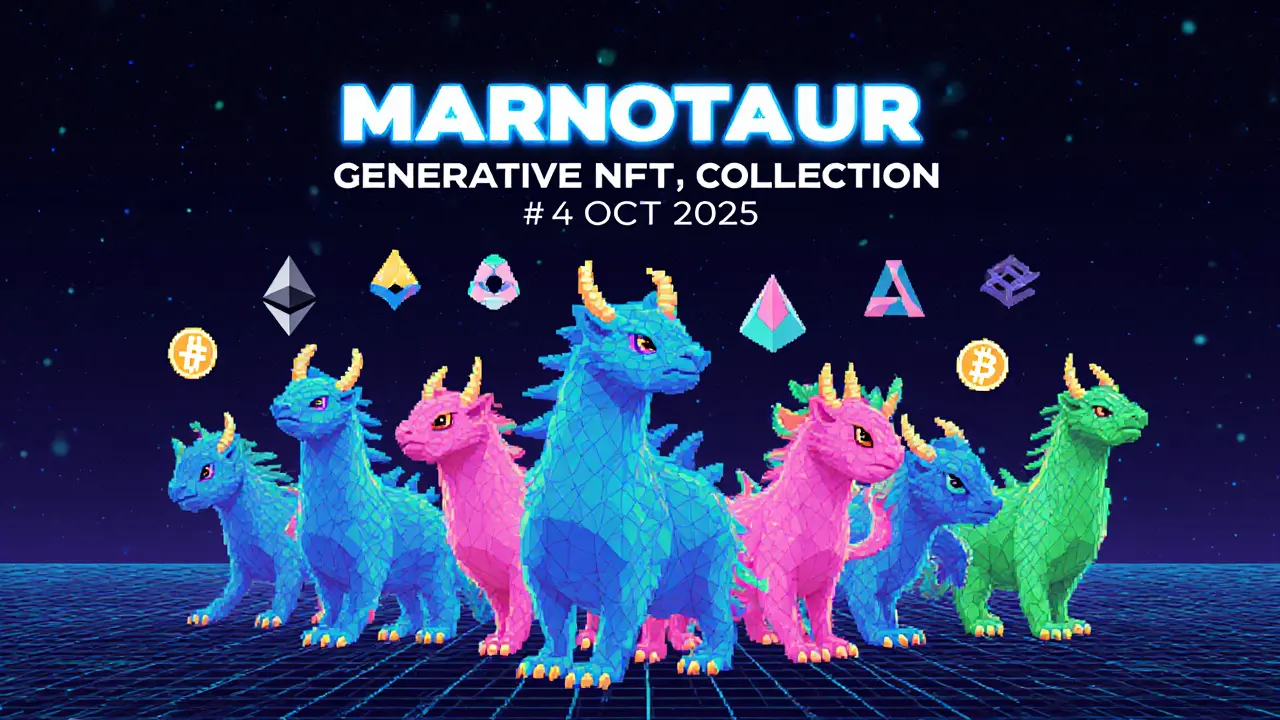
Discover the Marnotaur Generative NFT Collection, TAUR token details, profit‑sharing rules, eligibility, and step‑by‑step guide to claim rewards.
View More