
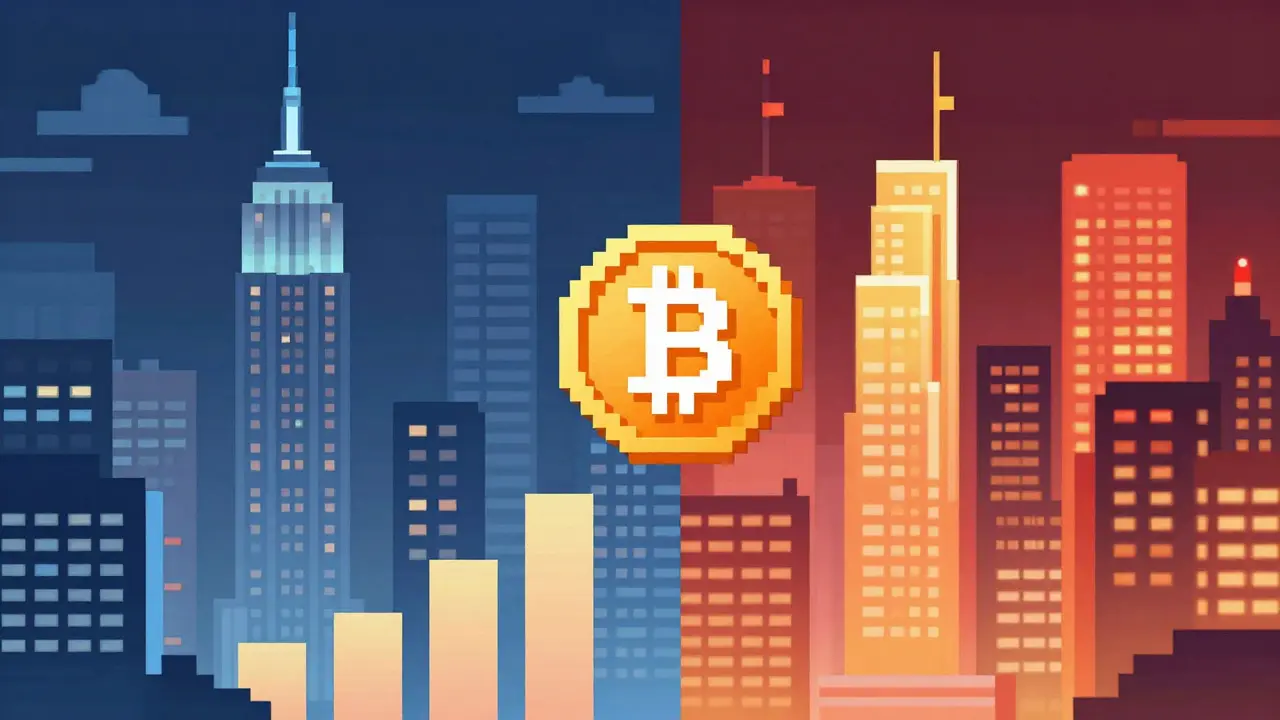
Imagine buying a Bitcoin for $45,000 in New York and selling it for $47,000 in Seoul. That is the reality of the Kimchi premium, a persistent price gap where digital assets trade significantly higher on South Korean exchanges than on global platforms. This phenomenon is not just a curiosity; it is a direct result of strict financial regulations and high local demand that create an isolated market bubble. If you are trading crypto or analyzing market trends, understanding this dynamic is crucial because it signals where money is trapped and how regulatory friction impacts global price discovery.
What Is the Kimchi Premium?
The term "Kimchi premium" refers to the percentage difference between the price of cryptocurrency on South Korean exchanges like UpBit and Bithumb versus international giants such as Binance or Coinbase. While the name sounds playful, referencing Korea’s staple fermented dish, the math behind it is serious. Historically, this premium has fluctuated wildly. In January 2018, it hit a peak of approximately 55%, meaning Koreans were paying half again more for Bitcoin than traders in Europe or the US. Under normal conditions, however, analysts observe the average hovering around 4.5%. But during periods of volatility or specific regulatory news, that number can spike dramatically, creating a distorted view of the asset's true global value.
Why Does This Price Gap Exist?
You might wonder why a global asset like Bitcoin doesn't instantly equalize across borders. The answer lies in three main drivers: demand, restrictions, and speculation.
- High Local Demand: South Korea has one of the most active crypto communities in the world. Traders there show a high willingness to take risks for potential gains. When local buyers outnumber sellers, prices rise above the global benchmark.
- Capital Controls: This is the biggest factor. The Bank of Korea implements strict rules on moving money in and out of the country. These measures, designed to protect the domestic financial system, make it slow and difficult to transfer funds quickly. Arbitrageurs (traders who profit from price differences) often cannot move their money fast enough to exploit the gap before it closes.
- Regulatory Barriers: Anti-money laundering laws and residency requirements mean that only locals with verified ID cards can easily trade on major Korean platforms. This locks out international traders who would otherwise bring supply into the market to balance the price.
The Role of Regulatory Restrictions
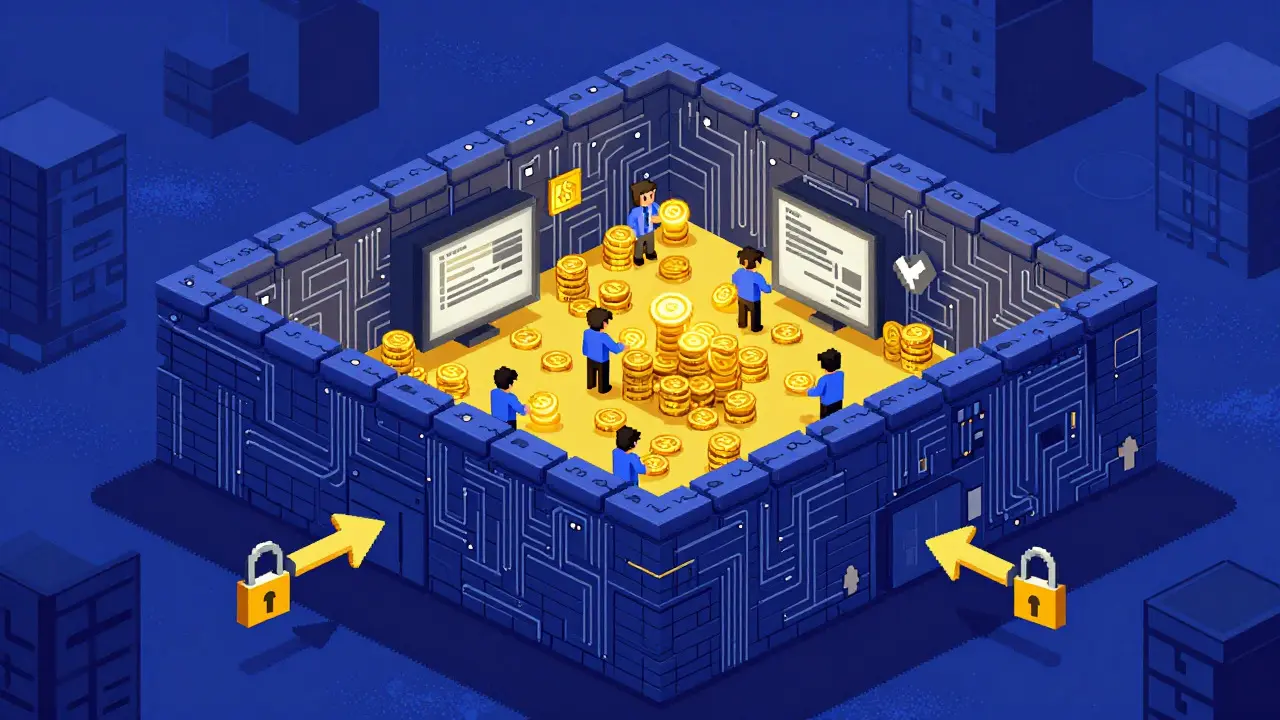
Restrictions are the engine keeping the kimchi premium alive. Unlike open markets where capital flows freely, South Korea treats crypto trading with a cautious hand. The government maintains strict oversight to prevent rapid capital flight that could destabilize the won. For a trader, this means that even if you see a 10% premium, executing a trade to capture that profit involves navigating complex settlement times and banking hurdles. The delay in transferring fiat currency means the arbitrage window often shuts before you can complete the buy-sell cycle. Essentially, the regulations create a walled garden where prices are determined by internal supply and demand rather than global equilibrium.
Speculation and the "Listing Pump"
Beyond structural issues, human behavior amplifies the premium. South Korean traders are known for aggressive speculative strategies. When a new coin is listed on a major exchange like UpBit, it often triggers a "listing pump." Prices surge immediately due to FOMO (fear of missing out), pushing the local price well above the global average. This feedback loop-where high premiums attract more speculators, which drives prices even higher-can keep the premium elevated for days or weeks. It turns the Korean market into a hotbed of volatility that ripples outward, occasionally influencing sentiment in other Asian markets.

Can You Profit From the Kimchi Premium?
For most people, the answer is no. While the theory of arbitrage is simple-buy low globally, sell high in Korea-the execution is fraught with obstacles. International traders face account verification hurdles that require local residency. Even for locals, the time lag in bank transfers eats into profits. Furthermore, transaction fees and spread costs on Korean exchanges can be significant. Professional firms have tried to automate these trades, but the regulatory friction remains too high for consistent, risk-free returns. The premium persists precisely because it is hard to eliminate.
Market Impact and Future Outlook
The kimchi premium serves as a barometer for South Korean market health. A rising premium often indicates strong local bullishness and confidence, while a shrinking premium suggests caution or regulatory tightening. As global institutional adoption grows, some experts predict the premium may shrink over time as cross-border payment rails improve. However, until the fundamental capital controls are relaxed, the gap will likely remain a feature of the crypto landscape. For investors, monitoring this metric provides insight into regional sentiment and the effectiveness of local policies. It reminds us that even in a decentralized world, national borders still hold power over price discovery.
What is the current average Kimchi premium?
Under normal market conditions, the Kimchi premium typically averages around 4.5%. However, this figure is highly volatile and can spike to double digits during periods of high speculation or regulatory uncertainty.
Why do capital controls affect crypto prices?
Capital controls limit the speed at which money can enter or leave South Korea. Since arbitrage relies on quick fund transfers to exploit price gaps, these delays prevent traders from equalizing prices, allowing the local premium to persist.
Which exchanges drive the Kimchi premium?
The primary drivers are major South Korean exchanges such as UpBit and Bithumb. These platforms dominate local trading volume, so their order books directly influence the divergence from global prices seen on venues like Binance or Coinbase.
Is the Kimchi premium a good indicator of market sentiment?
Yes. An expanding premium usually signals strong local demand and bullish sentiment among Korean traders. Conversely, a narrowing premium may indicate cooling enthusiasm or increased regulatory pressure on the market.
Can international traders easily exploit this premium?
Generally, no. Strict KYC (Know Your Customer) requirements often mandate local residency and identification for trading on Korean exchanges. Additionally, slow cross-border bank settlements make fast arbitrage difficult for outsiders.



Abigail Sparks
August 17, 2026 AT 18:19Let's be real here, the "Kimchi Premium" is basically a tax on inefficiency. If you think this is just a fun quirk of the market, look at the data again. The capital controls are so tight that arbitrageurs are stuck in limbo. It’s not about the crypto; it’s about the friction. You can’t fix what you don’t measure, and this premium is the loudest measurement we have for how broken cross-border fiat rails still are. Stop romanticizing the volatility and start respecting the structural barrier. That gap isn't an opportunity; it's a symptom of a walled garden.
OLIVER CHRISTIAN
August 19, 2026 AT 06:12Great breakdown. I always appreciate when someone explains the *why* behind the price action rather than just the *what*. The point about the listing pump is crucial too. We see it happen every time a new token hits UpBit. It’s wild how much local sentiment can skew global prices if the liquidity pool is isolated enough. Thanks for clarifying the settlement delays as well; that’s the part most retail traders overlook when they try to arb these gaps manually.
Kelsey Anne
August 20, 2026 AT 01:58You’re all missing the moral dimension. Why do we tolerate such blatant market distortion? It’s unfair to global holders who pay fair value while locals get subsidized by regulatory lag. Pure inefficiency dressed up as 'local demand'.
Mike Baca
August 20, 2026 AT 16:21its kinda like watching a car crash in slow motion but with money instead of metal. the whole concept of a 'global' market falling apart because of border control is deeply ironic right? i mean we talk about decentralization and borderless finance but here we are... stuck in a won-denominated bubble. its almost poetic in its failure. the regulators probably didn't even realize they were creating a separate parallel universe for bitcoin prices. just another day in the life of a fragmented asset class.
Teri W
August 22, 2026 AT 11:19This is actually a tragedy for the Korean economy! They are paying a hidden tax on their own financial freedom. How is this sustainable long-term? It feels like the government is holding the market hostage for the sake of stability, but at what cost to the people? We need to wake up to this reality before it spirals out of control completely.
Leah Humphrey
August 24, 2026 AT 06:25The bid-ask spread on UpBit during high vol is a nightmare for HFT desks. Slippage eats the alpha before the wire transfer even clears. It’s a dead end for quant strategies unless you have deep local banking relationships. Just noise, honestly.
Rod Sidoroff
August 24, 2026 AT 10:03It is amusing to watch the masses obsess over a metric that is entirely irrelevant to true wealth accumulation. The 'premium' is merely a reflection of domestic liquidity constraints, a triviality that serious investors ignore in favor of fundamental yield. Do not let your attention be captured by the whims of regional exchange order books. Focus on the macro narrative, or remain in the shallow end of the pool where such curiosities thrive.
Jay Johhnston
August 24, 2026 AT 15:35From a cultural perspective, this makes sense. Korea has a very specific relationship with risk and community trading. The 'listing pump' isn't just FOMO; it's a social event. When a coin lists, it's talked about everywhere. So yes, the price reflects that collective energy. It’s a unique feature of the Asian crypto scene that Westerners often underestimate.
Niall O'Rourke
August 26, 2026 AT 12:02sure why not. its just another example of how borders still matter in a world that claims to be borderless. the irony is lost on most people i guess. the 'decentralized' revolution is just as centralized as the banks it was supposed to replace. just different bosses now. enjoy the kimchi.
Jillian Groskreutz
August 28, 2026 AT 06:01You clearly haven't read the whitepaper on monetary policy; this is basic macroeconomics 101! The Bank of Korea knows exactly what they are doing! It is a calculated risk to protect the Won! Stop spreading misinformation about 'trapped money'; it is simply efficient capital allocation within a sovereign boundary!
Carmene Jackson
August 28, 2026 AT 07:13ugh i hate how complicated this stuff is. i just want to buy my coins without worrying about which country's bank is going to hold my funds for three days. it makes me feel so small. why can't we just have one price for everything?
Jennifer Ulmer
August 29, 2026 AT 05:20The divergence is a beautiful chaos. It’s a stress test for our assumptions about price discovery. When the premium spikes, it’s not just a number; it’s a signal of trapped liquidity screaming for an exit. We should stop looking at it as a bug and start seeing it as a feature of a segmented global market. The friction is the product.
Jade Brown
August 30, 2026 AT 23:41Look at the basis trade yields! While you lot argue about morality, the pros are farming the carry. The delta-neutral position is printing money right now. The premium isn't a glitch, it's the fee structure for those with the speed to capture it. The rest of you are just spectators paying the spread. Don't confuse sentiment with solvency. The market doesn't care about your feelings, it cares about flow. And right now, the flow is blocked, creating pressure. Release the pressure, and the boom will be deafening. Or silent. Either way, you're on the wrong side of the desk.
Stephanie Millar
September 1, 2026 AT 08:30It is fascinating to compare this with the UK's open market approach; the contrast is stark! One wonders if similar premiums could emerge elsewhere if regulations tightened significantly! It highlights just how much policy shapes price discovery, doesn't it? A truly illuminating topic for anyone studying international finance!
Nikki keller
September 2, 2026 AT 06:56I find myself thinking about the philosophical implications of 'value' here. If two markets agree on the asset but disagree on the price due to access, where does the truth lie? Is the global price the 'real' value, or is the local price the 'real' value for the local holder? It seems like both are true simultaneously. We need to accept that in a fragmented world, there is no single objective truth for price, only contextual truths. This isn't a problem to solve; it's a condition to understand.
miranda gamboa
September 3, 2026 AT 05:12This is a massive opportunity for DeFi protocols to step in! Imagine if stablecoin bridges could bypass the fiat settlement delay entirely. We could create a synthetic arbitrage loop that doesn't require moving KRW at all. The tech is ready; the regulation is the only wall left. Let's build the bridge, not just complain about the gap. The future is seamless cross-border liquidity, and this premium is the last hurdle standing in the way of full integration. Let's get to work!