

Imagine trying to send money home to your family, only to lose 15% of it to fees and wait a week for the transfer to clear. Now imagine having no bank account at all because you live too far from a branch or lack the right paperwork. For 1.4 billion adults globally, this isn't a hypothetical nightmare-it’s daily life. But a quiet revolution is happening in regions where traditional finance fails. Cryptocurrency is stepping in not as a speculative asset for tech bros, but as a lifeline for the excluded.
In developing nations, cryptocurrency acts as a tool for financial inclusion by bypassing restrictive banking infrastructure and high-cost intermediaries. It offers a way out of systemic exclusion, allowing people to save, send, and receive value using nothing more than a smartphone. This shift challenges the old gatekeepers of global finance.
The Wall of Exclusion: Why Traditional Banks Fail
To understand why crypto matters here, you first have to look at what blocks access. In Sub-Saharan Africa, for example, only 49% of adults held bank accounts as of 2021. The barriers aren't just about poverty; they are structural. Traditional banks require physical branches, extensive identity documentation, and minimum balance deposits. If you are a farmer in rural Kenya or a day laborer in Nigeria, these requirements might as well be written in another language.
Furthermore, the cost of doing business with traditional institutions is prohibitive. Cross-border remittances-the lifeblood of many developing economies-typically incur fees ranging from 6% to 15%. On top of that, processing times stretch from days to weeks. When a migrant worker sends money home, every percentage point lost to fees is food off the table. The World Bank has documented a clear pattern: where Bitcoin adoption rises, metrics for financial inclusion often improve alongside it. People are voting with their wallets because the old system doesn't serve them.
Blockchain: The Technical Bridge Over Broken Infrastructure
The magic lies in the technology underpinning these currencies. Blockchain is a decentralized ledger that records transactions across a network of computers. Unlike a bank, which sits in one place and controls your data, the blockchain is distributed. This means no single entity can freeze your assets or deny you service based on arbitrary rules.
| Feature | Traditional Bank | Cryptocurrency Wallet |
|---|---|---|
| Access Requirement | ID documents, proof of address, credit history | Smartphone, internet connection |
| Account Opening Time | Days to weeks (branch visit required) | Instant (digital download) |
| Minimum Balance | Often required ($10-$100+) | None |
| Geographic Constraint | Limited to branch locations | Global access via internet |
| Cross-Border Fees | 6% - 15% | Typically under 1% |
This accessibility is transformative. A user in Ghana can create a wallet instantly without visiting a branch. They don’t need a credit score. They just need connectivity. While internet access remains uneven, mobile penetration in Africa is soaring, making smartphones the new bank branches. This technical foundation allows individuals to participate in the global economy without asking permission from local regulators or international banks.
Remittances: Cutting the Middleman Fat
Let's talk about money movement. Remittances are critical for developing nations, often accounting for a significant portion of GDP in countries like Haiti or El Salvador. Currently, services like Western Union dominate this space, but they come with heavy price tags. Fees eat into the value of the transfer, and delays mean families wait longer for support.
Cryptocurrencies like Bitcoin or stablecoins (crypto pegged to the US dollar) change this dynamic entirely. Transactions settle in minutes, sometimes seconds, regardless of distance. The cost? Often less than 1% of the transaction value. For a $100 transfer, that’s saving $5 to $15 per transaction. Multiply that by millions of workers sending money home, and you’re looking at billions of dollars retained within developing communities rather than siphoned off by intermediaries.
Moreover, crypto enables direct peer-to-peer transfers. No correspondent banks. No foreign exchange desks marking up the rate. Just sender to receiver. This efficiency makes global trade accessible even for small vendors who previously couldn't afford the overhead of international payments.
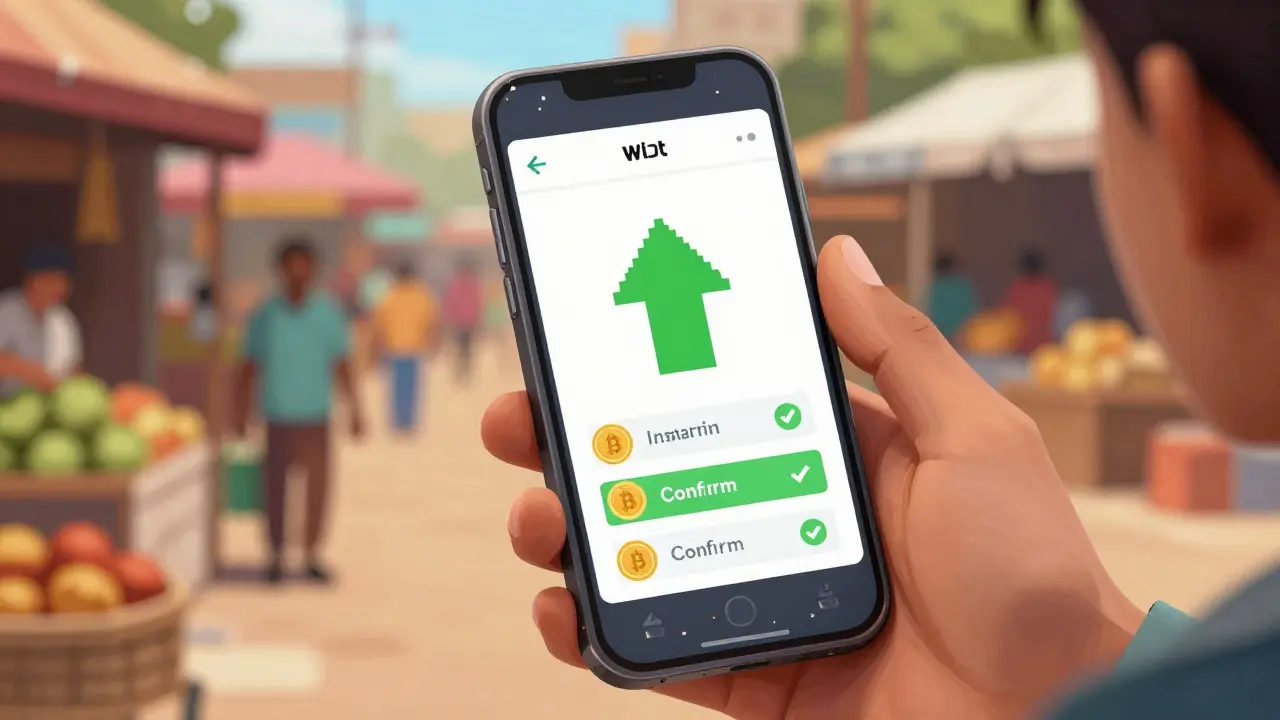
Hedging Against Hyperinflation
Money loses its meaning when it evaporates overnight. In countries experiencing currency crises-think Venezuela, Argentina, or Lebanon-holding local cash is a losing game. Inflation rates can skyrocket, eroding purchasing power faster than wages rise. Savings accounts become traps, locking away value that disappears due to banking system fragility and monetary policy failures.
Bitcoin was designed specifically to address this issue. Its supply is capped at 21 million coins, creating a deflationary pressure model unlike fiat currencies, which central banks can print endlessly. For citizens in hyperinflationary environments, converting savings into Bitcoin offers a hedge against currency devaluation. It provides a store of value that is global, neutral, and immune to local political decisions. While volatility exists, the alternative-watching your life savings turn to dust in local currency-is often worse.
The Barriers: It’s Not All Smooth Sailing
If crypto is so great, why isn’t everyone using it? The reality is complex. A 2025 literature review of 21 peer-reviewed studies highlighted four major obstacles holding back widespread adoption:
- Regulatory Uncertainty: Many governments haven't decided if crypto is legal, illegal, or taxable. This ambiguity scares users away. Without clear laws, people fear their assets could be seized or frozen.
- Technological Gaps: You need a smartphone and reliable internet. In rural areas, connectivity is spotty. If the network goes down, your bank does too.
- Security Concerns: Losing your private key means losing your money forever. There is no customer service line to call. This creates anxiety among users with low digital literacy.
- Market Volatility: Price swings can wipe out value quickly. Low-income users cannot afford to gamble their grocery money on a volatile asset.
Additionally, education is lacking. Understanding how to manage a wallet, secure keys, and verify transactions requires a learning curve that steepens when basic digital skills are scarce. These aren't minor hurdles; they are existential risks for someone relying on crypto for survival.

Complementing, Not Replacing: The Hybrid Future
Experts at Georgetown University’s McDonough School of Business argue that crypto shouldn't replace banks but complement them. Think of it as a layer on top of existing systems. For the unbanked, crypto provides initial access. For the banked, it offers better tools for cross-border trade and efficient settlements.
We are already seeing this hybrid model emerge. Central banks in Ghana and Nigeria are testing Central Bank Digital Currencies (CBDCs). These are government-backed digital tokens that run on blockchain-like technology. They aim to combine the trust of state backing with the efficiency of digital transfers. Meanwhile, private platforms are integrating crypto rails to allow instant conversions between local currency and stablecoins, reducing friction for everyday users.
Tokenization is another frontier. By turning real-world assets-like land titles or small business invoices-into digital tokens, entrepreneurs in developing countries can access capital markets previously closed to them. A small business owner can raise funds globally without needing a local loan approval process that favors the wealthy.
What Needs to Happen Next?
For cryptocurrency to truly fulfill its promise as a tool for financial inclusion, several things must align. First, governments need to create balanced regulatory frameworks. Bans drive activity underground; clear rules bring it into the light, protecting consumers while fostering innovation.
Second, infrastructure investment is crucial. Expanding internet access to rural areas is non-negotiable. Third, education initiatives must scale. Users need simple, intuitive interfaces and robust customer support to mitigate security fears. Finally, stability solutions like stablecoins need broader acceptance to reduce the risk of volatility for daily transactions.
The potential is massive. We are looking at a future where geography doesn't dictate financial destiny. Where a farmer in Kenya can sell goods globally, save securely, and receive payments instantly. But getting there requires navigating regulatory minefields, bridging digital divides, and building trust. The technology is ready. The question is whether society will adapt to let it work.
Is cryptocurrency legal in developing countries?
Legality varies widely. Some countries like El Salvador have adopted Bitcoin as legal tender. Others, like Nigeria and India, have imposed strict regulations or taxes but not outright bans. Many nations remain in a gray area, lacking specific laws. Always check local regulations before using crypto, as policies can change rapidly.
How do I start using crypto if I have no bank account?
You typically need a smartphone and internet access. You can download a non-custodial wallet app (like Trust Wallet or MetaMask) which generates a unique address for you. To get crypto, you can use peer-to-peer (P2P) platforms where you buy directly from other users using local payment methods like mobile money or cash, avoiding banks entirely.
Are cryptocurrencies safe from theft?
The blockchain itself is highly secure and nearly impossible to hack. However, user error is the biggest risk. If you lose your private keys (passwords), you lose access to your funds forever. Phishing scams and insecure devices are also threats. Using reputable hardware wallets for large amounts and keeping software updated helps mitigate these risks.
Why are remittance fees lower with crypto?
Traditional remittances involve multiple intermediaries: pickup agents, correspondent banks, and foreign exchange bureaus, each taking a cut. Crypto operates on a decentralized network, allowing direct peer-to-peer transfers. This eliminates middlemen, drastically reducing costs and speeding up settlement times.
Can crypto help protect my savings from inflation?
Yes, particularly assets with fixed supplies like Bitcoin. Unlike fiat currencies that can be printed indefinitely by central banks, leading to devaluation, Bitcoin's supply is capped. This scarcity can preserve value over time, especially in countries with unstable local currencies. However, short-term price volatility should be considered.