
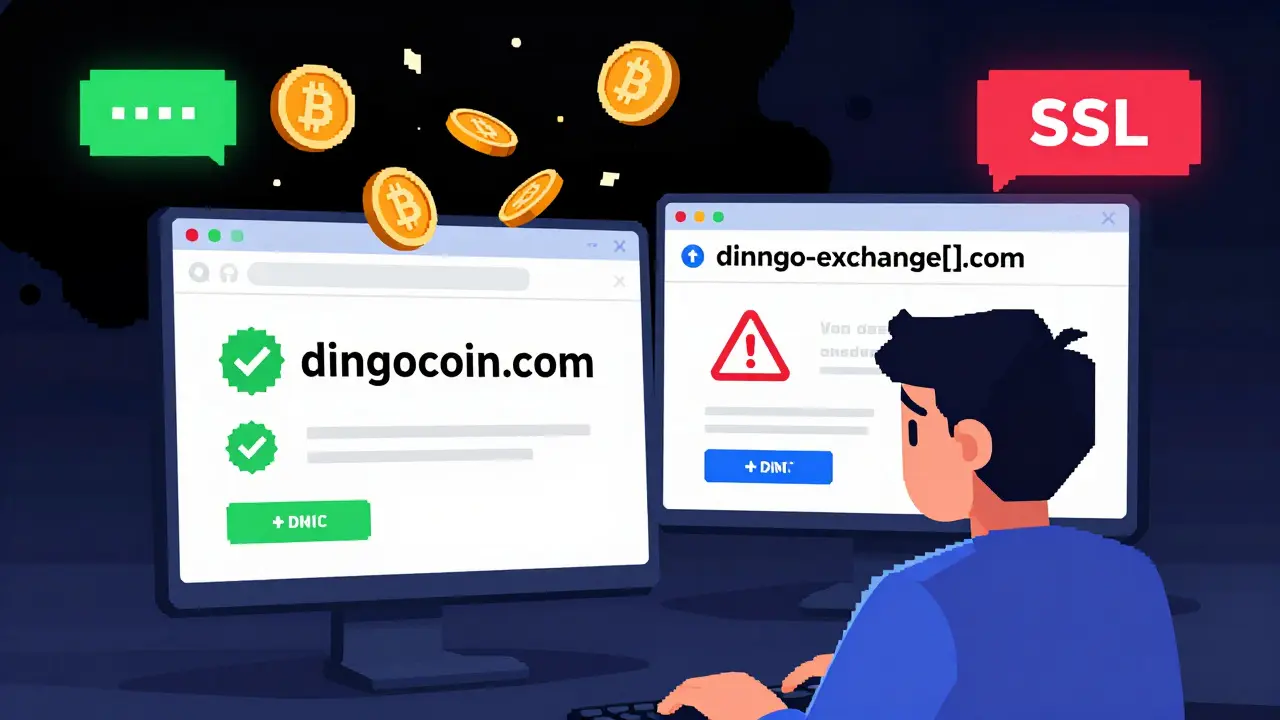
There’s no such thing as a legitimate crypto exchange called DINNGO. If you’ve seen ads, YouTube videos, or pop-ups promoting a platform named DINNGO - with double N’s - you’re being targeted by a scam. This isn’t a new exchange. It’s not even a real platform. It’s a carefully crafted fraud designed to look like Dingocoin (DINGO), a real cryptocurrency, and trick people into depositing money they’ll never see again.
Why DINNGO Doesn’t Exist
You won’t find DINNGO on CoinGecko, CoinMarketCap, CryptoCompare, or any other trusted crypto data site. As of November 2025, every major exchange tracker confirms: no exchange named DINNGO is listed anywhere. That’s not an oversight. It’s a red flag. Legitimate exchanges - even small ones - get listed within weeks of launching. DINNGO has zero presence across all verified systems. The name is a deliberate misspelling of Dingocoin (DINGO), a real cryptocurrency that launched as a Dogecoin fork. Scammers rely on this confusion. Typo-squatting like this is one of the fastest-growing crypto scams. According to the Commodity Futures Trading Commission, 47 consumer complaints about DINNGO platforms were filed between January and September 2024. Total losses? Over $1.27 million.How the Scam Works
Here’s how it plays out:- You search for “Dingocoin trading” and find a website: dinngo-exchange[.]com
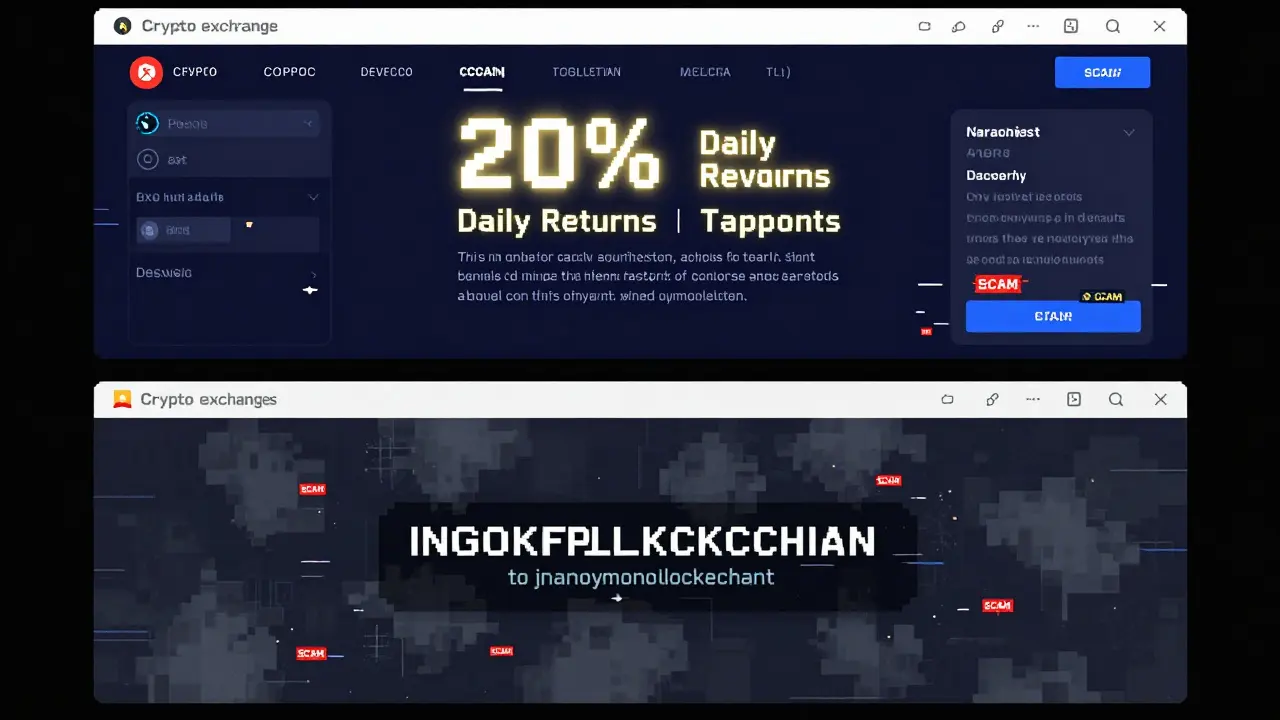
- The site looks professional - clean design, fake testimonials, and promises like “20% daily returns” or “high security measures”
- It claims to support DINGO trading, even showing fake charts and balances
- You deposit USDT, BTC, or another crypto - and the moment you do, the site vanishes
Dingocoin (DINGO) Is Real - DINNGO Is Not
Dingocoin (DINGO) is a legitimate BEP-20 token on the BNB Chain. It has an official website (dingocoin.com), a development team, and real trading volume. As of November 2025, DINGO has a market cap of $4.7 million and trades on verified exchanges like MEXC Global, CoinEx, and AscendEX (BitMax). These exchanges follow strict rules:- Mandatory KYC verification (identity checks)
- Two-factor authentication (2FA) using Google Authenticator or similar
- Compliance with the FATF Travel Rule - requiring transaction data for transfers over $1,000
- Public FinCEN IDs for U.S.-registered platforms
How to Spot a Fake Crypto Exchange
You don’t need to be a tech expert to avoid these scams. Here’s what to check:- Check the URL - Is it dingocoin.com or dinngo-exchange[.]com? One extra letter makes all the difference.
- Verify on CoinGecko or CoinMarketCap - Search for the exchange name. If it’s not there, it’s fake.
- Look for SSL certificates - Click the padlock icon in your browser. Does the certificate match the domain? If not, leave.
- Search for reviews - Try “DINNGO scam” or “DINNGO review Reddit.” Real exchanges have hundreds of reviews. Scams have none - or only glowing ones written in broken English.
- Check regulatory status - U.S. exchanges must have a FinCEN ID. If you can’t find it, walk away.
What Happens When You Deposit
Once you send crypto to a fake exchange like DINNGO, it’s gone for good. These platforms don’t store your funds. They don’t even try to trade. They’re just digital pickpockets. Your crypto gets instantly moved to a wallet controlled by the scammer - often a newly created address with no history. There’s no customer service. No recovery process. No legal recourse unless you report it to authorities. The Financial Crimes Enforcement Network (FinCEN) says over 90% of these scams are run from overseas, making recovery nearly impossible. In 2024, the SEC filed 14 lawsuits against fake exchanges using misspelled names - but those are just the ones they caught.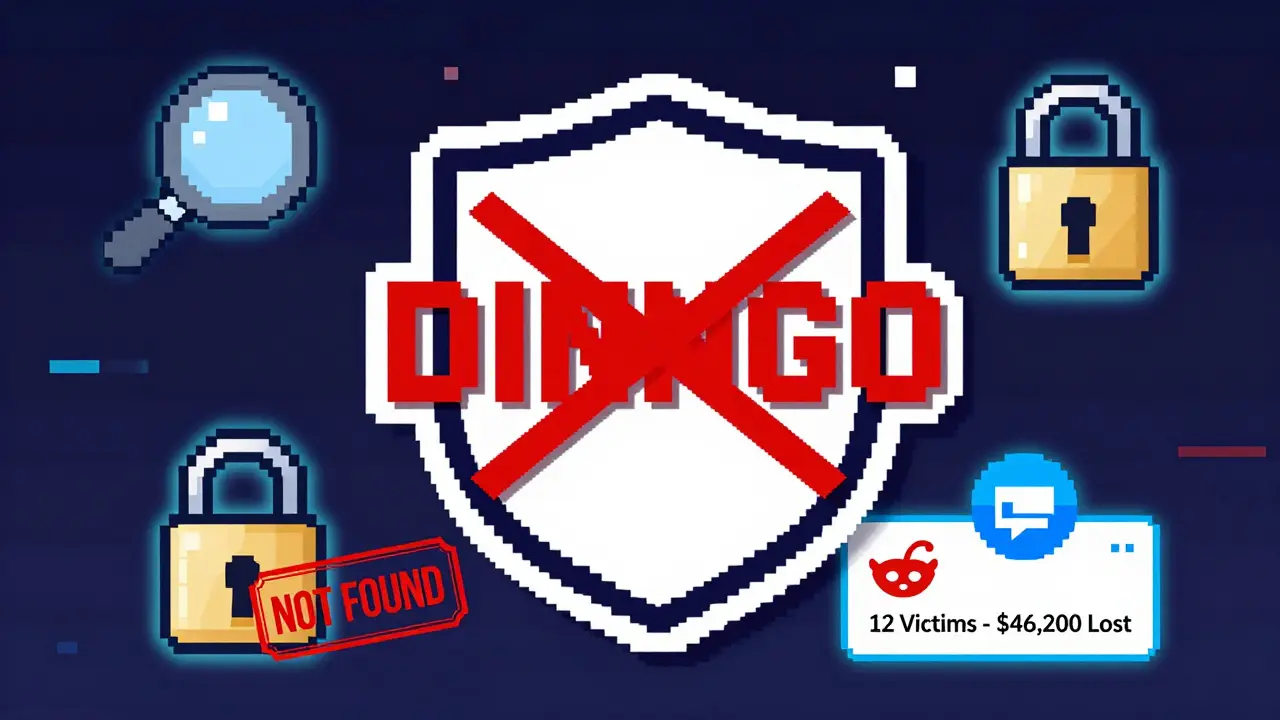
Where to Trade Dingocoin (DINGO) Legitimately
If you want to trade DINGO, use one of these verified exchanges:- MEXC Global - 4.2/5 rating on Trustpilot, 1,853 reviews as of November 2025
- CoinEx - Supports DINGO/USDT, DINGO/BTC pairs
- AscendEX (BitMax) - High liquidity, strict KYC
- letsexchange.io - Recently added DINGO for fiat on-ramps as of November 2025
What Experts Are Saying
Dr. Sarah Chen, Director of MIT’s Digital Currency Initiative, testified before Congress in October 2024: “Deliberate misspellings like DINNGO instead of DINGO represent one of the fastest-growing scam methodologies.” The Cambridge Centre for Alternative Finance found that 68% of crypto exchange scams in 2024 used typo-squatting. That’s more than phishing links, fake apps, or influencer scams combined. The European Banking Authority updated MiCA regulations in November 2025 to require trademark verification for all exchange names - a direct response to scams like DINNGO.Final Warning
If someone tells you DINNGO is the “newest, safest, highest-yield” crypto exchange - they’re lying. There is no DINNGO. There never has been. The only thing this name is good for is stealing money. Stick to exchanges you can verify through official sources. Never trust a site that doesn’t show its regulatory ID. Never invest based on a YouTube ad or a Telegram group. And always, always check the spelling. Dingocoin (DINGO) is real. DINNGO is not. Don’t confuse the two - or you’ll lose everything.Is DINNGO a real crypto exchange?
No, DINNGO is not a real crypto exchange. It does not appear on any legitimate crypto tracking platform like CoinGecko, CoinMarketCap, or CryptoCompare. All evidence points to it being a scam site designed to mimic Dingocoin (DINGO) and steal user funds.
What’s the difference between DINNGO and Dingocoin (DINGO)?
Dingocoin (DINGO) is a real cryptocurrency - a Dogecoin fork that trades on verified exchanges like MEXC and CoinEx. DINNGO (with double N’s) is a fake exchange name created by scammers to trick people searching for DINGO. One extra letter makes all the difference.
Can I trade Dingocoin (DINGO) on DINNGO?
No, you cannot. DINNGO doesn’t exist as a functional platform. If you try to trade DINGO there, you’ll lose your funds. Trade DINGO only on verified exchanges like MEXC Global, CoinEx, AscendEX, or letsexchange.io.
How do I know if a crypto exchange is real?
Check three things: 1) Is it listed on CoinGecko or CoinMarketCap? 2) Does it require KYC and 2FA? 3) Does it have a public FinCEN ID (for U.S. platforms)? If any of these are missing, it’s likely a scam.
What should I do if I already sent crypto to DINNGO?
Immediately stop all communication with the site. Report the scam to the FTC at ReportFraud.ftc.gov and to your local financial crimes unit. Unfortunately, recovering funds from these scams is extremely rare - the money is usually moved instantly to untraceable wallets. Learn from this and double-check every exchange name in the future.
Why do scammers use names like DINNGO?
Because people type quickly and make mistakes. Scammers rely on typos. If you search for “Dingocoin exchange,” you might accidentally type “DINNGO.” These scams are designed to catch you in that moment of error. They’re not targeting experts - they’re targeting anyone who doesn’t double-check the URL.

Jill McCollum
January 18, 2026 AT 23:21omg i just lost $3k to this dinngo thing last month 😭 i thought it was the new dingocoin exchange... so embarrassing. i didnt even check the spelling. lesson learned the hard way.
Hailey Bug
January 20, 2026 AT 18:03Always verify the domain before depositing. Dingocoin (DINGO) is on MEXC, CoinEx, AscendEX - no exceptions. If it’s not listed on CoinGecko, it’s not real. No ifs, ands, or buts.
Josh V
January 20, 2026 AT 23:54if you fall for this you deserve to lose your money bro
CHISOM UCHE
January 22, 2026 AT 08:31the typographical spoofing vector here is a textbook example of social engineering in decentralized finance ecosystems. the attack surface expands exponentially when user intent converges with lexical ambiguity in domain registration protocols.
Ashlea Zirk
January 23, 2026 AT 18:13While I appreciate the thoroughness of this breakdown, I must emphasize that regulatory compliance remains the most reliable indicator of legitimacy. The absence of a FinCEN ID, coupled with non-compliance with the FATF Travel Rule, renders any platform operating under the name DINNGO not merely untrustworthy, but legally nonviable.
Chris Evans
January 24, 2026 AT 16:14It’s not just a scam - it’s a mirror. We live in a world where attention is currency, and scammers know we’re too tired to read the fine print. DINNGO doesn’t steal crypto - it steals our trust in the illusion of easy gains. And that’s the real loss.
Pat G
January 26, 2026 AT 14:36US citizens need to stop trusting foreign websites. This is why we need stricter border controls on digital assets. No more crypto nonsense from overseas.
Alexandra Heller
January 26, 2026 AT 17:30People are so eager to get rich quick they’ll click any link that promises miracles. This isn’t about crypto - it’s about the moral decay of a generation that confuses convenience with wisdom. You don’t get wealth without work, discipline, or due diligence. And yet… here we are.
myrna stovel
January 26, 2026 AT 19:48Hey, if you’re new to crypto and just starting out - please take a breath. Double-check every name. Bookmark the real exchanges. Save this post. You’re not alone if you got tricked. What matters now is learning and protecting others. You’ve got this.
Hannah Campbell
January 27, 2026 AT 10:50so dinngo is a scam?? shocking. next you'll tell me the moon landing was fake or that my dog doesn't love me
Bryan Muñoz
January 28, 2026 AT 20:27you think this is just some random scam? nah man. this is part of the deep state’s plan to control crypto. they want you to think it’s typos but it’s really a distraction so they can monitor your wallet movements. they’re using dinngo to track who’s dumb enough to click
Rod Petrik
January 30, 2026 AT 12:14they’re all connected. dinngo, ftx, terra, luna - it’s all the same cabal. the government and big finance created these fake names to scare people away from real crypto so they can keep control of the dollar. i’ve seen the patterns. they’re watching us
Christina Shrader
February 1, 2026 AT 09:13Just saved someone I know from depositing into this. I sent them this post. Always good to share knowledge. You never know who might be one click away from losing everything.
Michael Jones
February 1, 2026 AT 11:49Pro tip: Use a password manager with URL autofill. It won’t auto-fill dinngo-exchange[.]com if you typed dingocoin.com. Small habits prevent big losses.
Alexis Dummar
February 2, 2026 AT 04:36man i used to think i was smart until i almost sent my eth to dinngo last year. i caught it because the ssl cert said 'dingocoin-secure[.]xyz' - total mismatch. i was so close to being that guy. never again.
Lauren Bontje
February 3, 2026 AT 20:43why are we even talking about this? if you’re dumb enough to click a random link then you deserve to get scammed. this isn’t a public service announcement - it’s a Darwin Awards nomination
Stephanie BASILIEN
February 5, 2026 AT 19:31It is, perhaps, an unfortunate cultural phenomenon that the proliferation of misinformation in digital asset spaces has reached such a zenith that even the most basic orthographic verification is deemed optional by the majority. The erosion of critical literacy is not merely a concern - it is a systemic failure.
Deb Svanefelt
February 6, 2026 AT 21:49I remember when I first got into crypto. I thought ‘Coinbase’ was spelled ‘Coibase’ for weeks. I almost sent my first trade there. Thank god I double-checked. This post? It’s the kind of thing I wish I’d read before I lost my first $200. Please, if you’re reading this - slow down. Breathe. Check the letters.
Telleen Anderson-Lozano
February 8, 2026 AT 10:24Wow. This is so important. I just shared it with my mom. She’s 68 and just started investing. She saw a YouTube ad for ‘DINNGO’ and was about to send $5k. I called her right away. She didn’t even notice the double N. This is why we need more posts like this - not just for us, but for the people who don’t know how to look.
Haley Hebert
February 10, 2026 AT 09:34I’ve been following crypto since 2017 and I’ve seen every scam under the sun. But this one? It’s the most insidious. It doesn’t come with fake influencers or Telegram bots - it just sits there, looking like the real thing. I almost fell for it last month. I checked the URL three times. Third time, I noticed the double N. I cried. Not because I lost money - because I realized how easy it is to be fooled. If you’re reading this and you’re new - please, don’t be like me. Slow down. Check the spelling. Your future self will thank you.
Stephen Gaskell
February 11, 2026 AT 02:19if you get scammed by dinngo you're a fool and should never touch crypto again